Rwanda’s Defence Minister Rejects Blame, Calls for Multilateral Approach to DRC Crisis at Munich Security Conference

By TOP AFRICA NEWS Reporter
Munich, Germany – Rwanda’s Defence Minister, Juvenal Marizamunda, used his intervention at the Munich Security Conference to reject accusations that Rwanda is involved in destabilizing the Democratic Republic of Congo (DRC).
Instead, he emphasized Kigali’s commitment to regional stability and economic cooperation while advocating for a multilateral approach to addressing the ongoing crisis in eastern DRC.
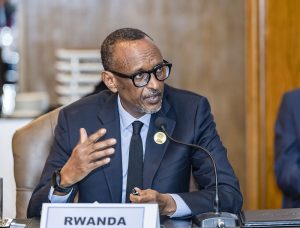
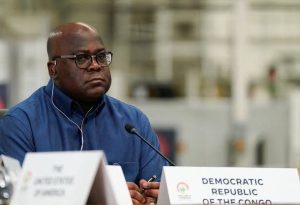
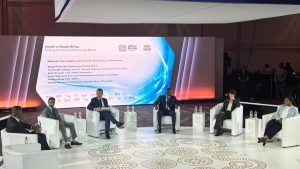
Addressing a panel that included DRC President Félix Antoine Tshisekedi, Marizamunda reiterated Rwanda’s stance against allegations of interference, calling for an end to “simplistic narratives” and urging solutions based on facts rather than finger-pointing.
Economic Ties and Rwanda’s Vision for Stability
Marizamunda highlighted Rwanda’s economic relationship with the DRC as a key argument against accusations that Kigali is backing M23 rebels in eastern Congo.
According to the minister, Rwanda’s exports to the DRC reached nearly $700 million in 2021, and in 2022, trade with DRC accounted for over 33% of Rwanda’s total exports—a significant share of the country’s economy.
“Why would Rwanda, a country with an ambitious agenda for socio-economic development, want to jeopardize this cooperation?” he questioned, implying that Rwanda’s economic interests are better served by peace rather than conflict.
He went further to dispel claims that Rwanda has any military ambitions in the DRC: “Rwanda has nothing to gain from an unstable DRC. On the contrary, our vision for prosperity is tied to regional stability and economic cooperation.”
Tshisekedi’s Shifting Tone?
Marizamunda’s comments came in response to Tshisekedi’s remarks at the conference in which he placed blame on his predecessor for the ongoing insecurity in Congo.
His tone appeared to contrast with previous public statements in which he has frequently accused Rwanda of supporting the M23 rebel movement in eastern DRC.
This discrepancy in messaging raises questions about Tshisekedi’s diplomatic approach, especially as the DRC prepares for further regional and international engagement on the crisis.
The Rwandan government has consistently denied involvement in the conflict, instead accusing Congolese forces and their allies, including the FDLR—a militia composed of remnants responsible for the 1994 Rwandan genocide—of launching attacks on Rwandan territory.
Multilateralism as the Path Forward
Calling for a collective approach, Marizamunda stressed Rwanda’s commitment to multilateralism as the best way to resolve security threats in the region.
“The UN as a unifying force is more crucial than ever during this period of fragmented division,” he said.
“We must work together to collectively address global issues that lie ahead.”
While diplomatic tensions between Rwanda and the DRC continue to rise, regional and international actors are increasingly under pressure to broker a lasting peace.
The involvement of the United Nations, African Union, and key international players will likely shape the direction of future negotiations.
As accusations and counter-accusations continue, the key question remains: Can economic interdependence and a multilateral approach pave the way for lasting peace in the Great Lakes Region?
About The Author


SUBSCRIBE TO OUR NEWSLETTER