Rwanda: GEF-Funded Project revitalizes rice supply chain in Eastern province.

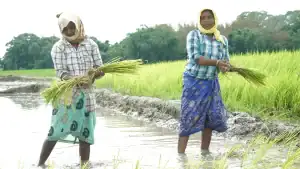
After years of low harvests caused by erosion, rice production in Cyunuzi marshland, Kirehe District, is rising steadily thanks to Rwanda Environmental Management Authority through its LDCF3 project’s catchment rehabilitation initiative.
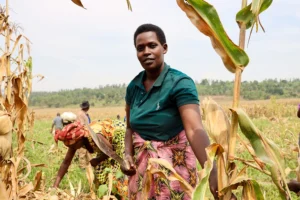
Like many parts of Rwanda, Kirehe has long struggled with erosion. In Cyunuzi, runoff from surrounding hills regularly washed fertile soil into the marshland, undermining rice cultivation. According to Nsengiyumva Pacifique, Agronomist for Gatore Sector, rice yields was low before the intervention.
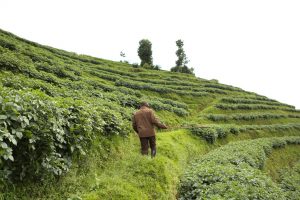
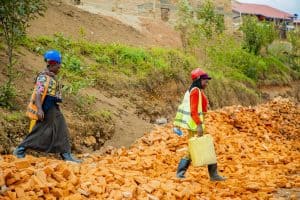
“Terraces and erosion-control structures have been installed on more than 300 hectares of hillsides surrounding the marshland,” Nsengiyumva explained. “These works were designed to curb soil erosion and retain upland soil that previously flowed into the marshland.”
Rice cultivation in Cyunuzi covers more than 400 hectares of land, including parts of Ngoma district bordering Kirehe.
Harvested rice is supplied to the Kirehe Rice Factory for processing and distribution to the market.
Factory records indicate a clear improvement since the start of the LDCF3 project in 2022. Emmanuel Niyirora, Manager of the Kirehe Rice Factory, reports a steady rise in supply from farmers.
“Compared to the years before 2022, production from farmers has increased by more than 500 tons,” he said. “We expect another significant increase this year.”
About Rwf 3 billion are generated annually by more than three thousand farmers, members of COOPRIKI-CYUNUZI,the cooperative of rice growers from both Kirehe and Ngoma district.
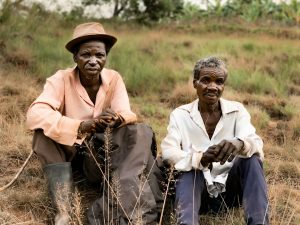
Beyond boosting rice yields, rehabilitation of the Cyunuzi catchment has also generated benefits for farmers living on the surrounding hills, where soil conservation structures have improved land productivity and reduced environmental risks.
Bruno Rangira, Mayor of Kirehe District, emphasizes the project’s contribution to community welfare. “Most of our residents depend on agriculture,” he noted. “This project has strengthened food security, raised crop production, and improved household incomes.”
Charles Sindayigaya, Manager of the LDCF3 project, expressed confidence that the gains achieved will be sustained beyond the project’s lifespan. “We have worked closely with residents throughout implementation,” he said. “Farmers have been trained and equipped with the knowledge and skills required to maintain these practices without our involvement.”
LDCF 3 is a five-year initiative that aims to climate-proof the rural settlements in Gakenke and Kirehe Districts by building communities’ resilience to climate change. It is implemented by REMA in partnership with the Districts of Gakenke and Kirehe with support from the Global Environment Facility (GEF) through the United Nations Development Programme (UNDP).
About The Author


SUBSCRIBE TO OUR NEWSLETTER