Rwanda Unveils New Investment Plans to Boost Climate-Smart Agriculture and Food Security

Rwanda has unveiled two major national investment frameworks aimed at accelerating climate-smart agriculture and sustainable landscape management, as government leaders and partners called for coordinated action to safeguard food security, restore degraded land, and build resilience to climate change.
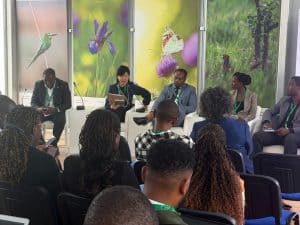
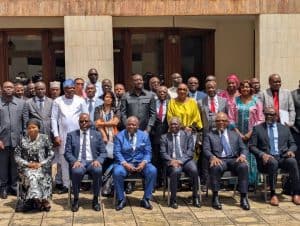
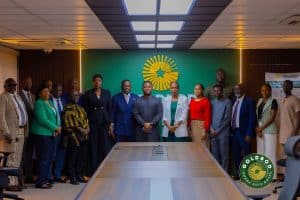
The commitments were announced on December 16, 2025, during the 18th National Cross-Sectoral Task Force Meeting on Forest Landscape Restoration and Sustainable Food and Agriculture, held in Kigali and convened by the Ministry of Environment in collaboration with the Ministry of Agriculture and Animal Resources, the Ministry of Local Government, and the International Union for Conservation of Nature (IUCN Rwanda Country Office), with support from the AREECA Programme.
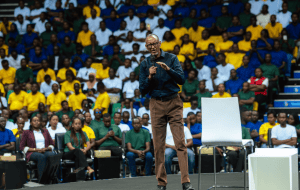
Held under the theme “Accelerating Integrated Landscape Restoration and Climate Resilient Food Systems through Sustainable Landscape Management and Climate Smart Agriculture,” the meeting brought together senior government officials, development partners, civil society organisations, academia, and the private sector to review progress and chart Rwanda’s next phase of investment.
Agriculture at the centre of resilience

In her opening remarks, Minister of Environment Dr. Bernadette Arakwiye said sustainable landscape management is no longer a sector-specific issue but a national development priority.
“Over 60 percent of Rwandans depend on agriculture for their livelihoods,” she said, noting that food security, rural incomes, and economic stability are closely linked to healthy and productive landscapes. “Agriculture does not stand alone. Its productivity depends on fertile soils, reliable water systems, restored forests, and functioning ecosystems.”
She warned that climate change, through increasing rainfall variability, floods, droughts, soil erosion, and land degradation, threatens agricultural productivity as well as infrastructure investments and long term economic growth.
“If Rwanda is to continue its economic transformation while safeguarding livelihoods and natural capital, we must invest differently and more strategically in how we manage our landscapes,” Dr. Arakwiye said.
It was in this context that Rwanda officially launched the Sustainable Landscape Management Investment Framework and the Climate Smart Agriculture Investment Plan, two complementary tools designed to move beyond fragmented project based interventions toward coordinated, large scale investment.
According to the Minister, the frameworks aim to align public finance, private capital, and development partner support around priority interventions that deliver productivity, resilience, ecosystem restoration, and climate outcomes.
“These frameworks provide a pathway to translate national ambitions into real investments on the ground,” she said, noting that they are aligned with Rwanda’s updated Climate Action Plan NDC 3.0, the Green Growth and Climate Resilience Strategy, and the National Climate and Nature Finance Strategy.
Major boost for food security

For the agriculture sector, the CSA Investment Plan marks a significant shift in scale and ambition. Minister of Agriculture and Animal Resources Dr. Telesphore Ndabamenye described the plan as central to Rwanda’s food security and rural transformation agenda.
“This investment plan spans five years from 2025 to 2030, with an estimated investment opportunity of 355 million dollars,” he said. “This is not just a figure. It is an investment in Rwanda’s people, landscapes, and future.”
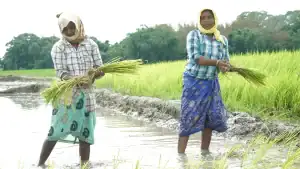
The plan is structured around three strategic pillars. The first is smart irrigation, aimed at expanding climate resilient irrigation systems to reduce dependence on unpredictable rainfall, increase yields, and enable year round production.
The second pillar focuses on resilient agricultural value chains. Through improved post harvest handling, storage, processing, and market access, farmers are expected to increase incomes while reducing losses and creating employment opportunities, particularly for women and youth.
The third pillar promotes low emission and sustainable farming practices such as agroforestry, improved soil management, and climate smart livestock systems, which increase productivity while reducing emissions and restoring ecosystems.
“These approaches allow us to strengthen food and nutrition security while aligning agriculture with Rwanda’s climate commitments,” Ndabamenye said.
He highlighted several investment pipelines already under development, including the West Gate Green Initiative Project valued at 33 million euros, the Kwihaza Project at 17.5 million euros, and the Anchor Farmer Based Youth Enterprises programme with a potential investment of 100 million dollars.
Communities at the heart of implementation

Minister of Local Government Dominique Habimana said the success of the Sustainable Landscape Management Investment Framework depends on strong community leadership and decentralized implementation.
“At the core of this framework is a participatory planning process that places communities and local governments at the centre of decision making,” he said.
He pointed to Catchment Based Village Land Use Action Plans as a key tool ensuring that citizens are active participants rather than passive beneficiaries. Since last year, the approach has been implemented in at least 21 districts, covering 470 villages, with an additional 200 villages expected to be included in the coming months.
Habimana also highlighted the establishment of a Community Adaptation Fund, developed by the Rwanda Green Fund in collaboration with LODA, which will support payments for ecosystem services and enable communities to benefit from restoration efforts, including through carbon market opportunities.
“When communities take ownership, investments endure,” he said, linking sustainable landscape management directly to improved livelihoods and farmer resilience.
Partner support and next steps
In her keynote address, IUCN Rwanda Country Representative Ms Kaori Yasuda reaffirmed IUCN’s continued support to the Government of Rwanda in technical assistance, resource mobilisation, and capacity building.
She cited achievements such as the development of Village Land Use Action Plans and support to the Ministry of Environment through REMA in developing the 2025 National Biodiversity Strategy and Action Plan.

Since 2022, the National Cross Sectoral Task Force has been supported by the AREECA Programme, which has helped restore 5,114 hectares of land across Rwanda. This includes 2,119 ha under agroforestry, 339 ha of pasture and rangeland restoration, 1,064 ha of forest rehabilitation, and 1,534 ha of government led afforestation, among other interventions.
As the meeting concluded, leaders emphasised that while launching frameworks is an important milestone, real success will depend on coordinated implementation and sustained investment.


About The Author


SUBSCRIBE TO OUR NEWSLETTER