An investment of over RWF 300 billion set for irrigation projects in Kayonza

By Matata Christophe
An irrigation project covering more than 4,000 hectares near lakes is set to begin in Kayonza District. The project will be implemented over a three-year period and is expected to play a major role in tackling drought caused by climate change.
The project, known as the Kayonza Irrigation and Integrated Watershed Management Project, will be rolled out in a revamped form after its first phase failed to deliver the expected results.
The project manager, Uwitonze Théogène, told the media that the initiative aims to permanently address the problem of prolonged sunshine that dries up crops, leading to poor harvests and recurring drought.
Under the project, modern irrigation infrastructure will be constructed to pump water from lakes up to higher elevations, from where it will flow down to irrigate farmland. The project will initially be implemented in the sectors of Ndego and Kabare in Kayonza District, but authorities say it will eventually extend to other parts of the district.
Uwitonze explained:
“We have already started constructing water-storage dams in other sectors. No sector will be left without access to irrigation. Where irrigation is not feasible, we will establish forests, and elsewhere we will construct radical terraces. All these efforts are part of the fight against climate change. The project will reach every area, depending on its geographical characteristics.”
He added that the preparatory phase of the project has already been completed.
“The project is now at an advanced stage. Feasibility studies have been finalized, and procurement has begun. Irrigation works covering 2,400 hectares have already been contracted, while the remaining 2,000 hectares are still under study. Once these are completed, the problem of food shortages will be permanently resolved.”
The project is scheduled for completion in 2031, with initial construction works expected to start between January and February 2026, so that irrigation activities can begin by September next year, during the following farming season. The total cost of the project is USD 205 million (over RWF 298 billion).
In the first phase of the project, emphasis was placed on flat areas, and even where farming was done on hillsides, the irrigation system failed to address the problem effectively. In the second phase, however, specialized machinery capable of pumping water uphill will be used, including equipment powered by solar energy.
Water for irrigation will be drawn from Nasho, Kibare, and Ihema lakes. The project will also include the construction of 50 greenhouses, which are expected to create jobs for 400 people.
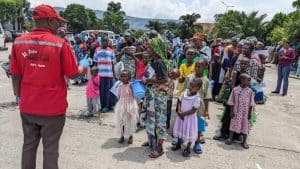
Meanwhile, residents of Kayonza District continue to suffer from severe drought caused by prolonged sunshine. Many say they expect no harvest this farming season, as crops have completely dried up, forcing some households to rely on food assistance from friends and relatives.
Uwimbabazi Jacqueline, who had just returned from visiting her family, said:
“I had gone to visit my parents because they had cassava flour and gave me 10 kilograms. Where I live, a kilo of flour costs 450 francs, and it has to be transported from my home area by motorcycle.”
As a result of the worsening situation, the government has begun distributing food aid to residents of Ndego and Kabare, providing them with beans and maize to sustain them for a period of three months.
About The Author


SUBSCRIBE TO OUR NEWSLETTER