Dr. Sam Kanyamibwa Calls for Unified Action on Climate-Smart Agriculture in Rwanda

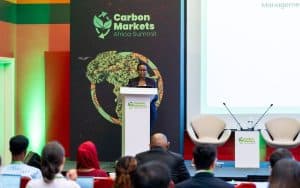
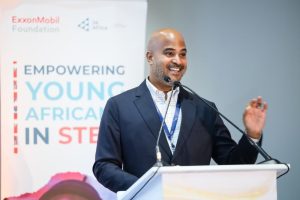
Dr. Sam Kanyamibwa, the Founder and CEO of the Albertine Rift Conservation Society (ARCOS).
Dr. Sam Kanyamibwa, the Founder and CEO of the Albertine Rift Conservation Society (ARCOS), has called for stronger collaboration across government, civil society, and the private sector to translate Rwanda’s climate smart agriculture and landscape restoration ambitions into action on the ground.
Speaking during a high-level panel discussion at the 18th National Cross-Sectoral Task Force Meeting on Forest Landscape Restoration and Sustainable Food and Agriculture in Kigali, Dr. Kanyamibwa described the moment as a turning point for the country.
READ ALSO: Rwanda Unveils New Investment Plans to Boost Climate-Smart Agriculture and Food Security
“This is an opportunity for Rwanda,” he said, arguing that while the concepts of climate smart agriculture and sustainable landscape management are well understood, the real challenge lies in coordinated implementation and financing at scale.
Common understanding as the starting point

Dr. Kanyamibwa stressed that successful landscape restoration depends on a shared understanding of objectives and responsibilities across all levels, from national institutions to local communities.
“When we talk about landscapes, one of the biggest challenges is bringing all stakeholders together around a common vision,” he said. “This understanding must exist from the highest decision making levels to the people managing land on a daily basis.”
He noted that climate smart agriculture is not just about improving practices on small plots of land, but about integrating ecosystem health, climate mitigation, and livelihoods within a broader landscape approach.
According to Dr. Kanyamibwa, this requires involving all sectors that interact with land and natural resources, including mining, infrastructure, and finance, to ensure that economic development remains compatible with environmental sustainability.
From grants to sustainable finance
Drawing from ARCOS’ experience, Dr. Kanyamibwa illustrated how coordinated partnerships can unlock long term, inclusive financing for communities.
He recounted how a community based programme supported by Rwanda Green Fund began a decade ago with a modest grant and has since attracted a 52 million euro initiative supporting nature based solutions across multiple landscapes and long-term financial access for communities though nature-based community fund.
“We asked ourselves how a grant could become sustainable financial access for communities,” he said. “The result was a community development fund that supports livelihoods while protecting ecosystems.”
The initiative, implemented around the Mukura landscape, Bugesera, Kirehe, and along the Akagera and Nyabarongo basins, demonstrates how nature based financing can be scaled when civil society, government, and development partners work together.
Aligning frameworks and institutions

IUCN Rwanda Country Representative Ms Kaori Yasuda said Rwanda can strengthen implementation of the Sustainable Landscape Management and Climate Smart Agriculture Investment Frameworks by shifting from sector based planning to integrated, landscape scale investment.
She emphasised the need to align financing mechanisms across institutions and empower coordination platforms such as the National Cross Sectoral Task Force to link decisions directly to budgeting and district planning.
“Rwanda can move from coordination as dialogue to coordination as delivery and investment alignment,” Ms Yasuda said.
Private sector engagement key
From the banking sector perspective, Equity Bank Rwanda Food and Agriculture Manager Darius Clement Nkuriza highlighted the importance of inclusive financial instruments that reach small scale farmers.
He noted that although agriculture employs the majority of Rwanda’s population, access to long term finance remains limited, particularly for farmers in remote areas.
Nkuriza said Equity Bank has committed to allocating 30 percent of its Rwanda portfolio to agriculture, supported by interest rate subsidies, flexible repayment terms, guarantees, and technical assistance.
“Farmers do not need sympathy,” he said. “They need a system that includes youth, women, and small scale farmers as key stakeholders.”


About The Author


SUBSCRIBE TO OUR NEWSLETTER