Government Calls on Communities to Safeguard Kigali’s Restored Wetlands
Communities living near wetlands undergoing restoration in the City of Kigali have been urged to take an active role in protecting them, as the government intensifies efforts to strengthen climate resilience, prevent flooding, and restore degraded ecosystems.
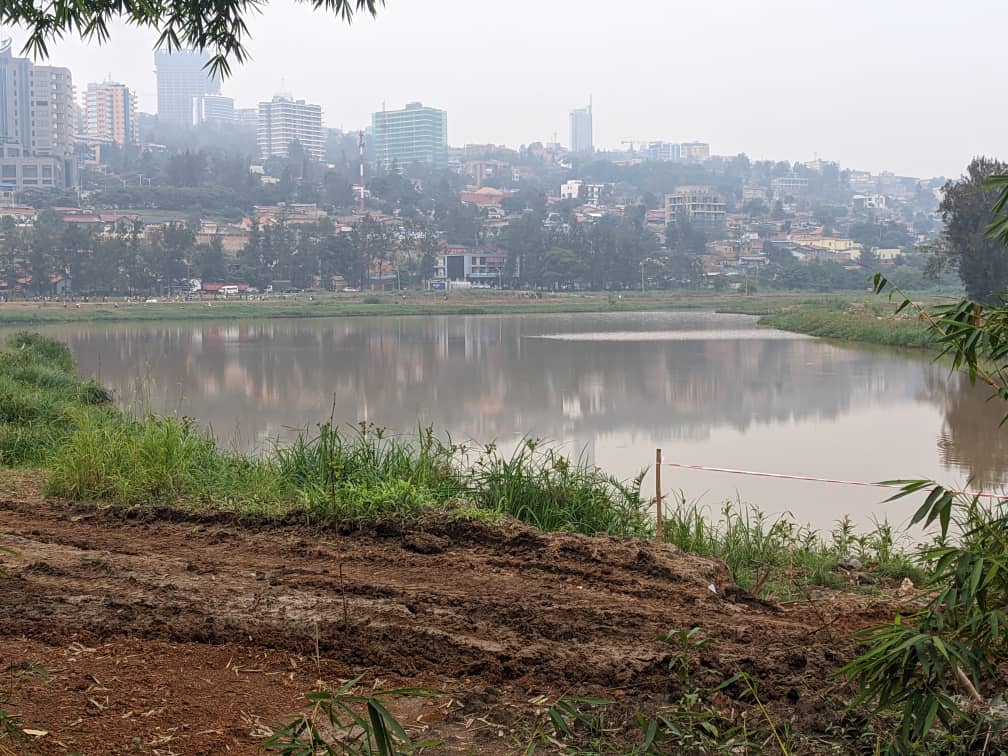
The call was made on Saturday, December 20, 2025, by the Minister of Environment, Dr. Bernadette Arakwiye, during a Special Umuganda held at the Rugenge Rwintare Wetland, one of five wetlands currently being rehabilitated across Kigali.
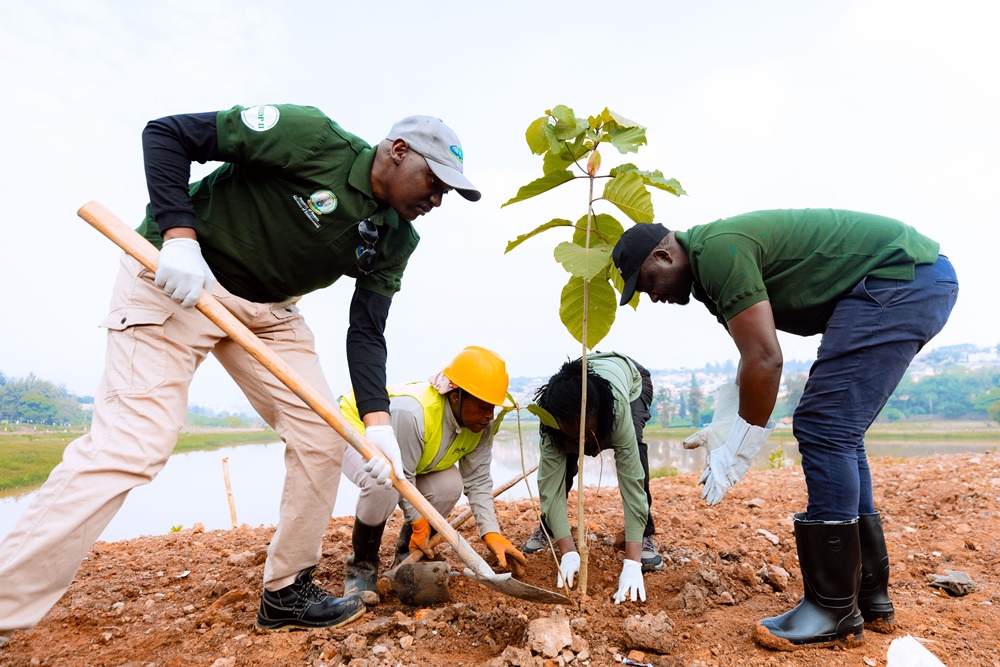
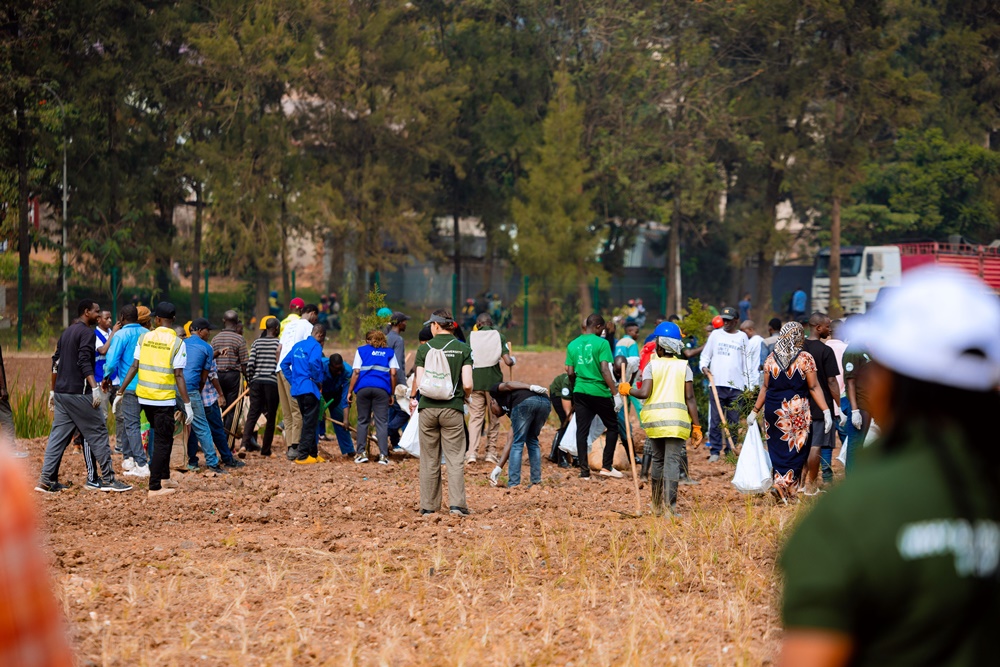
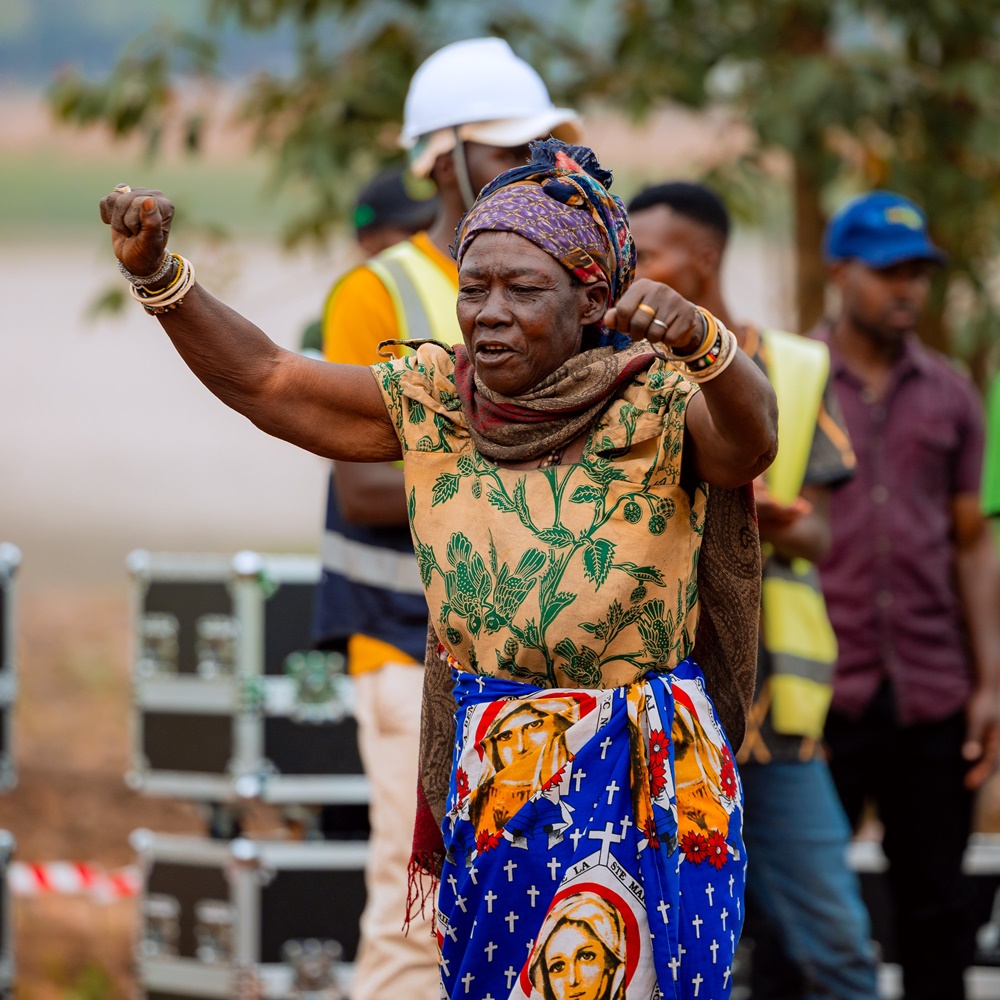
Organised by the Ministry of Environment through the Rwanda Environment Management Authority (REMA) in collaboration with development partners, the community work brought together government officials, development partners, and local residents for tree planting, plastic waste collection, and environmental awareness activities.
Community ownership at the centre of wetland restoration

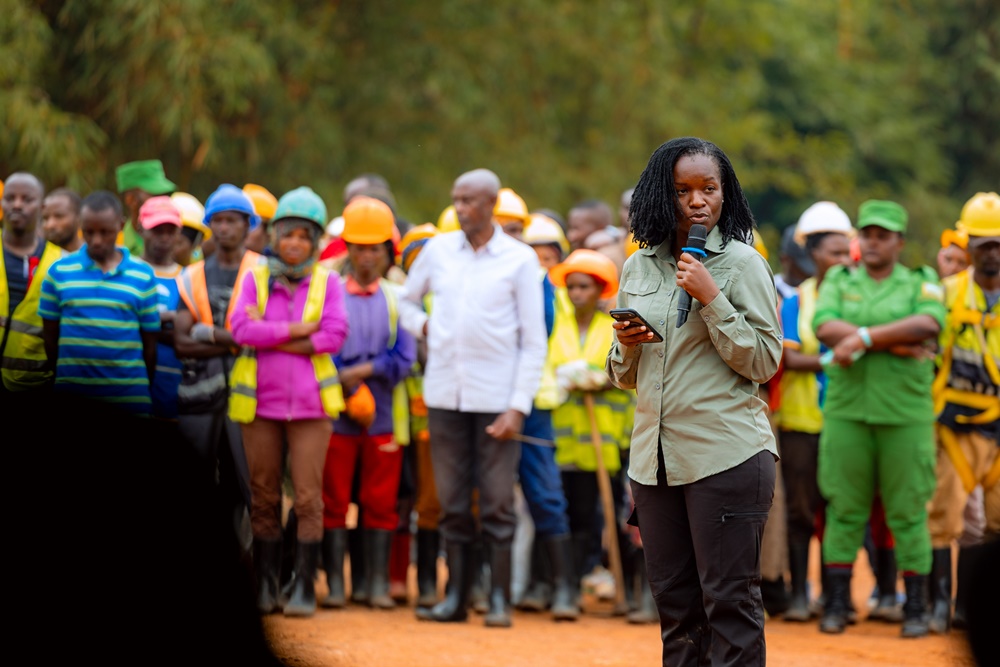
Addressing participants, Dr. Arakwiye emphasised that restoring wetlands will only deliver lasting benefits if surrounding communities commit to protecting them from pollution and encroachment.
“This is a valuable project that is close to you and will bring many benefits,” she said. “But for these benefits to be realised, residents must take responsibility by avoiding dumping waste into wetlands, preventing polluted water from flowing into them, and treating them as a shared public asset.”
She explained that the Special Umuganda was organised to bring communities closer to the wetland restoration programme, update them on progress made so far, and reinforce their role in safeguarding the ecosystems.
“Today’s Umuganda focused on tree planting and cleaning the wetland area,” she noted. “It is part of our continued engagement with residents and partners to ensure this restoration journey succeeds.”
Restoration works expected to conclude in 2026
According to the Minister, major infrastructure works including water control systems and the construction of artificial lakes for water filtration have made significant progress and are expected to be completed by mid 2026, although ecological restoration will continue beyond that timeframe.
“Restoring degraded ecosystems is a gradual process,” Dr. Arakwiye said. “Even after the project officially ends, trees will continue to grow, wetlands will keep filtering polluted water, and biodiversity will recover over time. Protecting these gains will remain everyone’s responsibility.”
She also warned that dumping solid waste or directing wastewater into wetlands is strictly prohibited, calling on communities to report offenders.
Wetlands key to flood prevention in Kigali

The City of Kigali Vice Mayor in charge of Urbanisation and Infrastructure, Fulgence Dusabimana, highlighted the critical role wetlands play in absorbing excess water during heavy rainfall, particularly runoff from surrounding hills.
“These wetlands protect our lives,” he said. “They receive large volumes of water during the rainy season, preventing floods. We must allow them to perform this function instead of degrading them.”
He added that the city is scaling up its urban greening programme, with plans to plant at least three million trees by 2029, urging residents to protect planted trees to ensure their survival.
Residents welcome restoration as long term investment
Residents who took part in the Umuganda expressed optimism about the wetland restoration, describing it as an investment in future generations.
Richard Murego, a resident of Kacyiru Sector in Gasabo District, said the transformation of the Rugenge Rwintare Wetland reflects visible progress in environmental protection.
“This restoration is real development,” he said. “What we see today is the beauty of our country taking shape. In the future, our children will grow up in a healthier and safer environment.”
Five wetlands under restoration in Kigali
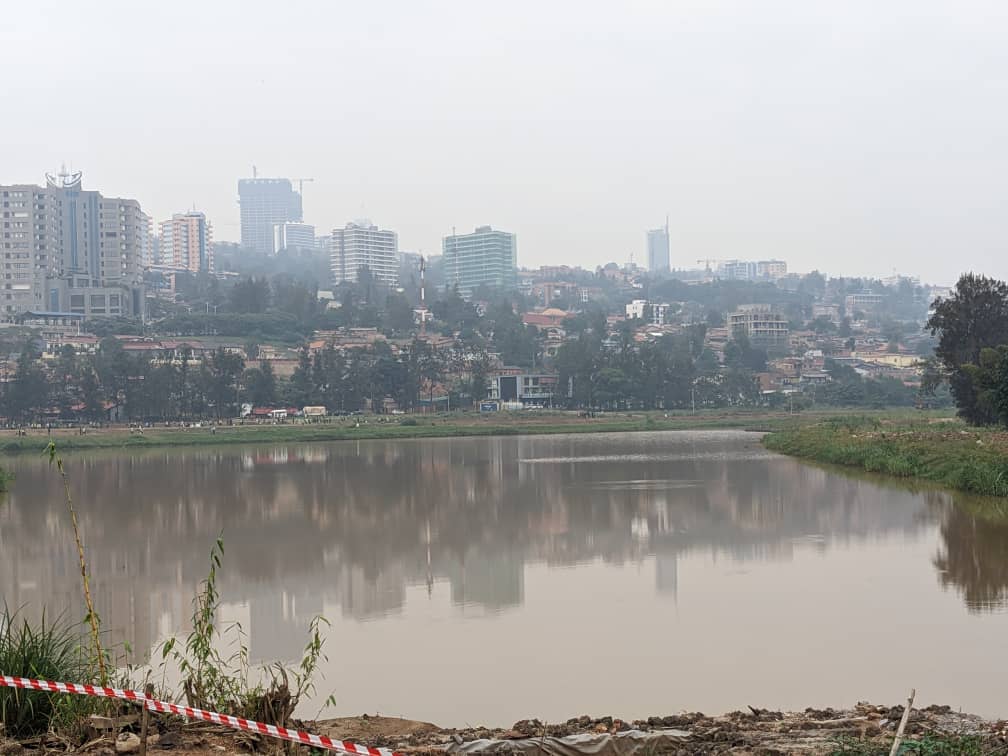
Kigali currently has five wetlands undergoing rehabilitation Rwampara, Gikondo, Kibumba, Nyabugogo and Rugenge Rwintare. The projects aim to restore their natural ecological functions, improve water quality, support biodiversity, and reduce flood risks in the rapidly growing city.
Faustin Munyazikwiye, Deputy Director General of REMA, commended the collaboration between communities, partners, and government institutions, calling for sustained cooperation to ensure the projects achieve their intended impact.
The Rugenge Rwintare Wetland restoration is supported by development partners including the World Bank and the Nordic Development Fund, and forms part of Rwanda’s broader strategy to integrate environmental protection, urban development, and climate resilience.
About The Author


SUBSCRIBE TO OUR NEWSLETTER