Beyond the Gowns: How UGHE is Rewriting the Playbook for Global Health Challenges

While the graduation ceremony at the University of Global Health Equity (UGHE) in Butaro was a celebration of academic success last week, a deeper look reveals that this campus is designed as a strategic engine to dismantle the structural roots of global health inequities.
The event underscored that UGHE does not merely train doctors; it cultivates a new breed of professionals equipped to tackle complex global challenges—from epidemics to poverty—by fundamentally altering how medicine is taught and practiced.

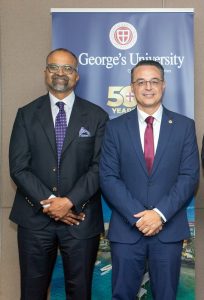
Rwanda’s Prime Minister Dr. Justin Nsengiyumva and Ms. Jeannette Kagame, the First Lady of Rwanda alongside Ministers of Education and Health during their tour at the UGHE Campus in Butaro, Burera District -25 January, 2026
The university was created specifically in response to global health inequities with the mission of training professionals who place equity, humanity, and strong health systems at the center of care.
The core of UGHE’s ability to address health challenges lies in its rejection of the traditional biomedical model that treats diseases in isolation.
The campus’s curriculum emphasizes treating the ‘wholesome being’ rather than focusing solely on a specific condition. This approach highlights the inadequacy of clinical precision when social and holistic support is lacking. For example, treating a patient for malaria is ultimately insufficient if they lack basic necessities like food at home or if the physician fails to consider the patient’s overall well-being.

This philosophy mentioned above is reinforced by Ms. Melinda French Gates, who highlighted in her virtual message delivered on Sunday during the UGHE 10TH GRADUATION that these graduates were trained to see patients as whole human beings instead of a collection of symptoms. By understanding that a patient’s health is dictated by their ability to reach a clinic, pay for care, and feed their families, graduates are prepared to intervene in the social determinants that often drive global health crises.
“When I was just starting in global health, Paul (Late Paul Farmer, Co-founder of UGHE) invited me to Haiti to see his work in action. He showed me what it looks like when health care providers insist on seeing their patients as whole human beings instead of a collection of symptoms.” She said.
Ms. Melinda emphasised:
“That idea is at the center of the education you’ve received here. You understand that your job is more than tracking a disease or treating an illness. It’s about people, making sure they can reach your clinic, helping them if they can’t pay, checking in on their families too. I love thinking of all the lives you will touch, the children you will help bring into the world, the parents and grandparents who will watch them grow because a surgery you performed or a hospital you opened saved their lives.”

To deal with the challenge of inequality, UGHE has institutionalized the “preferential option for the poor,” often referred to on campus as “O for the P”. Chancellor Dr. Jim Yong Kim emphasized that at this campus, equity was never an elective but a foundational requirement that shaped everything the students were taught.
This approach frames global health challenges not just as biological problems, but as moral and justice issues. Invoking the film The Matrix, Dr. Kim noted that the students have chosen the “red pill,” meaning they are willing to see the world as it actually is—full of unnecessary suffering—and accept the obligations to respond to it rather than looking away.

Student representatives echoed the Chancellor’s statement, noting that their founder, the late Dr. Paul Farmer, taught them that medicine without justice is incomplete and that they must work with patients in solidarity.
The campus’s ability to prepare students for global crises was tested in real-time during the COVID-19 pandemic.
The graduating cohort began their journey shortly before the world locked down, and while other institutions paused, these students remained on campus, navigating fear, uncertainty, and isolation.
This experience became a crucible for resilience; as Global Health Delivery graduate Hertier Mfura noted, it taught them responsibility and how to keep going when the future is unclear, a critical skill for health professionals who will face future epidemics and resource-constrained environments.

Furthermore, their training at the Butaro District Hospital and the Cancer Center of Excellence exposed them to the reality that disease lives within the contexts of poverty, geography, policy, and history.
A distinct feature of the UGHE pedagogical model is the shift from passive learning to active solution-finding.
Class Representative Hope Florence Mizero emphasized that they were taught not only how to analyze problems but how to solve them ethically, sustainably, and promptly. This moves beyond the age of information abundance where one might rely on Google; instead, students are trained to ask better questions, verify information, and understand that good practice involves knowing when to seek help.
Looking back and ahead, the university of Global Health Equity addresses the future of healthcare in Africa by focusing on systems leadership rather than just clinical care.
READ ALSO: UGHE graduates urged to put Resilient health systems at the center of Africa’s future
Rwanda’s Prime Minister Dr. Justin Nsengiyumva highlighted that the challenges facing Africa—such as emerging diseases, workforce shortages, and financing constraints—require practical solutions grounded in policy, management, and data implementation.

The graduates are equipped with these diverse skills to build strong, resilient African systems so that the continent does not have to rely on solutions arriving from afar,. This holistic training was evident in the diverse tracks of the Master of Science in Global Health Delivery graduates, who have learned that dignity is the foundation of care, that safe surgery is a human right, and, through the One Health track, that the future depends on protecting ecosystems, animals, and communities together. Through this comprehensive approach, UGHE is deploying a workforce capable of bending the arc of history toward a world where health is a human right.


About The Author


SUBSCRIBE TO OUR NEWSLETTER