When Diplomacy Failed, Goma Fell To M23 Rebels

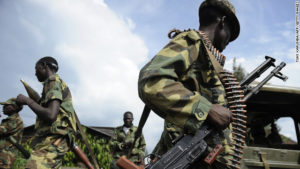
A year ago, Goma fell. The provincial capital of North Kivu, the main city in eastern DRC, fell under the control of the Rwandan-backed AFC/M23 political-military group.
The battle, of unprecedented intensity and unlike anything seen before the city’s capture in 2012, marked a lasting turning point in the conflict in the east of the country.
One year later, while the movement still administers the city, a look back at the political, diplomatic and military sequences that led to the battle of Goma.
December 2024: The failure of Angolan mediation
On December 15, 2024, in Luanda, everything seemed ready. Angola was on the verge of securing an agreement between Kinshasa and Kigali.
The Congolese and Rwandan delegations had virtually finalized the text of a peace agreement, accompanied by a Concept of Operations (CONOPS), a technical document detailing the military commitments of the two countries as well as a precise implementation timeline.
But one sticking point remains. Kinshasa categorically refuses to negotiate with the AFC/M23, a demand Kigali made a prerequisite for signing the agreement.
The disagreement is total. On December 16, Rwandan President Paul Kagame does not travel to Luanda. Congolese President Félix Tshisekedi is left alone. There will be no signing.
Following this diplomatic failure, military pressure intensified on the ground.
A military buildup documented by the UNIn the days that followed, the United Nations documented the deployment of sophisticated weaponry in areas controlled by the M23, including surface-to-air missiles, as well as GPS jamming capabilities.
These technological capabilities severely limited the use of aircraft and drones by Congolese forces and their allies.
Faced with rising tensions, Félix Tshisekedi is attempting to mobilize neighboring countries. On Saturday, December 21, he traveled to Brazzaville.
The following day, Sunday, December 22, he was in Bujumbura. Domestically, the head of state implemented a series of changes in the military hierarchy.
Four days later, he replaced several commanders of the Armed Forces of the DRC (FARDC), notably the commander of the Third Defense Zone, which covers North Kivu.
The FARDC Chief of Staff had already been replaced ten days earlier.
January 2025: The M23 advance towards Goma.
On the ground, the dynamic is now clearly military.
On Friday, January 3, the AFC/M23 took control of Katale.
The following day, Masisi-centre fell in turn. The fighters were then about 80 kilometers from Goma.
On January 7, clashes were reported around Sake, a strategic location about 30 kilometers west of the provincial capital.
During the first two weeks of January, several front lines became active simultaneously: in the Masisi territory, south of Lubero, in Rutshuru, and in the Nyiragongo territory.
The fighting was intense, prolonged, and gradually approached Goma.
The last week before the fall
On January 18, 2025, Félix Tshisekedi addressed the ambassadors accredited to Kinshasa.
He called on Western countries to impose targeted sanctions against Rwanda, accused of supporting the M23, which at the time controlled part of North Kivu.
Five days later, fighting intensified around Sake.
Major General Peter Cirimwami, the military governor of North Kivu, was seriously wounded by gunfire on January 23 while traveling to the front line west of Goma.
He succumbed to his injuries shortly afterward.
On Saturday, January 25, the fighting reached the immediate vicinity of Goma.
The Congolese army and its allies clashed with the M23.
Thirteen soldiers—South African, Malawian, and Uruguayan—deployed within the SADC regional force or the UN Mission in the DRC (MONUSCO), were killed.
In the aftermath, Kinshasa recalled its diplomats to Kigali and gave Rwanda forty-eight hours to cease all diplomatic activity on Congolese soil.
Goma plunged into chaos
On the ground, the consequences were immediate.
High-voltage power lines were cut during the fighting, depriving Goma of electricity and, quickly, water.
M23 fighters and Rwandan army soldiers entered the city.
On Monday, January 27, gunfire was heard as far away as the city center.
Elements of the M23 were reported in several neighborhoods
The previous day, the United Nations Secretary-General, António Guterres, directly blamed Kigali after another day of fighting.
Clashes continue, particularly in the southern part of Goma airport.
On the Rwandan side, a spokesperson for the Rwandan Defence Forces reports at least five dead and twenty-four seriously wounded in a border town.
On the same day, a mass escape occurred at Munzenze prison, which held approximately 3,000 inmates.
On Tuesday, January 28, Goma awoke to the sound of loud explosions and gunfire, while in Kinshasa, demonstrations broke out in several districts, notably Limete, Kitambo, and the administrative district of Gombe.
Goma’s hospitals are overwhelmed, unable to cope with the influx of injured people.
On Wednesday, January 29, several hundred Romanian nationals, instructors with the FARDC according to Kinshasa, mercenaries according to Kigali, crossed the border towards Gisenyi, Rwanda, before being evacuated to Romania.
One year later, Goma city still under the control of the M23
One year after the battle, Goma remains under the administration of the AFC/M23.
The battle of January 2025 did not just change the control of a city: it permanently reshaped the military and political balances in eastern DRC, while exposing the limits of regional and international mediation in the face of an increasingly regionalized conflict.
About The Author


SUBSCRIBE TO OUR NEWSLETTER