Musanze: Gacaca Residents Unite Behind the Construction of Karwasa Market

Residents of Gacaca Sector have renewed hope for economic transformation following a high-level consultative meeting aimed at accelerating the construction of Karwasa Market a long-awaited project expected to uplift local livelihoods and strengthen grassroots trade.
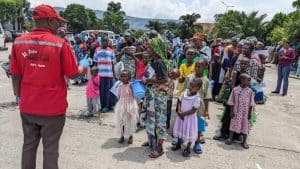
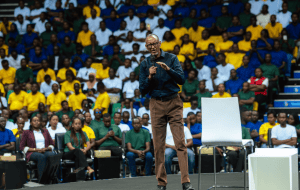
The meeting, held on this 27 January 2026 in Gacaca Sector, chaired by the Vice Mayor in charge of Economic Development, Uwanyirigira Clarisse, who convened discussions with the leadership of the Private Sector Federation (PSF) at sector level, the Karwasa Market Committee, and the local sector administration. At the the meeting, there is sharing of commitment to explore practical and inclusive ways of constructing Karwasa Market through a community-driven approach that empowers traders themselves.
Vice Mayor Uwanyirigira emphasized that markets are not merely trading spaces but engines of local economic growth. She noted that when well-planned and collectively owned, markets stimulate entrepreneurship, create jobs, and improve household incomes.
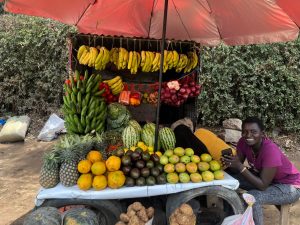
The proposed Karwasa Market is expected to serve as a central trading hub for agricultural produce, small-scale businesses, and services within Gacaca Sector and neighboring areas. For years, traders have operated in scattered and often inadequate spaces, a situation that limits growth, compromises hygiene, and exposes them to weather-related losses.
Members of PSF Gacaca Sector welcomed the initiative, underscoring the importance of strong collaboration between local authorities and the private sector. They highlighted that involving traders from the planning stage would not only reduce construction costs but also ensure long-term sustainability and accountability.
The Karwasa Market Committee presented preliminary ideas on how the construction could be phased and financed with contributions from traders, cooperative structures, and supportive partners. The committee stressed that transparency and inclusiveness would be key to maintaining trust among all stakeholders.
Beyond institutional voices, the meeting echoed the lived experiences of local residents who see the market as a turning point in their daily struggles.
UGWANEZA Daniella, a small-scale trader from Gacaca Sector, said the absence of a proper market has been a major obstacle to her business growth.
“We sell our products in open spaces without shelters. When it rains, we lose customers and sometimes our goods are damaged,” she explained. “A permanent market like Karwasa would give us dignity, security, and the confidence to invest more in our businesses.”
Similarly, Dukundimana Salatiel, a farmer and produce vendor, described the market as a bridge between farmers and buyers.
“We produce enough crops, but without a reliable market, it is hard to access customers and fair prices,” he said. “Karwasa Market will help us reduce losses and improve our incomes. We are ready to contribute because this project is for our future.”
Local leaders from Gacaca Sector reaffirmed their commitment to mobilizing residents and ensuring that the project aligns with district development priorities. They noted that community ownership would foster responsibility and proper maintenance once the market is completed.
The consultative meeting concluded with a shared resolution to continue technical assessments, mobilize traders, and strengthen coordination among all stakeholders. As plans move forward, Karwasa Market stands as a symbol of what can be achieved when leadership listens and communities take charge of their own development.
About The Author


SUBSCRIBE TO OUR NEWSLETTER