Musanze: Biotech Potato Trials Signal New Hope for Food Security and Farmer Resilience in Rwanda

Biotechnology-driven potato trials being conducted in Musanze and Rwerere Sector of Musanze district are showing promising results.
Thi marks a significant milestone in Rwanda’s efforts to strengthen food security and modernize agriculture.
The trials are part of the Rwanda Agri-Biotech Program, a collaborative initiative led by the Rwanda Agriculture and Animal Resources Development Board (RAB), the African Agricultural Technology Foundation (AATF), and other development partners.
The program is the introduction of potato varieties that are resistant to late blight, a devastating plant disease that has long threatened potato production in Rwanda. Late blight, caused by fungal-like pathogens, has historically forced farmers to rely heavily on chemical fungicides, increasing production costs while reducing profits and harming the environment.

Early observations from the trial fields in Musanze and Rwerere sector indicate that the biotech potato varieties are performing strongly. The crops show healthy growth, improved resistance to disease, and the potential for higher yields compared to conventional potato varieties. These results are raising optimism among farmers, researchers, and policymakers alike.
Potato farming is a critical livelihood activity in Rwanda’s Northern Province, particularly in Musanze, where fertile volcanic soils and favorable climate conditions support large-scale production. However, frequent disease outbreaks have often undermined farmers’ efforts, leading to losses that affect household incomes and local food supply.

According to agricultural experts involved in the trials, the late blight- resistant potato seed is expected to reduce farmers’ dependence on fungicides, lower production costs, and improve overall productivity. Beyond boosting yields, the technology is also aligned with Rwanda’s broader vision of promoting sustainable agriculture while ensuring food availability for a growing population.
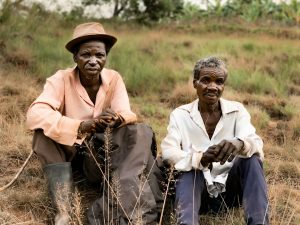
“I have been growing potatoes for more than ten years, but late blight has always been our biggest enemy,” said Jean Pierre Niyonsaba, a resident of Rwerere Sector. “When we see these new potatoes growing well without constant spraying, it gives us confidence. If this seed becomes available to farmers, it will change our lives because we will spend less money and harvest more.”
Another resident from Musanze District, Mukankusi Claudette, echoed similar sentiments, emphasizing the economic and food security benefits of the new technology.
“These trials give us hope as farmers,” she said. “When crops fail, our families suffer first. But with potatoes that resist disease, we can plan better, feed our households, and sell surplus to the market. This kind of farming helps us move from survival to real progress.”

The Rwanda Agri-Biotech Program also places strong emphasis on science-based decision-making, regulatory compliance, and public awareness. Researchers are closely monitoring the trials to assess agronomic performance, environmental safety, and potential socio-economic benefits before any wider deployment.
Partners involved in the initiative note that biotechnology is not meant to replace traditional farming knowledge, but rather to complement it by providing farmers with improved tools to face modern agricultural challenges such as climate change, pests, and disease.
The success of the biotech potato trials could pave the way for wider adoption of improved crop varieties across the country.
If approved for broader use, the late blight–resistant potato seed would not only enhance productivity in key potato-growing regions but also contribute significantly to national food security goals.
About The Author


SUBSCRIBE TO OUR NEWSLETTER