Green Realism: Kagame’s Crusade for Climate Justice and African Agency

KIGALI, Rwanda — To the international observer, President Paul Kagame is often defined by his assertive foreign policy and role in regional security. Yet, in the corridors of global power—from the G20 to the United Nations—he has quietly carved out a separate, equally forceful legacy: that of a climate pragmatist who refuses to let Africa remain a passive victim of a crisis it did not create.
For Kagame, the environment is not merely a conservation issue; it is an economic battlefield where Africa’s sovereignty is at stake. His philosophy, recently reiterated at the Nuclear Energy Summit in March 2026, pivots on a dual strategy: demanding accountability from the world’s heaviest polluters while simultaneously aggressively pursuing “green industrialization” at home [1].
A Question of Fairness, Not Charity
At the heart of Kagame’s climate diplomacy is a stark moral argument. He frequently reminds world leaders that while Africa contributes less than 4% of global greenhouse gas emissions, it bears the brunt of the consequences—from devastating floods in Rwanda’s northern provinces to creeping desertification across the Sahel [2].
However, his rhetoric eschews the traditional plea for aid. Instead, he frames climate finance as a debt owed. In scathing critiques of the global financial architecture, he has labeled the failure of wealthy nations to honor their $100 billion annual climate pledge as “unacceptable,” arguing that trust in multilateralism hinges on these commitments [3].
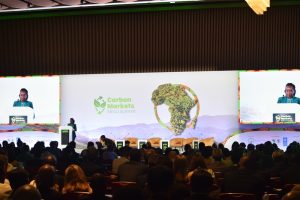
“We cannot just keep talking about it without doing what is required to fix the problem,” Kagame noted during the Africa Climate Summit, emphasizing that the continent seeks “fair and equal partnership,” not handouts [4].
The Pragmatic Pivot: Innovation Over Ideology
Where other leaders might focus solely on adaptation, Kagame champions technological adoption. Under his leadership, Rwanda has become a testing ground for what he calls “Green Growth.” This is most visible in the Ireme Invest facility, a green finance initiative launched at COP27 that has mobilized over $100 million to fund private sector climate resilience projects [5].
In a move that surprised some environmental purists, Kagame has also embraced nuclear energy as a necessary tool for development. Speaking earlier this month, he argued that nuclear technology is “not too complex or risky” for developing nations, positioning it as a reliable baseload power source essential for Rwanda to reach middle-income status without expanding its carbon footprint [1].
This aligns with his broader dismissal of the idea that Africa must remain underdeveloped to save the planet. “The point is not to generate carbon credits so that others can continue using coal,” he told delegates at COP27, “even as Africa is discouraged from exploiting its fossil fuel resources” [5].
Leading by Example
Domestically, the administration’s policies reflect this urgency. The Kigali Amendment to the Montreal Protocol, a historic global deal to phase out hydrofluorocarbons (HFCs), bears the capital’s name—a diplomatic victory Kagame cites as one of the most consequential actions taken to slow global warming [6].
Furthermore, the country’s updated Nationally Determined Contributions (NDC) set an ambitious target of reducing emissions by 38% by 2030, aiming for a completely net-zero economy by 2050 [7].
From the plastic bag ban that made Kigali one of Africa’s cleanest cities to the pursuit of small modular nuclear reactors, Kagame’s environmental record challenges the binary between economic development and ecological preservation. As the world looks toward the next round of climate negotiations, the Rwandan President’s message remains clear: Africa will not wait for permission to secure its future.
References
[1] Business Insider Africa (March 2026). Rwanda President Paul Kagame says nuclear power will play a central role.
[2] KT Press. Africa Can’t Carry the Burden Alone − President Kagame On Climate Change.
[3] Rwanda Dispatch. President Kagame Highlights Africa’s Commitment to Climate Action Despite Funding Challenges.
[4] Rwanda in Kenya. President Kagame calls for a more pragmatic approach in addressing climate change.
[5] Ministry of Environment. National Statement by President Paul Kagame at COP27.
[6] Embassy of Rwanda in Japan. G20: President Kagame Rallies World To Commit To $100bn.
[7] PaulKagame.rw. Climate Ambition Summit | 12 December 2020.
About The Author


SUBSCRIBE TO OUR NEWSLETTER