Insights: What SAIP’s approach reveals about solving smallholder challenges in Rwanda

The Sustainable Agricultural Intensification and Food Security Project (SAIP) is fundamentally reshaping the agricultural landscape in Rwanda. Implemented by the government-backed Rwanda Agriculture and Animal Resources Development Board (RAB), the initiative is actively addressing historical farming challenges and driving a transition from basic subsistence farming toward a thriving agro-industrial economy,,.
Igniting Yields and Empowering Financial Growth
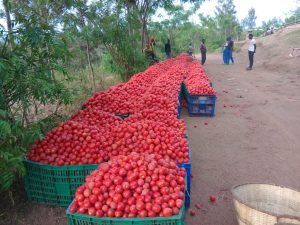
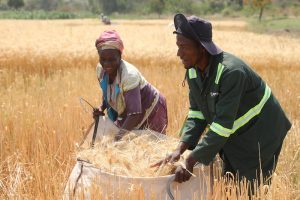
One of the primary ways SAIP solves farmers’ problems is by providing strategic financial investments that massively increase crop outputs. For example, SAIP II has been credited with igniting agricultural transformation, tripling crop yields, and restoring hope for farming families in Kirehe District.
In Huye District, a targeted 19 million RWF investment from SAIP created a remarkable “10x harvest” success story for local passion fruit farmers. This highlights how direct financial backing can alleviate the stagnation of low-yield farming and establish a foundation for financial stability.
Spearheading an Irrigation Revolution
A major hurdle for agricultural expansion has traditionally been water access and management. SAIP has tackled this constraint head-on by sparking an “irrigation revolution”. By introducing reliable infrastructure, SAIP has turned individual, struggling plots into models of sustainable agricultural growth. A prime example is Bernadette Umpfuyisoni, a dedicated farmer in Gatsibo District who had previously struggled for years to expand her fruit farm before SAIP’s intervention transformed her operations.
Integrating Value Chains and Market Access
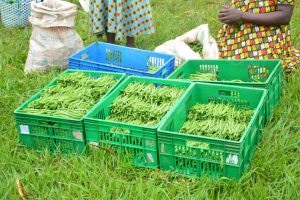
Growing more food is only half the battle; farmers also need reliable buyers and efficient markets. SAIP goes beyond field-level assistance by connecting farmers to broader value chains and driving an agro-industrial boom.

In Gatsibo District, SAIP played a vital role in strengthening the pumpkin value chain by linking local farmers with Iwacu Bakery Solution, a pioneering business that creates fortified baked goods using locally sourced pumpkins.
Furthermore, SAIP actively organizes dedicated knowledge-sharing sessions, such as those in Bugesera District, which are specifically designed to drive regional market access and collaborative agricultural growth.
Ultimately, these comprehensive modernizations are transforming rural livelihoods, directly strengthening household nutrition, and powering food security across districts like Nyamagabe and Huye,.
What This Means for the Sector
The continued success of the SAIP initiative signals a definitive paradigm shift for Rwanda’s agricultural sector, moving it away from traditional subsistence farming and toward a “robust agro-industrial economy”. For the broader sector, this proves that strategic, multi-layered investments—combining financial backing, infrastructure like irrigation, and knowledge-sharing—can successfully commercialize local agriculture. Furthermore, by successfully integrating supply chains and connecting raw crop producers directly to value-added agro-processors like Iwacu Bakery, the sector is demonstrating that farming can be a highly profitable, interconnected industry capable of driving both regional economic growth and national food security
About The Author


SUBSCRIBE TO OUR NEWSLETTER