From Conservation to Prosperity: How African-Led Solutions Are Redefining Wildlife Protection and Economic Growth

NAIROBI, KENYA — A new wave of conservation is emerging across Africa — one that is no longer defined solely by protecting wildlife, but by integrating environmental stewardship with economic opportunity and community empowerment.
This shift is highlighted in the 2025 Annual Report released by the African Wildlife Foundation (AWF), which outlines a transformative year in which African-led strategies are reshaping how conservation is designed and implemented across the continent.
At the center of this transformation is a clear principle:
Conservation must work for people as much as it works for nature
Across more than 8.6 million hectares under active conservation management, AWF reports that 90 percent of monitored wildlife populations are either stable or increasing — a strong indicator that this integrated approach is delivering results.
But beyond ecological metrics, the report reflects a deeper shift in governance.
African governments, communities, and youth are increasingly taking ownership of conservation agendas — ensuring that environmental priorities are aligned with long-term economic and social development goals.
In Rwanda, this model is already demonstrating measurable impact.
At Volcanoes National Park, a landmark initiative has expanded critical habitat for mountain gorillas through the restoration and donation of 27 hectares of land.
However, the significance of this effort goes beyond ecosystem restoration.
It represents a rights-based approach where conservation is directly linked to local economic transformation.
Communities that once faced persistent conflict with wildlife are now participating in biodiversity-driven enterprises, supported through business incubation programs and agricultural hubs.
This transition is not only reducing human-wildlife conflict — it is creating sustainable income pathways and strengthening local economies.
Similar models are taking shape across Central and West Africa, where climate change is intensifying resource pressures.
In the Sahel region, shifting pastoralist routes have historically triggered conflict with farming communities and encroached on protected ecosystems.
In response, locally driven solutions are emerging.
In northern Cameroon’s Faro landscape, a women-led initiative known as TANGO has successfully reduced conflicts between herders and farmers by 62 percent through community-based diplomacy.
This model is now being adapted in the Democratic Republic of the Congo, where mapping pastoralist routes is helping to balance mobility needs with ecosystem protection.
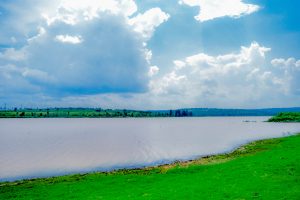
Across East Africa, water security is becoming a central focus of conservation efforts.
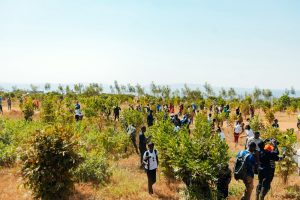
In Tanzania’s Kilombero Valley, local communities are restoring river ecosystems by planting indigenous trees and monitoring watershed health — protecting both agricultural productivity and wildlife corridors.
Meanwhile, in the transboundary Tsavo-Mkomazi landscape, farmers are rehabilitating degraded waterways and planting fruit trees, restoring vital water flows that sustain both livelihoods and wildlife populations.
These examples point to a broader transformation in how conservation is understood.
It is no longer viewed as a standalone environmental objective, but as a driver of economic resilience, conflict reduction, and community stability.
According to AWF leadership, this shift reflects Africa’s growing influence in shaping global conservation priorities.
By directly impacting over 142,000 people, supporting nature-based enterprises, and strengthening conservation governance, these initiatives demonstrate that long-term ecological success depends on aligning environmental goals with human development.
As Africa continues to navigate climate and development challenges, one message is becoming increasingly clear:
The future of conservation lies in integration
By placing communities at the center and linking ecosystems to opportunity, African-led models are not only protecting biodiversity — they are redefining what sustainable development looks like in practice.
About The Author


SUBSCRIBE TO OUR NEWSLETTER