One Health: A Shared Future for People, Animals, and the Planet

In Rwanda, cows are far more than just livestock; they are a profound symbol of wealth, social status, and cultural heritage
By Jean Claude HABIMANA
Long before it became a global talking point, the idea behind One Health existed quietly in everyday life, where communities understood that the health of their livestock, their land, and their families were closely tied together. Today, that same idea has taken center stage in global health conversations, evolving into a structured approach that recognizes one simple truth: human health is inseparable from the health of animals and the environment.
At its essence, One Health is about connection. For instance, One Health approach acknowledges that the air we breathe, the water we drink, the food we produce, and the animals we live alongside all shape our well-being. Diseases do not exist in isolation, and neither should the systems designed to prevent them. When forests are cleared, when wildlife habitats shrink, or when agricultural practices intensify without safeguards, the balance shifts, often in ways that bring humans and animals into closer, riskier contact. It is within these intersections that many modern health challenges emerge.
This is why One Health matters now more than ever. In recent decades, the world has witnessed how quickly local outbreaks can escalate into global crises. From COVID-19 to Ebola to Mpox, these events have demonstrated that health threats are not confined by borders. A virus that emerges in one region can travel across continents within days, carried by the very systems that connect the modern world. One Health offers a way to anticipate and manage such risks, not by reacting after the fact, but by understanding and addressing their root causes.
For Africa, the relevance of One Health is particularly profound. The continent is home to rich biodiversity, rapidly growing populations, and dynamic ecosystems where human, animal, and environmental interactions are part of daily life. In many regions, livelihoods depend directly on agriculture and livestock, making the health of animals a key determinant of economic stability and food security. At the same time, changing climates, urban expansion, and land use patterns are reshaping how people and ecosystems interact.

Rwanda’s Mountain Gorilla. Photo Visit Rwanda
These realities position Africa not only as a region of vulnerability but also as a place of leadership and innovation in applying One Health principles. Across the continent, countries are developing one health policies, integrating surveillance systems, strengthening veterinary and public health collaboration, and exploring community-based approaches to disease prevention. The experience of managing outbreaks such as Ebola has already demonstrated the importance of coordinated responses that extend beyond traditional health sectors.
Yet even the most well-designed strategies depend on one critical factor: communication. One Health is not only a scientific or policy framework, it is a concept that must be understood, adopted, and acted upon by communities, practitioners, and decision-makers alike. This is where advocacy and communication awareness become indispensable.
Translating One Health from concept to practice requires more than technical expertise. It requires the ability to explain why it matters in ways that resonate with farmers, health workers, policymakers, and the public. It involves building trust, sharing knowledge, and ensuring that information flows across sectors and levels of society. Without clear communication, even the most innovative solutions risk remaining confined to policy documents and conference discussions.
Advocacy plays a similarly important role. It brings visibility to the interconnected nature of health challenges and helps to mobilize resources and political commitment. By highlighting real-world examples and human stories, advocacy can bridge the gap between abstract concepts and tangible impact. In doing so, it creates the conditions necessary for sustained investment and coordinated action.
These themes were echoed at the recent One Health Summit held in Lyon, France, in April 2026. While the summit brought together global leaders, scientists, and organizations to discuss technical strategies and policy frameworks, it also reinforced a broader lesson that collaboration and shared understanding on One Health Approach is at the heart of effective implementation.
Global leaders highlighted the importance of breaking down silos between sectors and fostering partnerships that extend from the global to the local level. Discussions emphasized the role of data sharing, joint surveillance systems, and coordinated responses in addressing health risks that cross traditional boundaries. At the same time, there was recognition that these systems must be supported by strong communication networks that ensure information reaches those who need it most.

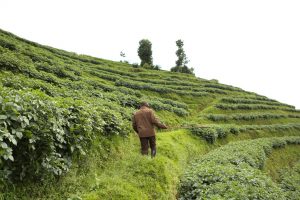
Wheat is indeed a significant crop grown in the volcanic highlands surrounding Volcanoes National Park in Rwanda.
Another key takeaway from the summit was the growing recognition of community engagement as a cornerstone of One Health. Local communities are often the first to encounter emerging health threats, making their awareness and participation essential. By involving communities in surveillance, prevention, and response efforts, countries can build more resilient systems that are capable of adapting to changing conditions.
The Lyon gathering also highlighted the importance of education and capacity building. Preparing the next generation of professionals to work across disciplines is essential for sustaining the One Health approach. This includes not only scientists and healthcare workers, but also communicators, media, educators, and advocates who can translate complex ideas into accessible messages. As the conversations in Lyon demonstrated, One Health is not a single solution but a way of thinking, one that encourages integration, collaboration, and foresight. It is an approach that recognizes that the challenges of today are interconnected, and that addressing them requires equally interconnected responses.
For Africa, this perspective offers both an opportunity and a pathway forward. By strengthening communication, investing in advocacy, and building systems that reflect the realities of interconnected health, countries can not only respond to current challenges but also shape a more resilient future. In the end, One Health is about more than preventing disease. It is about creating a world where the health of people, animals, and the environment is protected through shared understanding and collective action. The lessons from Lyon serve as a reminder that while the challenges are complex, the path forward lies in working together, across disciplines, across borders, and across communities.
About the author
Jean Claude HABIMANA, is a Science Communications Expert in Nature-based Solutions, One Health, Clean Water & Renewable Energy, Sustainable Agriculture, Gender & Youth, Food Systems, Biotechnology, Circular Economy and Policy Briefs Development.
About The Author


SUBSCRIBE TO OUR NEWSLETTER