Rwanda’s Crop Output Rises in 2026 Season A as Farming Gaps Persist

Rwanda has registered a modest increase in the production of key food crops during the 2026 Season A, according to new data released by the National Institute of Statistics of Rwanda (NISR).
In its seasonal agricultural survey published on April 15, 2026, NISR reports that staple crops such as bananas, potatoes, and sweet potatoes all recorded growth compared to the same period in 2025, signaling steady progress in agricultural output.
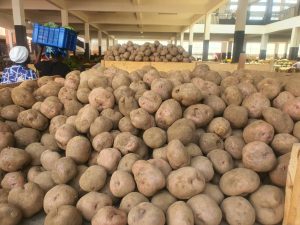
Banana production rose by 4.1 percent to exceed 1.3 million tonnes, maintaining its position as one of Rwanda’s most significant food crops. Potato output increased by 3.3 percent to 491,564 tonnes, while sweet potato production grew by 3 percent, reaching 675,768 tonnes.
The survey indicates that over one million hectares were cultivated with seasonal crops across the country. In addition, 501,000 hectares were dedicated to perennial crops, including coffee, tea, and bananas, while 84,000 hectares were reserved for permanent pasture.
Other staple crops also posted gains, albeit more modestly. Bean production rose by 0.5 percent to 229,396 tonnes, while rice output increased by 2 percent to 71,080 tonnes. Maize remained widely cultivated, covering 245,405 hectares, alongside beans (327,907 hectares), cassava (236,357 hectares), bananas (267,676 hectares), sweet potatoes (96,217 hectares), and potatoes (55,310 hectares).
Despite the overall growth in production, the report highlights persistent structural challenges in the agriculture sector. Adoption of improved seeds remains limited, with only 37 percent of farmers nationwide using them. The disparity is particularly pronounced between large-scale farmers—where adoption stands at 82.6 percent, and smallholder farmers, who account for the majority of producers but report a significantly lower rate of 35.2 percent.
Use of agricultural inputs shows a mixed picture. Organic fertiliser continues to dominate, with 90.2 percent of farmers relying on it, while 67.2 percent reported using chemical fertilisers. Pesticide use stood at 46.9 percent, again with higher uptake among large-scale farmers.
Irrigation remains one of the weakest links in the sector, with only 14.4 percent of farmers reporting its use during the season. However, soil conservation practices appear widely adopted, with 92.4 percent of farmers implementing at least one method. Agroforestry is also gaining ground, practiced by 53.4 percent of farmers.
Mechanisation, however, remains minimal at just 1.7 percent, underscoring ongoing constraints in modernising agricultural production.
The production gains come against a backdrop of rising food prices. NISR recently reported a 9.2 percent increase in food prices in March 2026 compared to the same period last year, raising concerns about affordability despite improved output.
The seasonal agricultural survey is conducted regularly to monitor performance in the sector and guide policy decisions aimed at enhancing productivity and strengthening food security in Rwanda
About The Author


SUBSCRIBE TO OUR NEWSLETTER