Women Power 76% of Sub-Saharan Africa’s Agrifood Workforce

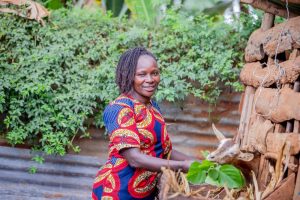
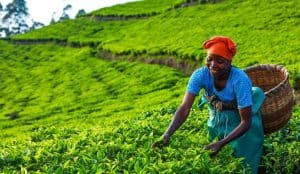
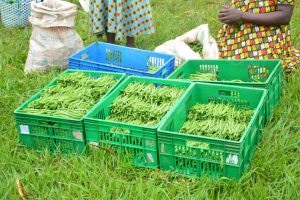
A new report has revealed that women make up the backbone of agrifood systems in sub-Saharan Africa, accounting for 76 percent of the workforce, the highest share globally, even as they continue to face systemic barriers that limit their productivity and wellbeing.
The findings are contained in The Status of Women in Agrifood Systems in Sub-Saharan Africa report, launched during the first World Food Forum–Africa, held alongside the 34th Session of the FAO Regional Conference for Africa.
The report, developed by the Food and Agriculture Organization (FAO), the Natural Resources Institute, and African Women in Agricultural Research and Development, provides new data on women’s labour, food security, nutrition, and wellbeing across the region, while outlining policy actions to address persistent gender gaps.
Women drive agrifood systems
According to the report, women’s role extends beyond formal employment, particularly in rural areas where they are four times more likely than men to engage in off-farm agrifood activities. Their contributions also include unpaid care work, such as fetching water, caring for children, and supporting elderly family members, tasks that are critical to sustaining food systems and ensuring household nutrition.
The report’s release coincides with the International Year of the Woman Farmer, which aims to mobilize global action toward gender equality in agriculture.
“This International Year is more than a celebration. It is an invitation to do more, better, and more consistently for women who are sustaining agrifood systems and feeding the world,” said Beth Bechdol at the launch.
Persistent barriers and inequalities
Despite their dominant role, women in Africa’s agrifood sector face significant challenges. The report highlights limited access to land, resources, and financial services, alongside higher exposure to food insecurity compared to men.
Social protection also remains critically low. Only 13 percent of women in the sector receive cash benefits, while fewer than 7 percent have access to pensions, underscoring widespread vulnerability.
Even so, women continue to adapt by diversifying income sources, forming community savings groups, and adopting sustainable farming practices.
“Women’s capacity to cope is often a response to structural failures rather than a choice,” said Clara Park. “Our focus must shift from celebrating individual endurance to implementing the collective solutions that drive systemic change.”
The report calls for urgent policy and investment measures to create more inclusive and gender-responsive agrifood systems. Key recommendations include scaling up social protection, strengthening legal frameworks to address gender-based violence, and promoting gender-transformative approaches that challenge discriminatory norms.
Closing gender gaps in productivity and wages could have significant economic benefits, the report notes. It estimates that such reforms could boost Africa’s GDP by 2.58 percent, equivalent to $53 billion, while reducing food insecurity by nearly 4 percent.
At the close of the forum, Fatmata Binta emphasized the urgency of action.
“Investing in women farmers is not a side conversation. It is central to ending hunger, building climate resilience, and creating a more just and inclusive Africa,” she said. “This must be the moment we move beyond words into action.”
About The Author


SUBSCRIBE TO OUR NEWSLETTER