Kigali Residents Urged to Step Up Malaria Prevention as Cases Remain High

Residents of the City of Kigali have been urged to strengthen preventive measures against malaria, as health officials warn that the capital remains among the areas with a high burden of the disease despite ongoing interventions.
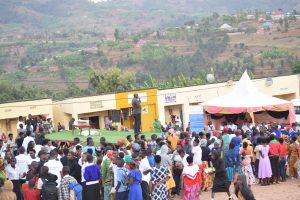
The call was made on April 25, during activities to mark World Malaria Day 2026, held in Gahanga Sector, Kicukiro District. The event combined community work (Umuganda) with malaria prevention efforts, including environmental cleaning, household sensitization, and mosquito net distribution.
READ ALSO: Malaria Incidence in Rwanda Rises from 45 to 76 per 1,000 in 2023/24–2024/25

Urujeni Martine, Vice Mayor of the City of Kigali in charge of Socio-Economic Affairs, said the city deliberately aligned Umuganda with malaria awareness to mobilize residents into action.
“Today’s community work was combined with World Malaria Day activities to further sensitize residents on malaria prevention, especially since districts in the City of Kigali are among those with relatively high malaria cases nationwide,” she said.
READ ALSO: 50% of Rwanda’s Malaria Patients Treated by Community Health Workers in 2024–2025
She explained that Gahanga Sector was specifically selected due to its high malaria burden. Authorities, working alongside Rwanda Biomedical Centre (RBC) and partners, carried out activities such as clearing bushes that harbor mosquitoes and visiting households to identify hidden mosquito breeding sites.
“We showed residents places they may not know are breeding grounds for malaria-carrying mosquitoes so they can better protect themselves,” she added.

According to the Vice Mayor, these interventions are not one-off efforts but part of ongoing, integrated measures that also include indoor residual spraying and the distribution of insecticide-treated mosquito nets.
She emphasized that prevention remains key.
“We urge all residents to reinforce malaria prevention measures. Indoor spraying is for their own benefit and protection, it should not be resisted. Mosquito nets must be used properly for their intended purpose. Prevention is better than treatment,” she said.
Health officials say the situation in Kicukiro District is particularly concerning.

Dr. Aimable Mbituyumuremyi, Division Manager for Malaria and Other Parasites at RBC, revealed that the district recorded 65,297 malaria cases between July 2025 and March 2026, ranking fourth nationwide.
“Kicukiro accounts for about 7 percent of all malaria cases in the country,” he said, noting that some individuals fall ill up to three times a year, affecting productivity and education.
At sector level, Gahanga emerged as a hotspot, recording about 15,000 cases over the same period, followed by neighboring Masaka Sector.
READ ALSO: New Malaria Drugs Deliver Results in Rwanda’s Treatment Shift
Dr. Mbituyumuremyi attributed the high prevalence partly to proximity to wetlands but stressed that human activity is a major contributing factor.
“We found that it is not only wetlands that are the problem. Water that residents draw from marshlands and bring into their homes, where it stagnates, becomes an even more dangerous breeding ground for mosquitoes,” he explained.

To curb the trend, RBC has rolled out a series of interventions, including nationwide distribution of mosquito nets targeting high-burden areas, strengthened community-based treatment through health workers, and the introduction of additional malaria medications to complement existing treatments such as Coartem.
“Ending malaria requires collective responsibility. Everyone must play a role if we are to defeat the disease,” Dr. Mbituyumuremyi said.
Recent data from RBC shows that malaria cases increased sharply from 610,832 in 2023–2024 to 1,131,314 in 2024–2025, before dropping to 928,616 in the first quarter of 2026. Despite the decline, the figures remain significantly higher than the 619,559 cases recorded in 2022–2023.
READ ALSO: New Mosquito Repellent Tools Offer Breakthrough in Malaria Control
Malaria incidence also rose from 45 cases per 1,000 people in 2023–2024 to 76 per 1,000 in 2024–2025, highlighting a resurgence that continues to challenge control efforts.
Nationwide data indicates disparities in distribution, with Gisagara District recording the highest number of cases at 216,350, followed by Gasabo (98,077), Bugesera (74,073), and Kicukiro (65,297). Within Kigali, Nyarugenge District ranked eighth with 40,518 cases.
In contrast, Nyabihu reported the lowest burden at 2,521 cases, followed by Burera (3,680) and Rubavu (5,169).


About The Author


SUBSCRIBE TO OUR NEWSLETTER