Africa’s Vaccine Success Against Cancer and Malaria Faces Funding Threat

Africa’s routine immunization programmes are delivering measurable public health gains, saving millions of lives and shielding communities from vaccine-preventable diseases. But health experts warn that these achievements could be undermined by growing funding pressures.
Over the past two decades, immunization coverage across the continent has expanded significantly. Since 2000, the number of vaccine-preventable diseases included in routine schedules has increased from eight to 13. The introduction of newer vaccines, particularly against malaria and the human papillomavirus (HPV), is accelerating progress in protecting vulnerable populations, especially children and adolescent girls.
Data from Gavi, the Vaccine Alliance and World Health Organization show that HPV vaccines alone have helped avert nearly one million cervical cancer deaths in 29 African countries as of 2024. At the same time, malaria vaccination programmes rolled out in 25 countries are already showing early success, including reductions in severe illness and hospital admissions.
Rapid progress in HPV vaccination
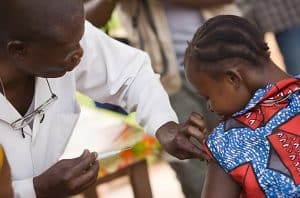
HPV vaccination efforts have scaled up rapidly in recent years. Countries such as Nigeria, Ghana, Ethiopia and Angola have reached millions of girls within weeks through school-based campaigns and integrated delivery systems.
Since 2019, the number of African countries offering HPV vaccines has nearly tripled, from 12 to 35, while coverage has surged from just 5% in 2014 to 47% in 2024. This places Africa second globally in HPV vaccine coverage, behind only the Americas.
Beyond health outcomes, the economic benefits are substantial. HPV vaccination programmes have generated an estimated $1.8 billion in savings through reduced treatment costs, improved productivity, and lives preserved.
Malaria vaccines show early impact
Malaria vaccination is also gaining momentum. Since 2023, more than 52 million doses have been administered in high-burden and fragile settings through programmes supported by Gavi and implemented in partnership with WHO, UNICEF and national governments.
Countries including Kenya, Malawi, Ghana and Cameroon are reporting declines in severe malaria cases and hospitalizations. In Burkina Faso, where the vaccine has been rolled out nationwide across all 70 health districts, authorities report a 32% drop in malaria cases between 2024 and 2025.
The impact has been particularly significant among children under five, with malaria-related deaths nearly halved. The country’s Ministry of Health estimates household savings of more than $26.6 million in direct healthcare costs.
“For decades, malaria placed a heavy burden on Burkina Faso’s health system and on families,” said Robert Lucien Jean-Claude Kargougou, noting that expanded vaccination, alongside mosquito net distribution and community interventions, has led to a “drastic and historic decline” in cases and deaths.
Momentum built on partnerships
Health leaders say the progress reflects strong collaboration between governments, international organizations and communities.
“HPV and malaria vaccines have enabled us to open up new frontiers in healthcare,” said Thabani Maphosa. He credited governments, healthcare workers and community trust for the success, but warned that these gains are now at risk.
Similarly, Mohamed Janabi emphasized that vaccines remain among the most effective tools available. “HPV vaccination brings us closer to eliminating cervical cancer, while malaria control is entering a new phase driven by country ownership,” he said.
Funding gaps threaten progress
Despite the progress, experts warn that future gains are far from guaranteed. Africa aims to expand vaccine coverage further, with plans to introduce HPV vaccines in 10 more countries and malaria vaccines in five additional countries by 2030. The goal is to reach 50 million children with full malaria vaccination by the end of the decade.
However, financial constraints pose a serious challenge. The malaria vaccination programme currently faces a nearly 30% budget shortfall, forcing a scale-back in support.
While many lower-income countries are increasing domestic investment in immunization, organizations such as the Africa Centres for Disease Control and Prevention are urging sustained funding and stronger resource mobilisation to protect recent gains.
Without additional domestic and international financing, health officials warn, hundreds of thousands of children could be left vulnerable to preventable diseases, jeopardizing years of progress in the fight against cervical cancer and malaria.
About The Author


SUBSCRIBE TO OUR NEWSLETTER