Borrowed Lights and Bitter Truths: The 1994 Genocide Against the Tutsi in Kinyinya

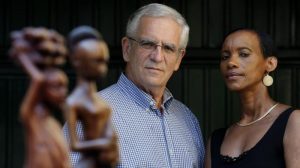
Semigabo Edouard, A survivor of the Genocide recounting the History of the Former Kinyinya Sector
“The Truth and History that Characterized the Genocide Against the Tutsi in the Former Kinyinya Sector: They Used to Brag About Having Electricity and Water, Yet They Belonged to the Germans ( Deutche-Welle station)”
The commemoration period of the 1994 Genocide against the Tutsi is a vital time to collectively reflect on the tragic history that characterized Rwanda, allowing us to look back at where we came from and where we are heading. This is also a crucial moment to teach the younger generation about Rwanda’s history—both the good and the bad—while making a collective resolution that the horrific events, including the Genocide, will never happen again.

Just like everywhere else in the country, the former Kinyinya Sector is a place where residents will never forget the devastating impact of the Genocide. As Kinyinya’s history reveals, the events were horrific because Habyarimana’s soldiers, alongside notorious Interahamwe militias—including those who walked around covered in thorns—viciously attacked and killed the Tutsis living on the Kinyinya hill. When visiting the Kinyinya memorial site, you will find a list of 411 names of Tutsis murdered on that hill, though this list continues to grow as more victims’ names are identified with each passing year.
On the evening of the 32nd Commemoration of the Genocide against the Tutsi, on April 25, 2026, the residents of Kinyinya gathered once again at the G.S Kinyinya Primary and Secondary School. They gathered to reflect on the painful “Way of the Cross” they endured and the dark history that plagued Rwanda until the Genocide claimed the lives of over a million Rwandans targeted simply for how they were born.

In a testimony provided by Edouard Semigabo, a Genocide survivor, he revealed many details of the killings in Kinyinya. When recounting the murder of his family members, including his parents, he was overcome with emotion and fell silent, asking the Master of Ceremonies (MC) to speak on his behalf.
His account described how they were hunted down in their hiding place at the German-held Compound (Former Deutche-Welle Radio Station) by attackers wielding spears. Upon discovering them, one of the killers shot Semigabo’s father with a traditional arrow and then proudly boasted as if he had accomplished a heroic deed.

Mr. Edouard Semigabo recounted, “On April 6, when President Habyarimana traveled to Arusha, Tanzania for ongoing talks, we saw soldiers from Kami Camp line up at 4:00 PM and head towards Nyarutarama”. He continued, “No one knew where they were going because it was getting dark”. He added, “Whether they were going to surround the Inkotanyi, we do not know”. He further explained, “Shortly after Habyarimana’s plane shot around 8:00 PM on the night of the sixth, two Tutsis living near the gates of the Kami Military Camp were immediately murdered“.
From that moment, the killings began instantly, and it became evident that the Tutsis living in Kinyinya were well known to their attackers.
The perpetrators systematically went through the area reading out names, clearly proving they had targeted them in advance.
He also recalled the names of the notorious Interahamwe leaders who worked closely with the Habyarima soldiers in the slaughter. Any elder who listened to Edouard’s testimony would undoubtedly remember the history as if it were happening right before their eyes.

The People of Kinyinya Always Bragged About Having Electricity and Water, Yet They Belonged to the Germans
Tracing back to the history before the Genocide, when the Germans first arrived at the Kinyinya Hill, Edouard Semigabo explained the conditions of the surrounding areas.
In the period preceding the Genocide against the Tutsi, the communes of Rubungo, Kacyiru, Gikomero, and Bumbogo all shared a deep poverty that had been entrenched by the Kayibanda and Habyarimana regimes—governments defined by impoverishing some while enriching others.
This disparity was especially apparent in the distribution of electricity and water.
The citizens of Kinyinya never actually had access to electricity or water themselves, but they would boast simply because they lived next to the German Radio station, which had visible lights.
He explained, “Compared to the communes surrounding us, Kinyinya seemed superior because we ‘had’ water and electricity. However, no ordinary citizen possessed them except the Germans working at Deutsche Welle. You would find us bragging to the residents of Kagugu and Kibagabaga about our water and electricity, but we were boasting about things belonging to the Germans. They were the ones who had these utilities, while we still used tiny kerosene lamps and fetched muddy water”. At that time, the only locals nearby who actually had electricity were individuals like Nsekarije and Katabarwa, while for everyone else, such amenities were merely a dream.
The History of Kinyinya is Long

The Executive Secretary of the Kinyinya Sector, Mr. Charles Havuguziga, emphasized that the act of remembrance is a powerful foundation that unites all generations. It helps both the youth and the elderly understand the history the country endured and search for sustainable solutions to ensure the Genocide never happens again.
He stated: “Commemorating and paying tribute to our loved ones is a way of restoring the dignity they were stripped of. It is a time to learn from history, to understand where our country came from and how it was destroyed by bad leadership. This provides us with profound lessons, especially for the youth, leaving everyone with the homework to fight anything that could cause a recurrence of the Genocide”.
He expressed deep gratitude to the RPF Inkotanyi for their immense role in stopping the Genocide, and he urged Rwandans to continue working together, prioritizing unity, reconciliation, and the values that build the nation.
He added: “We remember the 1994 Genocide against the Tutsi while striving for Rwandans to remain united and to build hope for the future. We must condemn all actions that could destroy our unity and delay the country’s development”. He also reminded both the young and the old that they must actively avoid and fight against genocide ideology, as it directly threatens the unity and progress of Rwandans.

In another presentation detailing the history of the Genocide, Eng. Albert Musabyimana highlighted that understanding history is essential, particularly for the youth, to prevent the past from repeating itself.
He explained that before colonialism, Rwandans lived together in unity, but colonial powers divided the people, planting the roots of discrimination that eventually culminated in the Genocide.
He also reminded the audience that in 1990, the RPF Inkotanyi launched the liberation struggle at a time when Tutsis were already being murdered under the false accusation of being RPF accomplices.
He pointed out that from 1990 until 1994, the systematic killing of Tutsis continued while the international community merely watched. He stated: “Even today, we must look within ourselves for solutions. We must fight genocide deniers and defeat them using truth and unity”.

A message delivered by the leadership of Ibuka in the Kinyinya Sector underscored that commemoration is the duty of every Rwandan and an obligation to restore value to the victims of the Genocide. The representative stated: “Remembering the victims of the Genocide against the Tutsi is a great debt owed by all Rwandans to give them the dignity and respect they were denied simply for being born the way they were”. He also thanked the Government of National Unity for its efforts in helping Genocide survivors rebuild their lives and restore their hope, urging everyone to stand firmly against those who still harbor genocide ideology.
The commemoration event was attended by Honorable Therese Uwizeye as the guest of honor, along with local government leaders—including the President of the Sector Advisory Council and Sector Councilors—security forces, Ibuka leadership at the Sector and Cell levels, and a large number of citizens. They all gathered with the shared purpose of honoring the victims of the Genocide and safeguarding their history.

Honorable Therese Uwizeye, the guest of honor, praised the national leadership for its role in preventing Rwanda from slipping back into its dark history.
She stated: “We will never stop reflecting on the sacrifice of the Inkotanyi, who willingly put their lives on the line so that we could have a secure country today. The Government of National Unity has implemented strategies to rebuild a country that had been completely destroyed, and it is in this framework that it established the Commemoration program so we can continuously reflect on the bitter history of our nation while uniting to ensure we never return to it”.
She urged the youth to keep pouring their energy into fighting evil and following in the footsteps of the country’s heroes. She emphasized that although there are still people exhibiting genocide ideology both within the country and across the region, the truth will ultimately prevail even if history is distorted.
The commemoration event concluded with a powerful message calling for the continuous pursuit of unity among Rwandans, the ongoing rebuilding of a country founded on truth and peace, and the empowerment of the youth to serve as the strong foundation of a future free from division.


About The Author


SUBSCRIBE TO OUR NEWSLETTER