Inside Rwanda’s Drive to Achieve a 53% Emissions Reduction by 2035

Rwanda has raised its climate ambitions under its latest Nationally Determined Contribution (NDC 3.0), committing to reduce greenhouse gas emissions by 53 percent by 2035 compared to a business-as-usual (BAU) scenario, as the country seeks to strengthen climate resilience and accelerate low-carbon development.
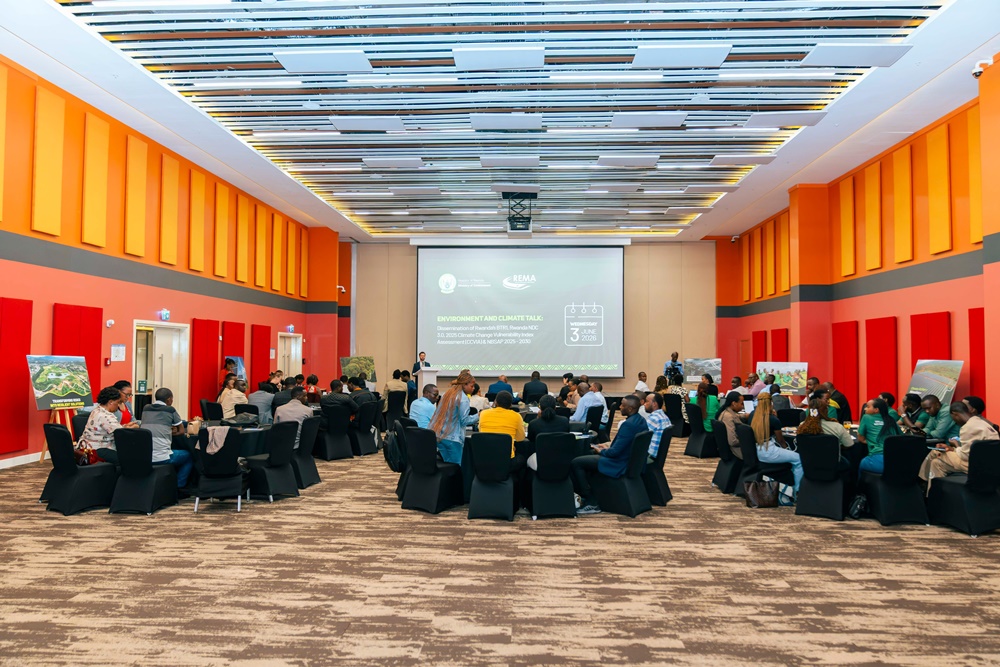
The new target, unveiled on June 04, 2026, during the dissemination of key national climate and environmental reports in Kigali, marks a significant increase from Rwanda’s previous commitment under NDC 2.0, which aimed to cut emissions by 38 percent by 2030.
According to the Rwanda Environment Management Authority (REMA), the updated climate action plan seeks to reduce emissions by 14.86 million tonnes of carbon dioxide equivalent (tCO₂e) by 2035, compared to the earlier target of approximately 4.4 million tonnes by 2030.
NDCs are climate action plans submitted by countries under the Paris Agreement, outlining measures to reduce greenhouse gas emissions and adapt to climate change. Countries are required to update their commitments every five years.
Rwanda first submitted its Intended Nationally Determined Contribution in 2015 before updating it in 2020 through NDC 2.0. The newly developed NDC 3.0 extends the country’s climate commitments through 2035.
To achieve the new target, Rwanda estimates it will require approximately US$12 billion in financing between 2025 and 2035. Of this amount, US$7 billion will be needed between 2025 and 2030, while an additional US$5 billion will be required from 2030 to 2035.

According to Olive Byukusenge, Greenhouse Gas Inventory Officer at REMA, Rwanda will finance part of the commitment through domestic resources, while the majority will depend on international support.
“The country committed to use its own resources equivalent to 7 percent, while external financial and technical support will contribute 46 percent in order to achieve the 53 percent reduction target,” she said.
The financing structure means that 18 percent of the overall NDC implementation will be funded through unconditional domestic measures, while 82 percent will rely on conditional measures requiring international support.
Rwanda plans to allocate about 40 percent of the investment toward mitigation actions aimed at reducing emissions and 60 percent toward adaptation measures designed to strengthen resilience against climate impacts.
Data presented during the dissemination show that Rwanda’s total greenhouse gas emissions, including land use, land-use change and forestry (LULUCF), reached 7,832.9 gigagrams of CO₂ equivalent in 2022, up from 2,395.1 gigagrams in 2006.
Agriculture remained the largest source of emissions, accounting for 39 percent of total emissions in 2022, followed by energy at 18 percent, waste at 13 percent and industrial processes and product use at 2 percent. The forestry sector remained the only net carbon sink, removing more emissions than it produced.
Methane accounted for 84 percent of total greenhouse gas emissions, making it the dominant greenhouse gas in Rwanda’s emissions profile.
Officials attributed the increase in emissions largely to population growth and economic expansion, although mitigation efforts in forestry and land management have helped offset part of the increase.
Despite rising emissions, Rwanda reported progress toward its existing climate commitments. Under NDC 2.0, the country targeted a 38 percent reduction in emissions by 2030. By 2024, Rwanda had already achieved reductions of 1.59 million tonnes of CO₂ equivalent, representing 36 percent of the 2030 target.
The country also mobilized 93.3 percent of its climate finance target for the 2020–2025 period.
Renewable energy now contributes 51 percent of Rwanda’s energy mix, while forest cover has reached 30.4 percent. Areas under irrigation have expanded to 71,500 hectares, and insurance coverage for crops and livestock has increased.
Mitigation efforts under NDC 3.0 will focus on reducing emissions across key sectors of the economy.
The Energy Sector will prioritize expanding renewable energy generation, improving energy efficiency and promoting cleaner transport systems to reduce greenhouse gas emissions.
The Industrial Processes and Product Use sector aims to reduce emissions by substituting high-impact greenhouse gases and improving industrial production processes.
The agriculture sector will focus on improved livestock management, better soil practices and enhanced manure management systems to lower greenhouse gas emissions.
The waste sector will strengthen waste treatment systems and promote waste-to-energy technologies to reduce emissions while generating additional energy resources.
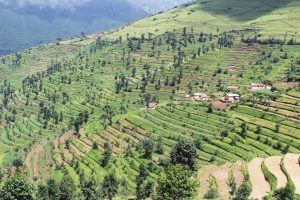
Meanwhile, the forestry sector will increase carbon sequestration through sustainable forest management covering 42,652 hectares, afforestation on 47,300 hectares and agroforestry initiatives across 27,000 hectares. These measures are expected to improve biodiversity while enhancing the country’s capacity to absorb carbon emissions.
Rwanda is also scaling up adaptation measures in response to growing climate risks.
The country remains highly vulnerable to floods, droughts and landslides. Between 2014 and 2023, climate-related disasters caused 1,595 deaths, injured 2,368 people, damaged more than 62,000 houses and destroyed over 38,000 hectares of crops.
Planned adaptation interventions include accelerating water management through land restoration, flood protection infrastructure, expanded irrigation and enhanced water quality monitoring.
The measures will also promote universal climate-resilient water and sanitation services through solar-powered treatment systems and flood-proofed infrastructure.
In agriculture, the country plans to expand climate-resilient seeds, improved livestock breeds, irrigation, soil conservation practices and agricultural insurance to strengthen food security and resilience to climate shocks.
Additional interventions include hazard-informed land-use planning, forest restoration and expanded agroforestry to reduce flood risks and sustain ecosystems.
Rwanda also plans to climate-proof road networks, expand public transport systems, establish multi-hazard early warning systems and district climate hubs, and mainstream climate adaptation across sectors.
Further measures include upgrading informal settlements through resilient planning, improved stormwater management systems and green and blue infrastructure, while promoting climate-compatible mining practices and rehabilitation of degraded mining sites.
The health sector will benefit from strengthened climate-proof health services, improved disease surveillance systems and enhanced early warning mechanisms aimed at reducing climate-related health risks, including disease outbreaks, maternal mortality and non-communicable diseases.

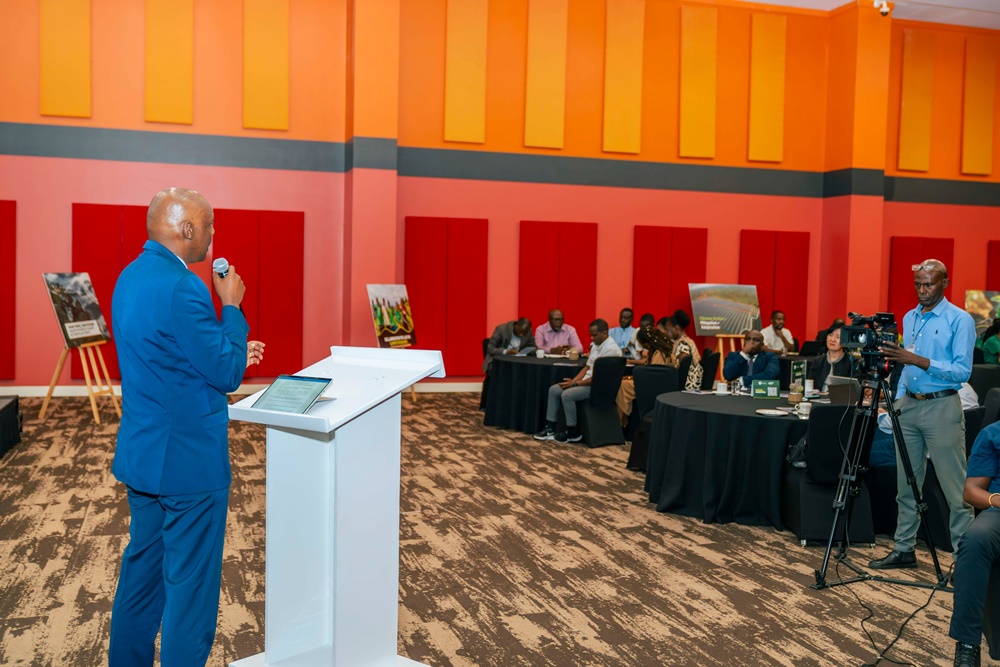
Thadée Twagirimana, Acting Director General for Environment and Climate Change at the Ministry of Environment, said the reports demonstrate both the scale of climate challenges facing Rwanda and the country’s readiness to address them.
“The presentations and discussions have reaffirmed that climate change and biodiversity loss remain among the most pressing challenges of our time,” he said.
He noted that the findings provide valuable evidence to guide resilience-building efforts and accelerate low-carbon development while protecting biodiversity and ecosystems.
Twagirimana emphasized that achieving the country’s climate ambitions would require collective action from government institutions, local authorities, development partners, the private sector, civil society, academia and communities.
About The Author


SUBSCRIBE TO OUR NEWSLETTER