Rwanda Secures Landmark Formula 1 Deal as Africa’s Support Expands
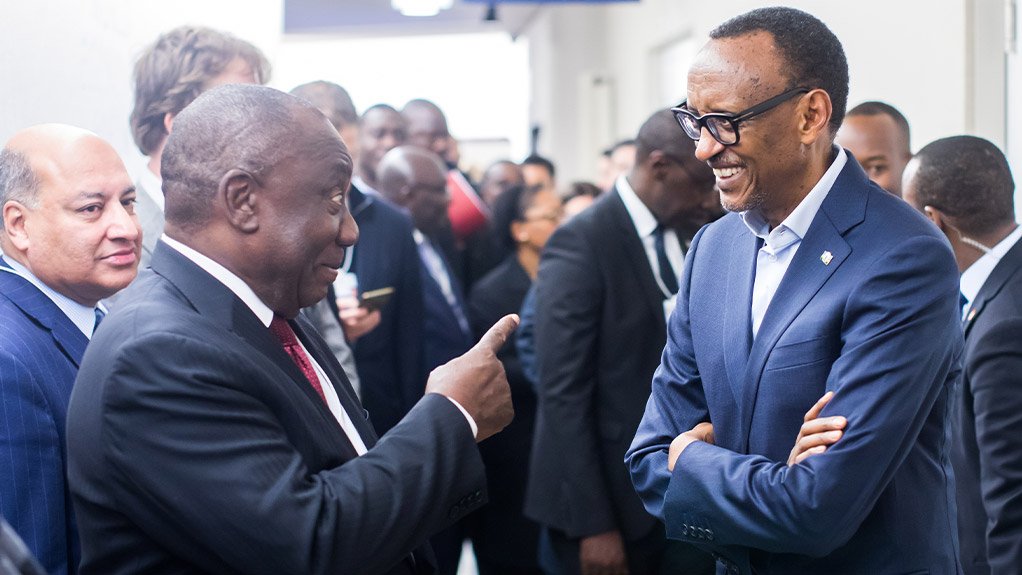
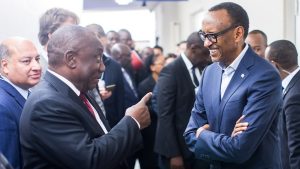
President Cyril Ramaphosa congratulated Kagame, the Rwandan government and people on securing the 10-year hosting rights.
KIGALI / PRETORIA – Formula 1 in Rwanda marks a return to Africa after more than three decades. Rwanda signed a 10-year agreement to host the African Grand Prix beginning in the early 2030s. The announcement, made this week in Kigali, drew warm congratulations from South African President Cyril Ramaphosa. He offered his country’s experience and support for the continental milestone.
Bugesera will host a brand-new, purpose-built circuit about 40 kilometers south of Kigali, beside the new international airport under construction. Designed by former Formula 1 driver Alex Wurz with Tilke, it spans about six kilometers and 17 corners. The project supports Formula 1 in Rwanda. Organizers say the design fits the hills and lakeside setting to create a flowing roller-coaster experience with good spectator views. The venue aims to meet FIA Grade 1 standards within a wider development that includes motorsport facilities, karting and tourism.
Rwandan President Paul Kagame described the agreement as a defining moment for the continent. “Today belongs to Africa,” he said. “For more than three decades, the world’s premier motorsport championship has raced without this continent, and that changes with this agreement.” He emphasized that the project aims beyond a single annual race weekend, positioning the circuit and surrounding infrastructure as long-term drivers of jobs, skills development, tourism and business growth across the region.
Formula 1 President and CEO Stefano Domenicali called the deal a landmark achievement that will finally place the championship on every inhabited continent. He stressed that the partnership was built on years of collaboration to ensure sustainable foundations and lasting economic and social benefits through tourism, investment and local opportunity.
South Africa’s response arrived swiftly. In a public message, President Cyril Ramaphosa congratulated Kagame, the Rwandan government and people on securing the 10-year hosting rights. He noted that South Africa had staged the last Grand Prix on the continent in 1993 at Kyalami and said his country stood ready to share expertise if invited. Ramaphosa framed the development as recognition of both Rwandan capabilities and broader African potential, adding that the African Grand Prix would join other successful Rwandan international events such as the Tour du Rwanda cycling race.
The 1993 South African Grand Prix remains the final Formula 1 race held in Africa. Alain Prost won that event for Williams at Kyalami in what proved to be the last championship round on the continent amid changing economic and logistical realities. Earlier African races took place primarily in South Africa, with occasional events elsewhere in the mid-20th century. Efforts in recent years by several African nations to bring Formula 1 back had not succeeded until Rwanda presented a comprehensive, long-term plan backed by government commitment and aligned infrastructure development.
The Bugesera project is designed as more than a race track. Officials describe it as a year-round destination capable of hosting major events, with an expected spectator capacity in the region of 100,000 for Grand Prix weekends. Its proximity to the new airport is expected to ease logistics for international visitors and teams. Designers have highlighted the natural topography—two hills with a lake below—as a key advantage that allows the circuit to blend with the landscape rather than impose upon it.
For Rwanda, the agreement continues a strategy of using high-profile sports events to raise the country’s profile. The nation has previously hosted major cycling championships, basketball competitions and international gatherings. Supporters of Formula 1 in Rwanda argue it will create engineering opportunities, inspiring a new generation of motorsport talent.
No exact inaugural date has been confirmed, with organizers stating only that the first race is expected once the circuit is completed in the early 2030s. Further details on construction milestones, the final track layout and race-weekend arrangements will follow as development progresses. Consultation with teams and drivers is anticipated before the design is locked in.
The return of Formula 1 to Africa closes a long absence and opens a new chapter. With South Africa publicly offering partnership and Rwanda committing to a decade-long presence, the African Grand Prix is positioned not only as a sporting event but as a platform for broader continental visibility and development.
About The Author


SUBSCRIBE TO OUR NEWSLETTER