The Hard Truths of African Integration: Kagame Slams “Self-Inflicted” Barriers and Calls for a Mindset Revolution
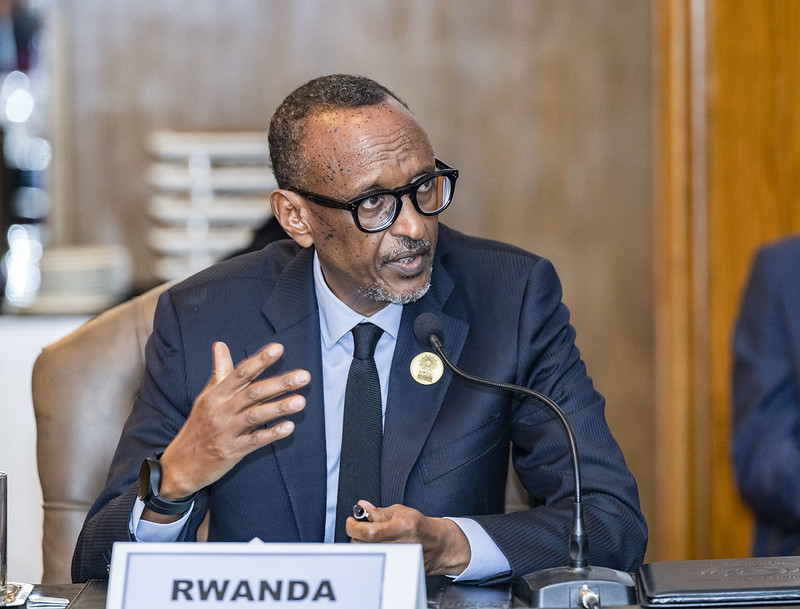
On August 24, 2026, President Paul Kagame did more than host a press conference; he delivered a scathing indictment of the continental status quo. Speaking to a room of veteran journalists and digital content creators, Kagame used this engagement as a pulse-check for Rwandan stability and a strategic manifesto for African self-determination.
He lauded the Rwandan people for “standing tall” under the weight of external constraints, framing domestic resilience not just as a national achievement, but as a necessary prerequisite for sovereignty.
This was a clear signal to the world: Rwanda’s internal cohesion is the bedrock upon which it confronts a global landscape characterized by arrogance and external interference.
Yet, as the session progressed, Kagame pivoted from domestic consolidation to a blunt analysis of why the broader African project remains paralyzed by friction and broken trusts.
The AfCFTA Paradox: When Framework Meets Friction
The African Continental Free Trade Area (AfCFTA) represents a critical bottleneck in the continent’s trajectory.
While Kagame acknowledged the “good beginning” of establishing a policy framework, he characterized the current state of implementation as a failure of will.
The gap between policy and practice is where African GDP growth goes to die. The President dismissed standard administrative excuses as “self-inflicted” barriers, specifically targeting the absurdity of leaders who cite “security concerns” as a reason to close borders while simultaneously posturing as champions of integration.
Excuses vs. Realities in African Trade:
- The Security Excuse: Using border closures to project control, which Kagame identifies as a choice that actively sabotages regional prosperity.
- The Administrative Excuse: Hiding behind complex paperwork to mask a lack of integrationist mindset.
- The Reality: The “slow pace” of movement is not a technical error; it is a lack of belief in the fundamental benefits of unity.The transition from policy friction to physical friction is best illustrated by the visceral reality of moving across the continent’s arbitrary lines.
The Absurdity of Borders: From Cyclists to Billionaires
African borders remain the most enduring monuments to colonial logic, stifling modern connectivity and assaulting African dignity. Kagame highlighted two case studies that expose the farce of current border management:
- The Content Creator: Miriam, a Moroccan cyclist who crossed 34 countries, found that the physical terrain of the continent was easier to conquer than the administrative checkpoints. Her journey proved that the “mountains” are not the problem; the bureaucrats are.
- The Nigerian Billionaire: Kagame recounted the experience of a prominent Nigerian investor—a man with massive continental footprints—who was turned back at an African airport by officials who ignored his status and his investments. “What is the principle behind it?” Kagame asked, hammering home the point that harassing the very people who build the economy is a form of continental sabotage. Rwanda’s response has been the implementation of a visa-free policy for all Africans. Kagame asserted that this openness has yielded “only benefits,” debunking the security “problems” feared by more insular states. Integration, in the Rwandan model, is a lived reality of openness, not a diplomatic talking point.
DRC Security Crisis and the “Screw in the Back” of Sanctions
In the Great Lakes Region, the security narrative is frequently hijacked by what Kagame calls “scapegoat” narratives. He delivered a dismissive critique of the UN Group of Experts, labeling them actors with “connections to history” who frame root causes to fit pre-ordained conclusions.
Kagame was uncompromising regarding the FDLR threat in the Eastern DRC, stating that Rwanda’s involvement is a non-negotiable matter of survival as long as the threat persists.
He was most biting in his assessment of Western sanctions, describing them as the “wrong exercise of power.” He used the metaphor of “driving the screw hard into your back” to describe how international powers attempt to force African nations to “agree with falsehoods.”
For Kagame, the refusal to be broken by these lies is the ultimate act of sovereignty. “We will do anything that contributes to that protection day or night,” he declared, framing the struggle as one of truth versus external dictate.
The Burundi Friction: Intelligence Clashes and Broken Trusts
Regional stability is further undermined by a lack of bilateral transparency, exemplified by Rwanda’s deteriorating relations with Burundi. Kagame detailed a specific instance of “intelligence denials” that eroded diplomatic trust:
- The Deception: Kagame personally called President Ndayishimiye to warn him that Burundian forces were moving into North Kivu.
- The Denial: Ndayishimiye claimed the report was false, suggesting Kagame “cross-check” his sources.
- The Reality: Within weeks, those same Burundian forces were captured in the region, embedded with the FDLR. This incident, Kagame argued, proves the difficulty of cooperation when neighbors prioritize “telling lies” over collective security. This pattern of misrepresentation extends beyond the battlefield and into the digital realm.
Reclaiming the Narrative: AI and the Digital Footprint
Digital sovereignty is the new frontier of colonization. Kagame responded to concerns from Joel of Ethiopia regarding the “thin digital footprint” of Africa. He warned that if Africans remain “onlookers” while AI models learn from data written by outsiders, those same models will “define us tomorrow” with inherent biases.
Kagame’s directive was clear: Africa must move from being a consumer of tech to an investor in its own data ownership. Reclaiming the narrative is not just about content; it is about the technological infrastructure that dictates how African history and reality are processed by the machines of the future.
Umuganda Philosophy: Cleanliness as Sovereignty
The President linked national pride directly to public hygiene through the philosophy of Umuganda . Rejecting the “dependency mindset,” Kagame responded to Abdul Basid’s query on Kigali’s cleanliness by asking, “Does a homestead require foreign aid to be kept clean?” He framed basic dignity and a clean environment as choices that require zero external funding—only internal discipline. Cleanliness, in this context, is a rejection of the “poor country” label and an assertion of self-worth.
Institutional Accountability: Toxic Alcohol and Social Media Malpractice
The session involved a masterclass in internal accountability. State functionality, Kagame argued, requires a “reset” of the mindset toward rigorous standards.
- The Health Crisis: Regarding a crackdown on toxic alcohol that caused over 100 deaths in a single day, Kagame was ruthless. He rejected the argument that closing these factories would cost jobs. “Do we want factories and jobs that lead to death?” he asked. Protecting human life takes precedence over commercial interests and flawed “investment” metrics.
- The Diplomatic Row: In a rare public rebuke, Kagame addressed a social media spat between Foreign Minister Olivier Nduhungirehe and a journalist regarding the Africa Forward summit in Nairobi . The Minister had attempted to use language proficiency—criticizing the journalist’s French—to deflect from a factual dispute over whether the DRC delegation was actually present.
- The Verdict: Kagame labeled the Minister’s conduct “absolute nonsense,” asserting that “nobody owns the facts.” He stated clearly that a journalist has the right to question a Minister’s statement and that the Minister had no business engaging in such a public, petty exchange. He noted that the journalist had “no reason to apologize,” signaling that accountability applies to the highest echelons of his own government.
The Reset
President Kagame’s “Hard Truths” are a wake-up call for a continent caught between its potential and its self-inflicted wounds. His message was clear: Africa is not hindered by a lack of resources, but by a lack of accountability and a mindset that still seeks external validation or excuses for internal failure. From the border post to the AI laboratory, the path to true integration requires a fundamental “reset” that prioritizes facts over protocol, lives over “investments,” and African agency over the “screw” of external dictates.
About The Author


SUBSCRIBE TO OUR NEWSLETTER