US and Russia Vie to Power Rwanda’s Nuclear Ambitions
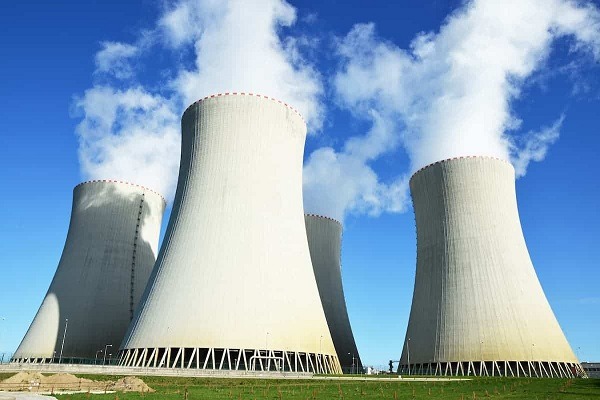
Kigali, Rwanda – In the heart of East Africa, Rwanda is racing toward a bold energy future.
The country, known for its rapid development and ambitious Vision 2050, is positioning nuclear power as a cornerstone of its industrialization.
With limited fossil fuels and growing electricity demand, Rwanda aims to have its first nuclear reactor operational by the early 2030s, potentially supplying 60-70% of its energy mix in the long term.
At the center of this push is an emerging geopolitical contest between two global nuclear powerhouses: the United States and Russia.
Both nations are actively courting Rwanda with technology, financing promises, and strategic partnerships to build the country’s inaugural nuclear power plant.
Russia’s Long Game with Rosatom
Russia has been laying groundwork in Rwanda for nearly a decade. Through its state nuclear corporation Rosatom, Moscow signed early agreements that include plans for a nuclear power plant and a Center for Nuclear Science and Technology in Kigali.
Recent reports suggest Rosatom has finalized or significantly advanced a deal to construct Rwanda’s first large-scale nuclear facility.
Russian technology offers turnkey solutions, extensive experience in building reactors across diverse environments, and often attractive financing packages backed by the Russian state.
This approach appeals to countries seeking rapid deployment and comprehensive support, from training engineers to managing the full fuel cycle.
For Rwanda, Russia’s involvement represents continuity and a proven model seen in other African nations pursuing nuclear energy.
America’s Push with Small Modular Reactors
In a notable development this week, Rwanda signed a Memorandum of Understanding on strategic civil nuclear cooperation with the United States and a comprehensive development agreement with American company Holtec International.
The deal focuses on deploying Holtec’s SMR-300 small modular reactors, which promise flexible, scalable power with enhanced safety features and shorter construction timelines compared to traditional large reactors.
The US approach emphasizes innovation, regulatory best practices, and integration with international safety standards.
Holtec’s agreement outlines collaboration on site assessment, technology maturation, and potential deployment of multiple SMR units that could collectively deliver up to several gigawatts of clean baseload power.
This aligns with Rwanda’s goal of reliable, carbon-free electricity to drive manufacturing, data centers, and urban growth without heavy reliance on imported fuels.
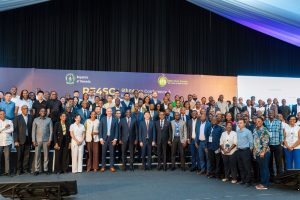
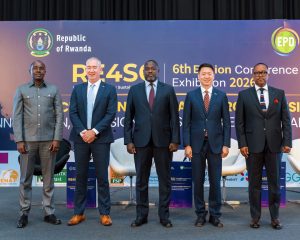
The timing of the US agreements, coinciding with the Nuclear Energy Innovation Summit for Africa hosted in Kigali, signals Washington’s renewed interest in countering influence in the region through advanced nuclear technology.
Rwanda’s Strategic Balancing Act
President Paul Kagame’s government is playing a smart, diversified game. Rather than choosing one partner exclusively, Rwanda is engaging both superpowers while maintaining dialogue with the International Atomic Energy Agency (IAEA), which recently reviewed and endorsed progress on the country’s nuclear infrastructure.
This dual-track strategy allows Rwanda to leverage the strengths of each: Russia’s experience with full-scale projects and the US’s cutting-edge small modular designs.
It also mitigates risks by avoiding over-dependence on a single foreign power. Key challenges remain, including finalizing robust regulatory frameworks, securing financing, developing a skilled workforce, and addressing public concerns about safety and waste management.
Nuclear energy could transform Rwanda from an energy importer into a potential exporter in the East African region, powering everything from electric vehicles to advanced agriculture and tech hubs.
About The Author


SUBSCRIBE TO OUR NEWSLETTER