Africa Needs Greater Fertilizer Self-Reliance to Protect Food Security, Solidaridad Says
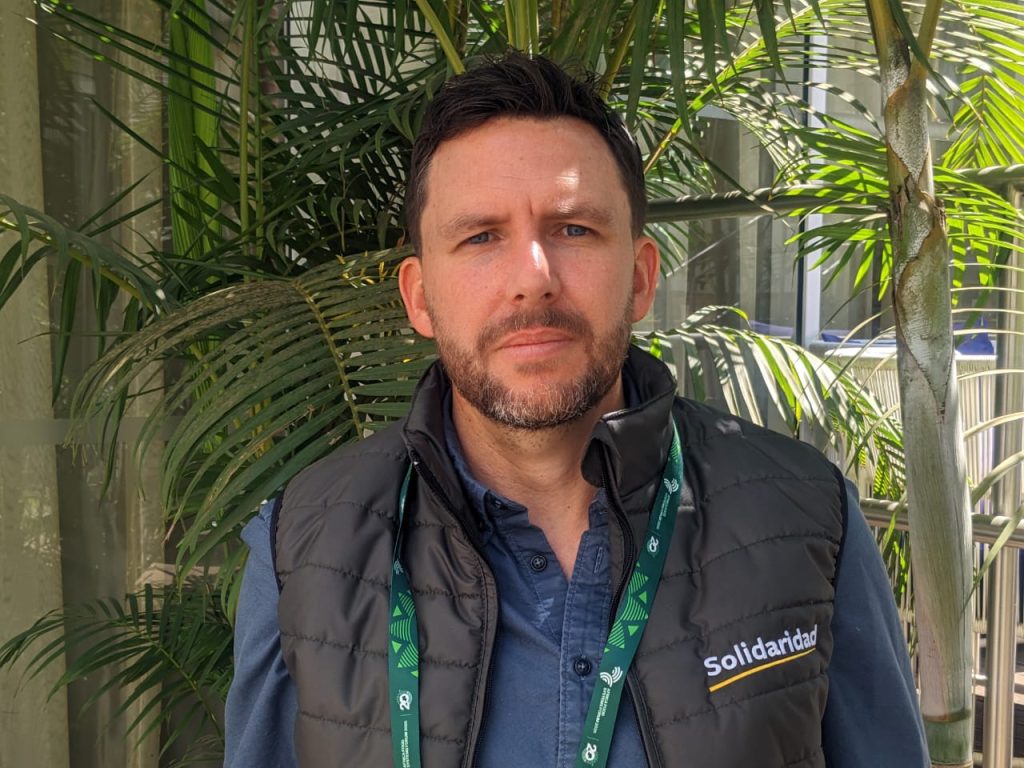
Dr. Jonathan Atkinson, Managing Director of Solidaridad Southern Africa.
Africa needs to move towards greater self-reliance in fertilizer production and agricultural inputs as repeated global market shocks continue to expose farmers and food systems to risks beyond their control, according to Dr. Jonathan Atkinson, Managing Director of Solidaridad Southern Africa.
Atkinson said African countries should consider strengthening their own capacity to produce fertilizer and make greater use of locally available raw materials, while simultaneously building resilience to international market disruptions.
“There are probably two components to it. Whether we should be building up our own ability to produce our own fertilizer, and at the same time, building resilience against global shocks,” Atkinson said in an interview in Kigali.
His comments come as fertilizer prices, supply disruptions and wider input costs remain major concerns for African agriculture. Solidaridad is participating in the 2026 Africa Food Systems Forum, taking place in Kigali from August 31 to September 4, where Atkinson is engaging in discussions on fertilizer resilience, agricultural innovation and sustainable farming.
‘We cannot be on the back end of these crises’
Atkinson said Africa’s challenge is not simply the availability of fertilizer but the continent’s continued exposure to crises that originate outside its control.
“These crises have come upon us when there are other challenges that we need to deal with as well,” he said, noting that building domestic fertilizer production cannot happen overnight.
According to him, countries need to establish partnerships between governments and the private sector, while also strengthening cooperation across African institutions and countries.
He cautioned against looking for a single solution that can be applied uniformly across the continent.
“I don’t think that there’s a one-size-fits-all approach for every country. Each country has different opportunities, different risks,” Atkinson said.
But he argued that the frequency of such disruptions makes it increasingly important for African countries to plan beyond the immediate crisis.
“They’re happening every two to three years now, and it’s becoming harder and harder to adapt to these challenges,” he said.
He added, “We need to be able to look forward. What does it mean for us to become independent, to become sovereign, to domesticate some of our own livelihoods?”
From fertilizer resilience to farmer resilience
For Solidaridad, the issue is also closely connected to its new five-year strategy covering 2026–2030.
The organisation aims to reach 260,000 emerging and small-scale farmers in Southern Africa and support at least 13,000 to become agricultural entrepreneurs, according to Atkinson. The target is part of its Multi-Annual Strategic Plan IV, which places farmers at the centre of agricultural transformation.
Atkinson said the new strategy will put greater emphasis on partnerships with governments, private companies, civil society organisations and research institutions.
“You cannot get where you want to go on your own,” he said.
For him, private-sector involvement is particularly important because investment in areas such as fertilizer production cannot be driven by governments and development organisations alone.
“If we’re wanting to become independent in terms of fertilizer supply, we need to have the private sector investing,” he said.
The strategy also seeks to bring more young people and women into agriculture, alongside efforts to promote fair wages and more integrated farming systems.
Atkinson said the focus on youth is particularly important as agricultural populations in many countries are ageing.
“To ensure food security and food sovereignty, we need to bring young farmers into the mix,” he said.
Finance remains a major barrier
Even where technologies and agricultural innovations are available, Atkinson said farmers can struggle to benefit from them because they cannot access finance at the right time.
“The cost of inputs is just escalating continually,” he said, pointing to seed, fertilizer and crop-protection products.
But he stressed that timing is as important as access itself.
“In a farming setting and in agriculture, finance is timing dependent. Farmers need financing before the planting season so they can purchase and apply inputs when they are needed. If you don’t do that, you miss the opportunity,” Atkinson said.
Rather than acting as a microfinance institution, Atkinson said Solidaridad works to profile farmers and understand their land, experience, needs and ambitions, allowing financial institutions and government agencies to better determine what type of financing may be appropriate.
For some farmers, he said, financing could support working capital, while others may need capital for mechanisation, irrigation or other investments.
Models already operating in Southern Africa
Atkinson said Solidaridad is already using such approaches in Zambia, Mozambique and Malawi, including among farmers facing difficult climatic and production conditions.
He cited examples including financing for drip irrigation and irrigation kits, drought-tolerant seed, packaging and marketing, working capital for harvesting and storage, and the introduction of biochar through carbon projects.
The objective, he said, is to view the farm and the farmer as part of a wider value chain rather than treating access to finance as an isolated intervention.
“It’s got to deliver a return, not always a financial return, but a return even in yield,” he said.
A continental response
Atkinson also called for African countries to treat agricultural challenges as interconnected rather than purely national problems.
He argued that disruptions in one African country can have consequences elsewhere because of the continent’s interconnected economies and food systems.
“There is no single solution,” he said when asked what interventions could be scaled across Africa.
Instead, he advocated a collective approach involving governments, the private sector and continental institutions.
“It’s this mindset that we are on one continent,” he said.
For Atkinson, the Africa Food Systems Forum provides an opportunity for those stakeholders to identify where countries face similar challenges and where cooperation can produce solutions that individual countries may struggle to achieve alone.
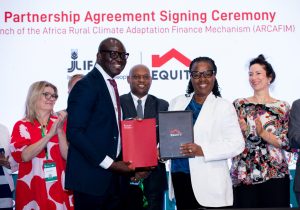
Solidaridad’s participation in the forum is also intended to help shape implementation of its new strategic plan and strengthen partnerships with governments, donors, research organisations and other stakeholders. The organisation is also using the forum to deepen regional partnerships, including through an agreement with the International Crops Research Institute for the Semi-Arid Tropics (ICRISAT).
Atkinson described the forum as a “halftime” in which organisations can assess what is working, determine where they need to change direction and then apply those lessons after the event.
For Africa’s food systems, however, the bigger challenge will be turning those discussions into investments and policies that make farmers less exposed to the next global shock.
About The Author


SUBSCRIBE TO OUR NEWSLETTER