Kagame, Tinubu and el-Sisi Urged to Lead $50 Billion Africa Space Economy Investment Drive

Former African Development Bank (AfDB) President Dr Akinwumi Adesina has called on Rwanda’s President Paul Kagame, Nigeria’s President Bola Tinubu and Egypt’s President Abdel Fattah el-Sisi to provide political leadership for a proposed fund aimed at accelerating Africa’s space economy, with the ambition of mobilising up to $50 billion in investment over 10 to 15 years.
The proposal, known as the Africa Space Future Fund, was presented at the 2026 Africa Space Economy, Innovation and Communication Conference in Abuja, Nigeria, organised by the Nigerian National Space Research and Development Agency (NASRDA). Adesina argued that Africa should move beyond being only a user of technologies developed elsewhere and become an active participant in creating, producing and owning space technologies.
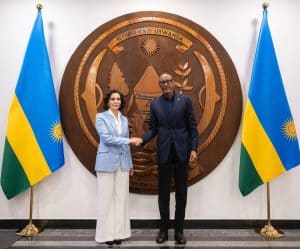
Adesina identified Kagame, Tinubu and el-Sisi as leaders who could provide the initial political backing for the proposal. However, the call remains a proposal: there has been no confirmation that the three presidents have accepted the request or that the fund has been formally established.
The proposed fund would seek an initial capitalisation of $5 billion and aim to mobilise as much as $50 billion over 10 to 15 years. The $50 billion target does not mean that governments are being asked to immediately commit that amount from their national budgets. Instead, the proposal envisages bringing together resources from governments, sovereign wealth funds, development finance institutions, pension funds, insurance companies, private investors, international partners and the African diaspora.
Investment would support satellite infrastructure, research, innovation, the manufacture of space-related equipment and the growth of commercial space businesses. The proposal also places emphasis on African ownership, technology transfer, intellectual property and building local manufacturing capacity.
Rwanda is among the African countries that have begun positioning themselves in this sector. The Rwanda Space Agency was established in 2020 to develop, coordinate and regulate the country’s space activities. Rwanda’s National Space Policy, adopted in March 2025, identifies priority areas including earth observation, communications, access to space, exploration and science, space situational awareness and navigation.
Satellite-based information can support several development priorities in Rwanda, including agriculture, urban planning, water management, disaster response and communications. In agriculture, satellite data can help monitor crop health and estimate yields. In disaster risk management, it can support the monitoring of areas exposed to floods and landslides and help authorities prepare responses.
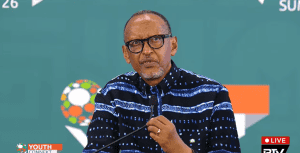
Speaking at the International Space Summit in Paris in September 2026, President Kagame said Africa should not remain merely a consumer of space technology but should become a full participant in shaping the sector. He highlighted Rwanda’s use of space technology and artificial intelligence in agriculture, infrastructure and disaster management, while calling for fairer access to technology, knowledge and a meaningful role for developing countries in global space governance.
Adesina’s proposal also includes Africa Link, a flagship initiative intended to expand satellite connectivity across the continent. It would seek to aggregate demand among African countries, develop shared ground infrastructure and build partnerships with satellite operators. The longer-term ambition is to strengthen Africa’s role in operating its own networks and developing relevant technologies.
For Rwanda, participation in a continental initiative of this nature could complement its efforts to use technology for development and support the broader ambition of building African capacity in the space sector. Real benefits, however, would depend on how the proposal is implemented, the investment it attracts and the ability of participating countries to work together.
Adesina said a fund of this scale would need independent governance, professional investment management, rigorous project assessment, transparency and accountability. These safeguards would be important to ensure that resources are directed towards viable projects with measurable and lasting benefits.
The Africa Space Future Fund remains a proposal. Its future will depend on whether African governments, financial institutions and investors support it, how its governance arrangements are designed and which projects are ultimately selected for investment.
About The Author


SUBSCRIBE TO OUR NEWSLETTER