Agric insurance as a tool for farmers to gain trust from financial institutions

The Government of Rwanda, through the Ministry of Agriculture and Animal Resources, (Minagri) aims to increase the number of farmers who insure their operations, as this will contribute to boosting the amount of loans provided in this sector. Some who have joined this scheme say banks now trust them.
The National Agriculture Insurance Scheme (NAIS) was launched in 2019 under the title “Tekana Urishingiwe Muhinzi Mworozi” (“Smallholder farmer, feel safe, you are insured”).” It is implemented by RAB-SPIU in partnership with Minagri.
By working with Rwanda’s private insurance companies, the NAIS is developing financially viable insurance products coupled with a 40% subsidy from MINAGRI to manage risks and losses in crops and livestock.
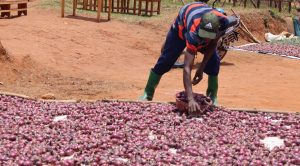
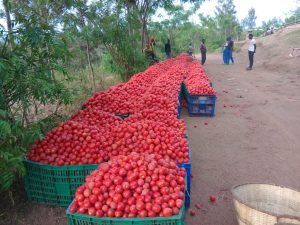
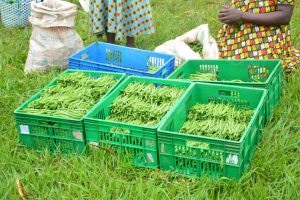
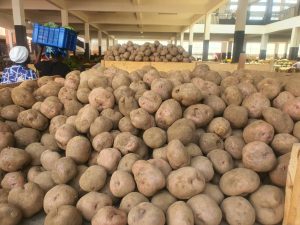
The insured crops include rice, maize, potatoes, pepper, beans, soya, French beans, and cassava, while insured livestock includes cows, pigs, poultry, and fish.
Minagri states that although this scheme has been rolled out across all districts in the country, participation has not yet reached the desired level, with current uptake below 10% among farmers and livestock keepers. The goal is to reach 30% within the next five years.
As part of the agricultural reform agenda under PSTA5 and NST2, it is hoped that crop and livestock insurance will help increase the share of agricultural loans from 6% to 10% of all loans issued, according to Mr. Joseph Museruka, Project Manager of NAIS at RAB-SPIU.
Mr. Gervais Uzabakiriho, a cattle farmer in Shangasha Sector, Gicumbi District, Northern Province, explained that beyond compensation for losses, livestock insurance also increases banks’ trust when granting loans.
He said, “People buy car insurance so that in case of an accident, they receive compensation. After learning about this scheme, I decided to join, and now all my 15 cows are insured. Even if diseases were to wipe them out, I would not face financial ruin because I would receive compensation.”
He added, “Wherever you go, banks accept insured livestock as collateral. If you have insurance, you can get a loan quickly because the bank knows that, in case of losses, the insurance will cover them. Wherever you apply, you are welcomed.”
He encouraged fellow livestock keepers to take up insurance to protect themselves against unforeseen losses.
“I am one of those encouraging others to adhere to agric insurance because it is beneficial. For instance, my sister lost four cows due to a disease in our area, but because she had no insurance, she suffered a huge loss. If she had been insured, she would not have had to endure such hardship.”
Mr. Jean Claude Shirimpumu, is a professional pig farmer in Gicumbi District, who also runs a centre that collects and distributes pig semen across the country in partnership with the Ministry of Agriculture and Animal Resources and Zipline, using drones for delivery.

He insures his breeding pigs and high-value boars, especially imported ones, and currently has 102 insured pigs.
“I was among the first to join the insurance scheme when it was introduced. I found it valuable because insurance provides peace of mind. If my animals suffer losses, I know I will be compensated. Two of my pigs died—one while giving birth and another boar after a fight—and I was reimbursed. I strongly encourage all livestock keepers to take up insurance because unexpected losses can happen at any time,” he said.
Since the launch of ‘Tekana Urishingiwe Muhinzi Mworozi’, a total of Rwf 6,448,769,162 has been paid in compensation to insured farmers and livestock keepers. The government has subsidized insurance costs for farmers to the tune of Rwf 5,088,4706.24.
Insurance providers offering crop and livestock coverage include Old Mutual, Radiant Yacu, Sonarwa, and BK Insurance.
Museruka highlighted the need for efficient and timely compensation, stating that contracts specify that a farmer or livestock keeper must receive compensation within 30 days of submitting proof of loss to the insurance provider.
“We are committed to ensuring that services are delivered quickly and transparently, which is why we advocate for educating farmers and livestock keepers about their contractual rights, their responsibilities, and the obligations of insurance companies. By the end of this year, we will have a digital system enabling farmers and livestock keepers to track their claims on their mobile phones, receive updates on their applications, and monitor their progress,” he said.
According to Museruka, currently, representatives of insurance companies under the ‘Tekana Urishingiwe Muhinzi Mworozi’ scheme are available in all districts, and at the sector level, those seeking insurance can contact an agronomist, veterinarian, agricultural advisor, or livestock advisor. If that is not possible, they can call the toll-free number 4127 at Minagri to be connected to an insurance provider.


About The Author


SUBSCRIBE TO OUR NEWSLETTER