Denial of the Genocide against Tutsi 1994: Confronting a Dangerous Legacy

Written by Fred Mfuranzima
More than three decades after the 1994 Genocide against the Tutsi, where over one million people were killed in just 100 days, Rwanda continues to reckon not only with the wounds of the past but also with a persistent and dangerous phenomenon: genocide denial.
Genocide denial—whether subtle or explicit—remains one of the most corrosive threats to truth, justice, and reconciliation in Rwanda. It undermines the dignity of victims and survivors, obstructs the path to healing, and fosters conditions that could encourage future violence.
Forms of Genocide Denial
Denial of the Genocide against the Tutsi manifests in various forms, both locally and internationally. These include:
1. Negation – Claiming the genocide did not occur or minimizing the scale of the killings.
2. Revisionism – Distorting historical facts, falsely equating crimes, or suggesting that the genocide was a result of a civil war.
3. Justification – Implying the genocide was provoked or defending the actions of its perpetrators.
4. Double Genocide Theory – Suggesting that two genocides occurred simultaneously—targeting both Tutsi and Hutu—thereby attempting to obscure the intent and specificity of the genocide against the Tutsi.
5. Propaganda and Digital Denial – Dissemination of misinformation online, especially on social media and diaspora platforms, that fuels denial narratives.
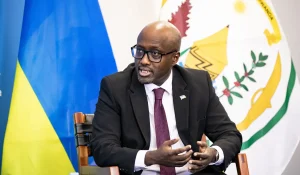
“To deny the genocide is to kill the victims twice—first physically, and then by erasing their memory,” says Dr. Jean Damascène Bizimana, Minister Of Ministry of National Unity & Civic Engagement (Minubumwe)
Examples and Expressions of Denial
Diaspora-based denial movements, often led by individuals with links to former genocidal regimes, continue to publish books, articles, and blogs that downplay or falsify the genocide.

Some individuals promote the “double genocide” narrative, falsely claiming that the Rwandan Patriotic Army (RPA) committed an equivalent genocide against Hutu civilians during and after the genocide.
Social media posts, including from former politicians and exiles, have been documented spreading revisionist theories and using coded language to provoke genocide ideology.
In education and informal discussions, misrepresentation of genocide history persists in some communities where the younger generation may be exposed to denialist rhetoric.
Causes of Genocide Denial
Several interlinked factors contribute to the persistence of denial:
Guilt and self-preservation: Perpetrators and their sympathizers seek to rewrite history to justify or obscure their actions.
Ideological continuity: Remnants of the extremist Hutu Power ideology survive within some diaspora groups and former political elites.
Political motives: Some actors use denial to delegitimize the current Rwandan government, which was formed by the Rwandan Patriotic Front (RPF) that stopped the genocide.
Lack of education: In some cases, ignorance or misinformation fuels denial, especially among youth who were born after 1994.
The Legal and Social Response in Rwanda
Rwanda has taken a firm legal stance against genocide denial, with laws criminalizing genocide ideology and revisionism. The 2021 Revised Penal Code includes severe penalties for spreading false narratives or minimizing the Genocide against the Tutsi.
In addition to legal action, the government and civil society have emphasized education, commemoration, and documentation:
Institutions such as MINUBUMWE and Kigali Genocide Memorial work to preserve historical truth and promote memory.
Rwanda’s Kwibuka (Remembrance) period each April serves as both a national mourning and educational period.
Survivors’ groups, like IBUKA, play an active role in combating denial and advocating for justice and recognition.
“Denial is the final stage of genocide. It is a continuation of hatred through the distortion of truth,” says genocide survivor and activist Freddy Mutanguha, Director of Aegis Trust Rwanda.
The Importance of Fighting Denial
Genocide denial not only dishonors the memory of victims but also poses a significant risk to peace and reconciliation. It can breed new cycles of hatred, encourage impunity, and alienate survivors.

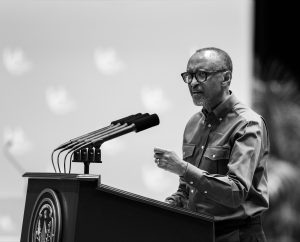
“Truth is the foundation of peace. If we allow lies to grow, we build the future on poison,” said President Paul Kagame during a previous Kwibuka commemoration.
As Rwanda continues to rebuild and reconcile, the fight against genocide denial remains a moral, historical, and national imperative. Confronting denial is not only about preserving the past—it is about protecting the future. The country’s commitment to truth, education, and justice is vital in ensuring that such atrocities are never repeated, and that the dignity of every victim is honored with unwavering clarity.
About The Author


SUBSCRIBE TO OUR NEWSLETTER