SAIP Knowledge Sharing Drives Market Access and Agricultural Growth in Bugesera District

The SAIP Knowledge Sharing Session organized by Rwanda Agriculture and Animal Resources Development Board (RAB) through its Single Project Implementation Unit (SPIU) under the Sustainable Agricultural Intensification and Food Security Project II has marked a turning point for farmers and agricultural cooperatives in Bugesera District.
The initiative has strengthening farmers’ skills, enhancing cooperative management, expanding irrigation infrastructure, and most importantly, building sustainable market linkages that ensure farmers’ produce reaches profitable destinations both locally and internationally.
Through study tours and structured training sessions, farmers and cooperative leaders from Bugesera visited exemplary agricultural projects, including modern greenhouse farms in Rwamagana. These visits exposed them to the clear difference between open-field farming and greenhouse cultivation.
Participants witnessed firsthand how greenhouse farming increases yields, reduces pest and disease risks, and enables year-round production. For a district like Bugesera, known for its prolonged sunshine and dry spells, such innovations are not just improvements they are survival strategies.
Training sessions emphasized cooperative governance, financial management, bookkeeping, and internal collaboration among members. Leaders were equipped with tools to improve transparency, accountability, and strategic planning within their cooperatives. Farmers were also trained on post-harvest handling, value addition, and quality standards required by competitive markets.
One of the most impactful outcomes of the SAIP II knowledge-sharing sessions has been the strengthening of market linkages between farmers, cooperatives, and buyers.

Ikirezi Ange Nailla, a representative of an agricultural export company, expressed deep appreciation for SAIP II’s role in expanding her professional network and knowledge base. Through the project, she gained access to new ideas and partnerships that have enhanced collaboration between her company and various cooperatives.
Her company collects agricultural produce particularly fruits such as avocados and other fresh products for export markets. She confirmed that SAIP II enabled her to directly connect with farmers as reliable suppliers.
“Through the SAIP project, I was able to meet farmers who are a source of products that we export abroad. It is valuable to work with them. We collaborate with different cooperatives as well as individual farmers.” She explained
HATEGEKIMANA Eliphase, the representative of Cooperative Umucyo, also highlighted the transformative role of the knowledge-sharing initiative. Through SAIP II sessions, he was able to meet producers who were struggling to find markets for their harvest.
This connection created new opportunities for aggregation and collective marketing.
“As Cooperative Umucyo, we have a plan to buy produce from farmers and later sell it collectively as a growing cooperative. All this was made possible by SAIP II, which helped us connect with those who need buyers for their harvest.” He stated
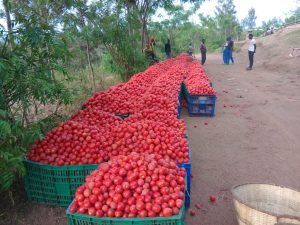
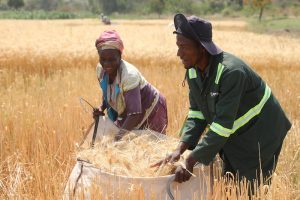
SAIP II is helping farmers move beyond subsistence production toward commercial agriculture. Cooperatives now act as organized buyers, aggregators, and negotiators ensuring that members secure better prices and reduce post-harvest losses.

Eliphase further emphasized that the knowledge-sharing initiative organized by RAB SPIU under SAIP II opened doors for greater visibility and recognition of their work. Through networking sessions, cooperatives gained exposure to potential clients and institutional buyers, creating long-term commercial relationships.

The Executive Secretary of Bugesera District, Nkuranga Joseph Kayijuka, acknowledged the profound impact of SAIP II, particularly in addressing the district’s climatic challenges.
Bugesera is widely known for its intense sunshine and dry conditions. These environmental factors have historically limited agricultural productivity and increased vulnerability to food insecurity.
“As you know, Bugesera District is among the areas that experience intense sunshine. However, through collaboration with RAB SPIU under SAIP II, we have greatly benefited from irrigation systems, so the sun can no longer destroy crops.” He stated
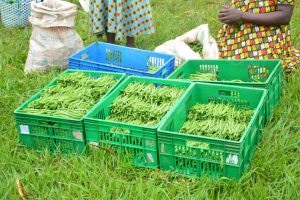
The introduction and expansion of irrigation infrastructure have significantly reduced the risk of drought-related crop losses. Farmers are now able to cultivate vegetables and fruits on large-scale farms throughout the year. This shift has strengthened food security, improved nutrition, and stabilized household incomes.
SAIP Project Manager, Ezra MUTABARUKA said that one of the primary objectives of SAIP II is to provide farmers with relevant agricultural information to ensure that production aligns with labor and market demands.
“One of the key objectives of SAIP II is to secure markets for farmers so that the produce obtained can generate profit.” He emphasized
By combining improved irrigation, greenhouse technology, cooperative strengthening, financial literacy training, and direct market linkage facilitation, SAIP II has created a comprehensive support system.
Bugesera district challenged by intense sunshine and limited market access, SAIP II has illuminated a new path. Through knowledge-sharing sessions, study tours, irrigation support, and market facilitation, farmers in Bugesera have gained more than skills they have gained opportunity, confidence, and economic direction.
It demonstrates that when farmers are empowered with knowledge, connected to markets, and supported with infrastructure, agriculture becomes not merely a livelihood but a sustainable engine of development.
About The Author


SUBSCRIBE TO OUR NEWSLETTER