Small Livestock Drive Cuts Malnutrition in Huye from 24% to 19%
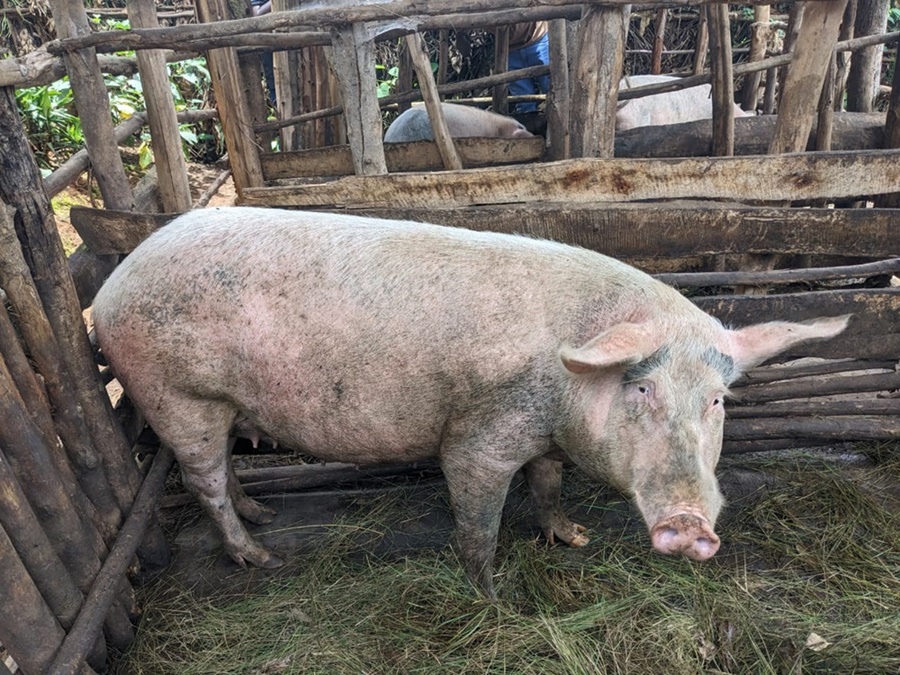
Huye District has recorded a notable decline in malnutrition, with rates dropping from 24 percent to 19 percent, a shift local authorities partly attribute to the distribution of small livestock to rural households.
According to André Kamana, Vice Mayor in charge of Economic Development in Huye District, the Partnership for Resilient and Inclusive Small Livestock Markets (PRISM) project has played a key role in improving both household incomes and nutrition among vulnerable communities.

“The PRISM project came as a solution, particularly targeting rural livestock farmers with limited means,” Kamana said. “It operates in five sectors of Huye District: Gishamvu, Karama, Ruhashya, Kinazi, and Rwaniro.”
He explained that the provision of small livestock, such as pigs, goats, and poultry, has supported the government’s broader graduation programme aimed at helping households move out of poverty into higher economic categories.
Beyond livestock distribution, the project has also focused on building farmers’ skills to ensure long-term sustainability.
“Even when the project ends, beneficiaries will be able to continue progressing because they have been equipped with the necessary knowledge,” he noted.
Farmers have also benefited from manure produced by the animals, which has boosted agricultural productivity and enabled them to access markets with surplus produce.
“They were trained to create their own solutions, especially in addressing the high cost of animal feed,” Kamana added. “Some have started growing Azolla and using black soldier fly larvae as alternative feed sources.”

He pointed to visible changes among beneficiaries, including increased incomes and improved market participation.
“At exhibitions where we meet partners, it is encouraging to see beneficiaries selling a rooster at no less than 15,000 RwF. Some report pigs giving birth to up to 15 piglets, each sold at around 20,000 RwF. These are strong testimonies of transformation,” he said.
Kamana emphasized that small livestock are particularly effective because they require limited land and are accessible to low-income households. Coupled with mindset change, this has enabled many families to see new economic possibilities.
The impact has also extended to household nutrition.
“Families that once had children suffering from malnutrition are now able to provide vegetables and eggs regularly. There is a clear improvement in diets,” he said.
A Family’s Transformation
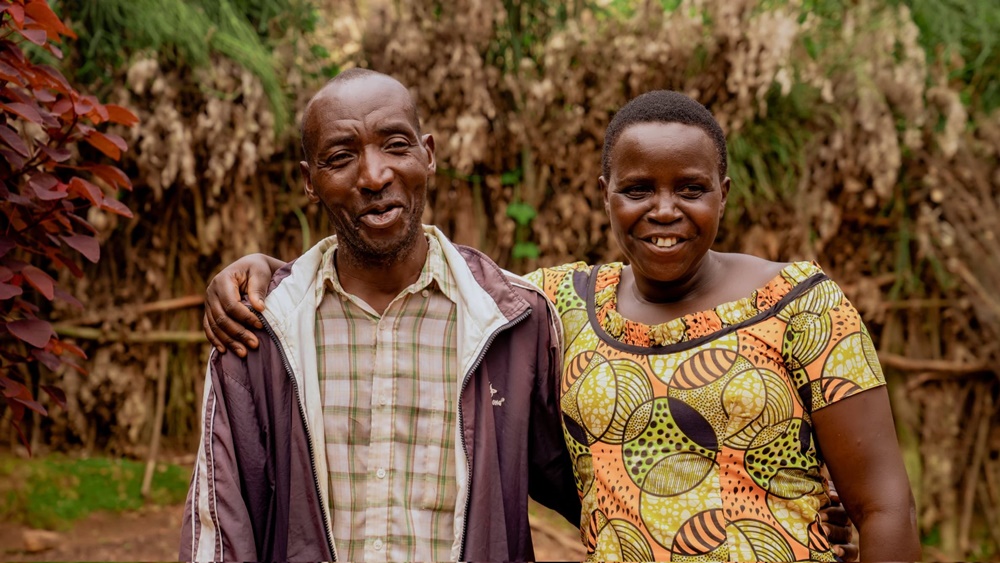
Among the beneficiaries is the family of Etienne Ndikuryayo and Therese Mukantwali, residents of Gahororo Cell in Karama Sector.
“We used to live a very hard life,” Mukantwali recalled. “We didn’t have land to farm because we couldn’t afford it.”
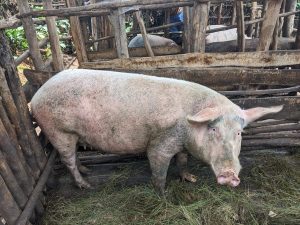
Their situation began to change after receiving pigs through the PRISM project.
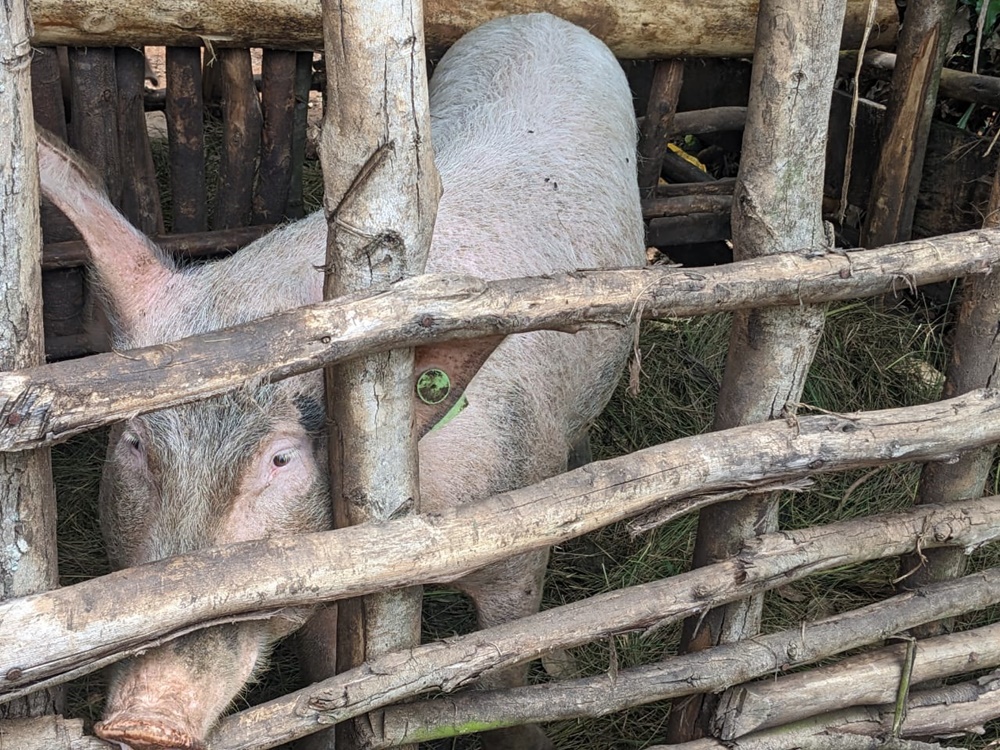
“We took good care of them, and they multiplied quickly. The first pig gave birth to three piglets, then 10, and later 13. Two of its offspring also started reproducing, each giving birth to 13 piglets twice a year,” she said.
With pigs generating steady income, the family began selling piglets and eventually purchased about one hectare of farmland.
“Now we cultivate our own land and get good harvests, especially since we also use manure from the pigs as fertilizer,” she added.
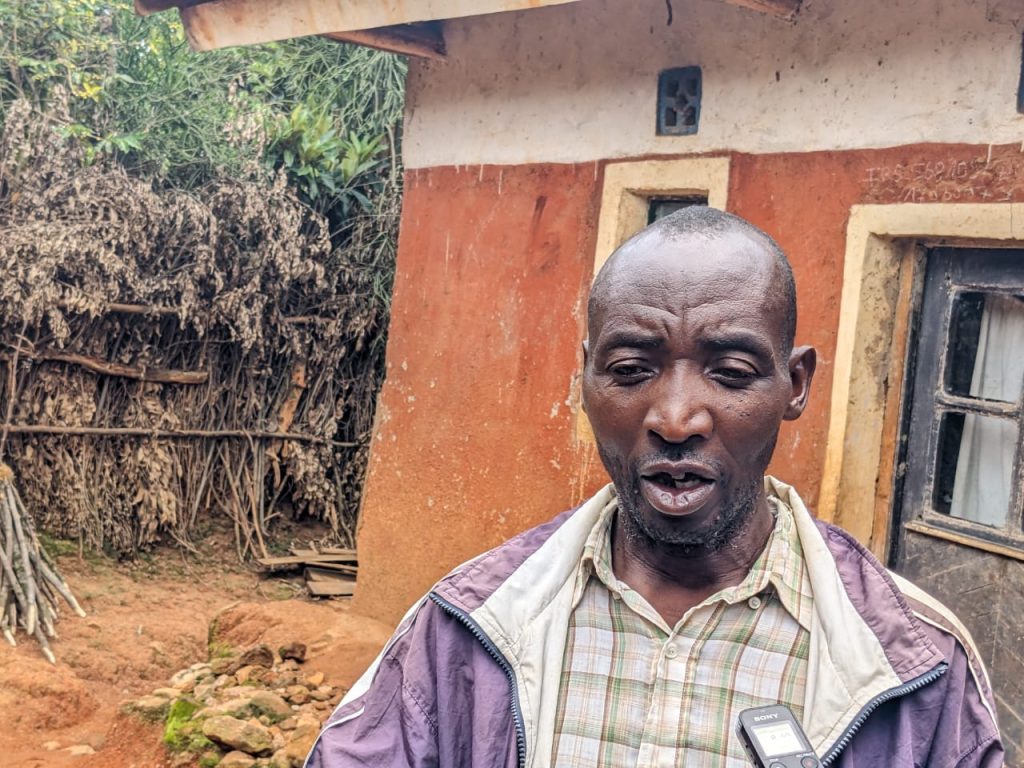
Ndikuryayo said the income has also supported their children’s education.
“We bought land worth 300,000 RwF from pig sales,” he said. “One of our children didn’t qualify for a public university, but thanks to this income, we enrolled them in a private university. Today, the child is in the second year.”
Across Huye District, the PRISM project has reached thousands of farmers through livestock distribution.
A total of 3,380 chickens were initially provided to 338 farmers, while 7,330 more were distributed to 701 farmers through a pass-on system. Similarly, 154 pigs were given to 154 farmers, with an additional 322 pigs distributed to 161 farmers. For goats, 1,072 were provided to 536 farmers, and 140 more were distributed to 67 farmers.
The project has also invested in key infrastructure to support the livestock value chain. These include a small livestock market in Gishamvu Sector, a veterinary post in Karama Sector, a veterinary clinic with a laboratory, and pig slaughter facilities in Ruhashya Sector.
Implemented by the Rwanda Agriculture and Animal Resources Development Board (RAB) and funded by the International Fund for Agricultural Development (IFAD), the PRISM project operates in 15 districts across Rwanda. With a budget of USD 45 million, it focuses on strengthening pig, poultry, goat, and sheep value chains.


SUBSCRIBE TO OUR NEWSLETTER