Financing Gap Threatens Africa’s Fight Against Hunger, New Report Warns

A new continental report has raised alarm over a widening financing gap that is undermining efforts to end hunger and transform Africa’s agrifood systems, even as food insecurity continues to rise across the continent.
Published jointly by the Food and Agriculture Organization (FAO), the United Nations Economic Commission for Africa (ECA), the World Food Programme (WFP) and the African Union Commission (AUC), the report highlights that current levels of public and private investment fall far short of what is needed to achieve sustainable food systems.
While government spending on agriculture, forestry and fishing has steadily increased since 2018, the report notes that the pace remains insufficient to meet targets on food security and nutrition. External financing, including official development assistance, has grown only modestly, with less than 27 percent directed toward food security.
Private sector investment is even more constrained. Bank lending to agriculture accounts for under four percent of total credit, while foreign direct investment in the sector remains below USD 2 billion annually. Small and medium-sized agricultural enterprises are particularly affected, often falling into a financing gap where they are too large for microfinance but too small to access commercial bank loans.
The report calls for urgent reforms to unlock new sources of financing, including strengthening policy environments, promoting public-private partnerships, and expanding access to affordable credit. It also highlights the potential of blended finance and climate financing to bridge existing gaps.
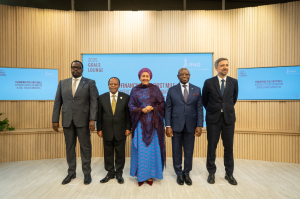
“Financing for agrifood system transformation in Africa should contribute to eradicating hunger, food insecurity and malnutrition in all its forms,” the heads of the four institutions said in a joint foreword, urging coordinated and sustained investment.
The warning comes as hunger continues to worsen across Africa. For the eighth consecutive year, the number of undernourished people has risen, reaching an estimated 306 million in 2024, more than 45 percent of the global total. Nearly 893 million people now face moderate or severe food insecurity, driven by conflict, climate shocks, economic downturns and inequality.
Affordability of nutritious food remains a major concern. The average cost of a healthy diet in Africa rose to USD 4.41 per person per day in 2024, far above the extreme poverty threshold. As a result, about 67 percent of the population cannot afford a healthy diet.
Child malnutrition also persists at worrying levels. Over 30 percent of children under five are stunted, although wasting rates, at 5.4 percent, remain slightly below the global average.
Despite these challenges, the report identifies opportunities for progress. Between 2020 and 2023, Africa recorded 99 blended finance deals worth USD 3 billion in agrifood systems. However, most of these investments targeted large companies, leaving smaller, nutrition-focused enterprises behind.
Climate finance is another area with untapped potential. Although Africa received USD 44 billion in climate funding in 2021/2022, a significant increase, it remains well below the estimated USD 250 billion required annually to meet climate goals.
The report stresses that reversing current trends will require a dramatic scale-up in financing from all sources, alongside inclusive policies that prioritize women, youth and smallholder farmers. It also underscores the importance of continental frameworks such as the Comprehensive Africa Agriculture Development Programme (CAADP) and the African Continental Free Trade Area (AfCFTA) in creating an enabling environment.
Without urgent and coordinated action, the report warns, Africa risks falling further behind in achieving its goal of ending hunger and building resilient, sustainable food systems.
About The Author


SUBSCRIBE TO OUR NEWSLETTER