From Water Tower to Power Tower: Ethiopia’s Energy Awakening
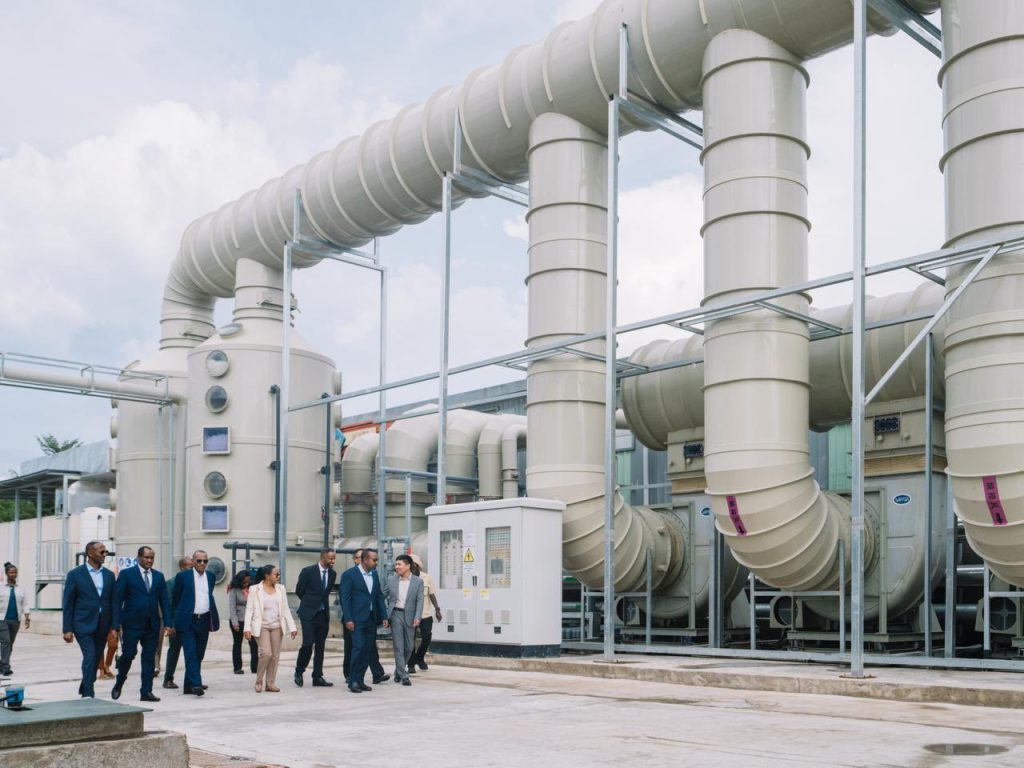
Ethiopia’s dramatic highlands have always defined the country’s story. Sitting at the roof of Africa, it holds vast water resources that have shaped everything from daily life to big-picture geopolitics. For years, experts have called it “Africa’s water tower.” Now, that nickname is evolving into something even more powerful: a genuine “power tower.”The transformation isn’t just talk anymore. It’s happening in steel, concrete, and rushing water.
The Grand Ethiopian Renaissance Dam: A National Dream Realized
Nothing captures this shift better than the Grand Ethiopian Renaissance Dam (GERD). Construction started back in 2011, and on September 9, 2025, the country officially inaugurated it. Built mostly with domestic funding — around $5 billion — without relying on traditional strings-attached loans from international banks, the GERD feels like a genuine statement of self-reliance.At 5,150 MW installed capacity and an expected average output of about 15,700 GWh per year, it dwarfs Ethiopia’s previous record holder, Gilgel Gibe III. But the real impact goes far beyond the numbers. For decades, conversations about the Nile were stuck in zero-sum arguments over water shares. The GERD is quietly changing that script toward practical cooperation and shared energy benefits.
Koysha: The Next Big Leap
While the world’s eyes stay fixed on the GERD, another major project is taking shape on the Omo River in southwestern Ethiopia. The Koysha Hydroelectric Project, being built by the Italian company Webuild, carries a price tag of roughly $2.7–2.8 billion. By mid-2025, it had reached about 70% completion, with full commissioning expected between 2027 and 2029.Once online, Koysha will add 2,160 MW, making it the country’s second-largest power plant. Beyond electricity, the reservoir opens doors for irrigation, fisheries, and new tourism possibilities — classic multi-purpose development that Ethiopia is increasingly pursuing.
Turning Electricity into Diplomacy
Ethiopia isn’t just generating power for itself. It’s using its growing surplus as a tool for regional connection. The country already exports electricity to Djibouti, Sudan, and Kenya, and has signed agreements to supply Tanzania and South Sudan (including a 100 MW deal with the latter).In the 2024/25 fiscal year alone, electricity exports brought in $118.1 million — money that’s expected to grow substantially as new plants come online. This isn’t just business. It’s energy diplomacy at work: creating real economic interdependence that makes conflict more expensive and cooperation more attractive.Projects like the Eastern Africa Power Pool and the Ethiopia–Kenya–Tanzania Electricity Highway are turning this vision into physical infrastructure, backed by institutions like the World Bank and African Development Bank.
“Horn First” and the Spirit of Medemer
Since 2018, Ethiopia has followed a “Horn First” approach to foreign policy, putting regional stability and prosperity front and center. It fits perfectly with the national idea of Medemer — roughly translated as synergy or coming together.Relations with neighbors like Djibouti, Kenya, and South Sudan are increasingly built around practical economic ties rather than old suspicions. When senior officials from across Africa attended the GERD inauguration, it felt like a quiet but meaningful signal of this new chapter.
A Green Foundation with Big Ambitions
One of Ethiopia’s quiet strengths is how clean its electricity is. Nearly all of it — over 95% — comes from renewable sources, mainly hydropower but with growing contributions from wind, solar, and geothermal. As of 2025, total installed capacity sits between 9,000 and 9,800 MW. The country has set its sights on pushing well beyond 13,000 MW in the coming years, enough to meet domestic needs and export even more.
The Road Ahead
Ethiopia’s move from water tower to power tower is no longer a hopeful prediction — it’s an unfolding reality. The strategy rests on three solid legs: developing projects with real sovereignty, using energy as a bridge for cooperation, and staying committed to a predominantly renewable system that can serve as a model for the region.Tim Marshall’s idea about Ethiopia’s geographic destiny is coming to life. When countries treat shared resources as opportunities for mutual benefit rather than sources of conflict, real and lasting peace becomes possible. Ethiopia seems determined to prove that point in practice. The turbines are turning, the transmission lines are spreading, and a new chapter for the Horn of Africa is quietly taking shape.
About The Author


SUBSCRIBE TO OUR NEWSLETTER
![Two women smile as one awards a crystal trophy at a Commonwealth Youth Programme event, with a blue backdrop behind them.”]},{](https://www.topafricanews.com/wp-content/uploads/2026/06/unnamed-5-300x200.png)