From Fragmented Crises to Integrated Solutions: Inside IUCN ESARO’s 2025 Environmental Breakthroughs in Africa
The year 2025 marked a definitive turning point for Eastern and Southern Africa, firmly establishing that climate change, biodiversity loss, water insecurity, and land degradation are not parallel crises, but a single shared challenge demanding a unified response. The International Union for Conservation of Nature (IUCN) Eastern and Southern Africa Regional Office (ESARO) 2025 Annual Report details a year defined by this deliberate convergence, proving that environmental stewardship and human prosperity must advance together.
Operating with a doubled annual project expenditure of CHF 36 million, the region successfully brought 114,233 hectares under restoration and improved management across 16 protected and conserved areas. Through integrated action, IUCN ESARO has delivered measurable impact across four critical pillars: coastal resilience, water management, land systems, and biodiversity.
Championing a Regenerative Blue Economy
Africa’s coastal communities are on the frontlines of climate change, but they are also leading the charge in ocean resilience. The African-led Great Blue Wall initiative has evolved from a bold vision into an investment-ready portfolio, successfully mobilizing over $80 million and bringing 56,000 square kilometers of marine area under improved management.
At the community level, the Bahari Mali initiative in Tanzania’s Tanga-Pemba seascape demonstrates the power of locally-led conservation. By introducing alternative livelihoods like seaweed farming and sustainable aquaculture, the project created over 400 sustainable blue jobs, with women holding more than 60% of these roles.
On the global policy stage, IUCN ESARO provided crucial technical and legal support to 14 African nations navigating the complex new Agreement on Biodiversity Beyond National Jurisdiction (BBNJ), also known as the High Seas Treaty. This expert guidance was instrumental in the decisions by Comoros, Madagascar, and Mauritius to formally ratify the historic treaty in 2025.
Water Diplomacy as a Catalyst for Peace
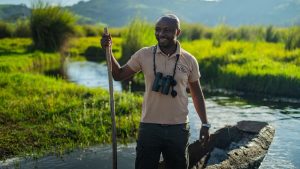
Recognizing that water is a catalyst for cooperation rather than conflict, IUCN made significant strides in transboundary water management. In the Sio-Malaba-Malakisi basin shared by Kenya and Uganda, the BRIDGE programme successfully shifted international dialogue from simply dividing a shrinking resource to collaboratively growing the benefits derived from it. This resulted in a jointly prioritized investment plan focused on watershed protection, food security, and sustainable livelihoods, serving as a blueprint for climate-resilient regional development.
Regionally, 2025 also saw the official launch of the Southern Africa Ramsar Regional Initiative (SARRI) at COP15. Hosted by IUCN, this platform unites SADC member states in a collective commitment to conserve critical wetland ecosystems across Southern Africa and the Indian Ocean islands.
Revitalizing Land and Empowering Communities
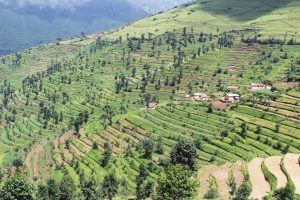
The report underscores that restoring degraded landscapes is one of the most cost-effective climate strategies available. The Land Systems Programme, which has mobilized over USD 100 million in recent years, focuses heavily on integrating nature-positive farming with large-scale restoration.
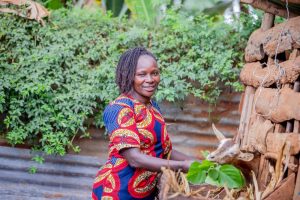
In Kenya’s arid and semi-arid lands, the $34.5 million TWENDE project rehabilitated over 78,000 hectares of rangelands and established 23 tree nurseries. This initiative birthed localized success stories like the Kaume B Grass Seed Banking Group in Tharaka Nithi County. What began as a group of struggling farmers transformed into a thriving enterprise; by planting indigenous, drought-resistant grass seeds in protective earth bunds, the community generated 480 bales of hay and 400 kilograms of seed, ensuring financial independence and landscape regeneration.
Similarly, in Tanzania, the SUSTAIN Pro project introduced Climate Smart Agriculture to local farmers. By utilizing the System of Rice Intensification, farmers like Anna Maganga saw their crop yields soar from 2.5 to 4.2 tons per hectare while simultaneously reducing their environmental footprint.
Biodiversity Conservation and Global Leadership
Systemic biodiversity protection requires aligning national policies and securing long-term funding. In 2025, the SADC Transfrontier Conservation Areas (TFCA) Financing Facility approved seven new projects worth over EUR 11 million to mitigate human-wildlife conflict and promote sustainable forest management. This was bolstered by an additional EUR 10 million from the NaturAfrica programme to support community-led green economies. The region also celebrated a major diplomatic victory as the Republic of Zimbabwe officially rejoined the IUCN as a State Member, strengthening Southern Africa’s conservation coalition.
Africa’s growing leadership in global conservation was undeniable at the 2025 IUCN World Conservation Congress in Abu Dhabi. Kenyan conservationist Humphrey Kariuki made history as the first African to be named an IUCN Patron of Nature. Most notably, IUCN unveiled “RegenAfrica,” a bold, continent-wide vision designed to scale up conservation efforts and restore both nature and livelihoods through integrated landscape management.

As the report concludes, Africa’s drylands and coastlines are not margins of despair, but frontiers of innovation. The focus must now shift to deploying blended financing mechanisms that can scale these proven, community-led solutions to millions of hectares across the continent.
About The Author


SUBSCRIBE TO OUR NEWSLETTER