6.5 Billion People in Low- and Middle-Income Countries Breathe Unsafe Air
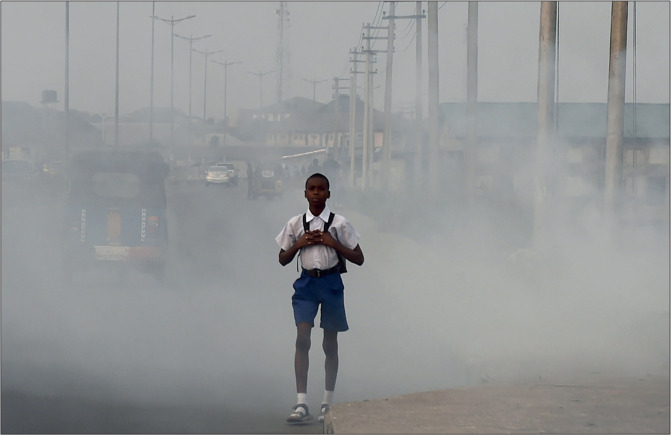
More than 6.5 billion people in low- and middle-income countries were exposed to dangerous air pollution levels in 2024, a burden 13 times higher than that faced by people in high-income nations, according to newly released data from the World Health Organization.
The updated Sustainable Development Goal (SDG) indicators show that while global levels of fine particulate matter (PM2.5) declined until 2020, progress has largely stalled since then, leaving poorer countries disproportionately exposed to polluted air and its health consequences.
WHO estimates that 2 billion people still rely on polluting fuels and inefficient stoves for cooking, exposing families to harmful smoke inside and around their homes. The agency says the combined effects of household and outdoor air pollution are driving a growing burden of heart disease, stroke, chronic respiratory illnesses and lung cancer.
Low- and middle-income countries account for 90% of the health impacts linked to unsafe air pollution, with 83% of those impacts resulting from noncommunicable diseases.
“We cannot address the climate and air pollution crisis or protect public health without reliable information that highlights global inequalities and disparities,” said Bruce Gordon, WHO’s acting Director for Environment, Climate Change, One Health and Migration.
The data reveal sharp regional contrasts. Asia records the highest pollution levels globally but has also made the greatest progress in reducing PM2.5 concentrations. By contrast, Africa, western Asia and northern Africa have seen little improvement over the past decade.
Urban areas generally have worse air quality than rural areas, yet cities across income groups have achieved notable reductions in pollution. In some low-income rural areas, however, pollution levels are still rising.
Access to clean cooking energy remains another major challenge. Of the 2 billion people without clean household energy, 1.5 billion live in rural areas. Sub-Saharan Africa alone accounts for about 970 million people lacking access, a figure projected to reach 1 billion by 2027.
By 2030, WHO projects that 58% of the world’s clean-cooking access deficit will be concentrated in sub-Saharan Africa.
WHO says the updated indicators are intended to help governments strengthen air-quality laws, improve monitoring systems and accelerate investments in cleaner energy, transport and household technologies.
The agency is targeting a 50% reduction in air-pollution-related deaths by 2040, while supporting the global goal of universal access to clean cooking by 2030.
About The Author


SUBSCRIBE TO OUR NEWSLETTER