VATICAN CALLS FOR AI “DISARMAMENT” AS POPE LEO XIV RELEASES NEW ENCYCLICAL
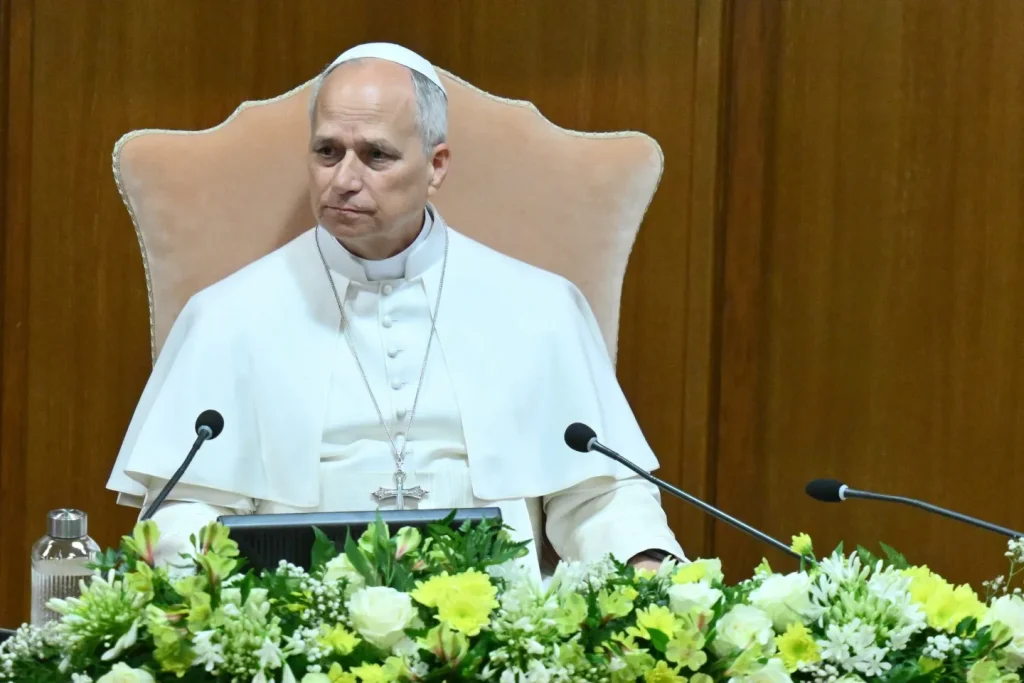
VATICAN CITY, May 25, 2026 — Pope Leo XIV released his first encyclical letter today, titled Magnifica Humanitas, which tackles the safeguarding of the human person in the age of artificial intelligence. During a presentation event broadcast from the Vatican’s New Synod Hall, the pontiff declared that artificial intelligence “needs to be disarmed” in a manner similar to the push for nuclear disarmament, warning against its potential to become an instrument of “domination, exclusion, and death”.
The Pope emphasized that the rapid digital transition represents a profound historical turning point with massive consequences, comparing it to the industrial revolution addressed by Pope Leo XIII 135 years ago. The new document issues an urgent call for moral discernment, insisting that technology must be directed toward the common good and the “civilization of love,” rather than eroding human inner freedom.
The presentation featured a diverse panel of speakers, notably including Christopher Olah, a researcher and co-founder of the AI company Anthropic. Offering a rare tech industry perspective, Olah explained that modern AI models are not predictably engineered like bridges, but are instead “grown” on a massive inheritance of human thought and speech. He noted that these systems develop mysterious internal structures that mirror human neuroscience and remain somewhat unsettling even to their creators. Because the tech industry operates under intense commercial and geopolitical incentives, Olah stressed that earnest, outside moral critics like the Church are essential to push events in a safer direction.
Concerns regarding the exploitation of the Global South were also a major focal point. Professor Léocadie Lushombo cautioned that AI risks driving new forms of “colonial extractivism” that appropriate data and exploit vulnerable populations. She specifically highlighted the devastating physical toll on children and adolescents working in dangerous mining conditions to extract the rare earth elements necessary to keep global computational infrastructure running. Furthermore, Lushombo warned that the automation of learning threatens deeply relational and communal traditions of knowledge, such as the African philosophy of Ubuntu.
The Vatican also offered strong theological pushback against modern technological ideologies. Cardinal Víctor Manuel Fernández addressed movements like transhumanism and posthumanism, which often view human limitations as flaws to be overcome or suggest humanity has reached an “expiry date”. Fernández argued that limitations are not flaws, but rather the exact places where human beings mature, find compassion, and open up to relationships. He warned that eliminating all suffering and limitations through technology would ultimately extinguish love and spiritual experience.
Framing the future of artificial intelligence as an unfinished “construction site,” Cardinal Michael Czerny reminded the global community that the technology’s trajectory is not predetermined. Instead, its future depends entirely on collective human choices and the understanding that human beings possess an irreplaceable conscience—a “most secret core” touched by God—that no machine can ever replicate.
About The Author


SUBSCRIBE TO OUR NEWSLETTER