G.S. Kinyinya Remembers: Honoring Teachers and Students Lost in the 1994 Genocide Against the Tutsi
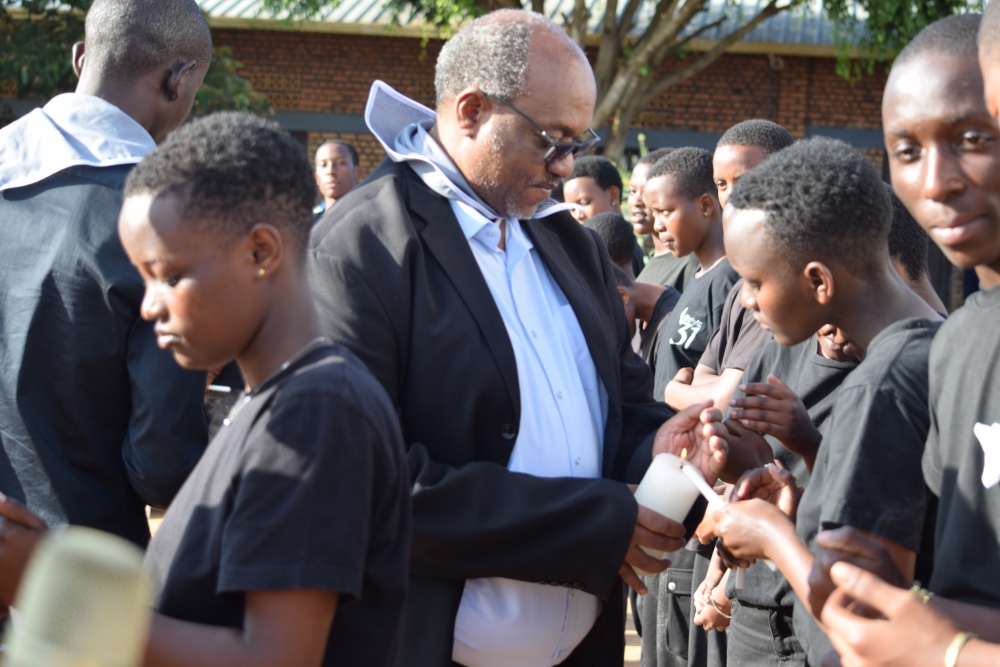
Gasabo District, May 16, 2025 — A solemn atmosphere enveloped Groupe Scolaire Kinyinya on Friday as students, teachers, parents, and alumni gathered to commemorate the victims of the 1994 Genocide against the Tutsi, particularly those who studied or taught at the former Kinyinya Primary School.
The 31st commemoration began at the Kinyinya Genocide Memorial in Murama, where participants were guided through the harrowing history of the genocide in the area. The remembrance then continued at the school grounds, where names of 12 teachers and 6 students who perished during the genocide were publicly honored.

In her opening address, the school’s director, Aimée Béatha Mushimiyimana, emphasized the importance of unity and compassion, particularly among the youth.
“We all need to work together, remember, rebuild, and develop our country,” she said, urging students to reject hatred in all its forms.
She reflected on the genocide’s deep-rooted causes, noting the disturbing role education once played in fostering division. “The genocide we remember is a terrible history that was taught in schools for a long time; children were taught it and even came to a point where they put it into practice,” she said.
“You could see a child killing the teacher who taught them, or a teacher killing the child they were teaching.”

Mushimiyimana called on students to be guardians of peace and tolerance.
“This is why we remember—so that even the young can learn about the genocide and its consequences, especially the ideology behind it, and then take the time to eradicate it from all its roots.”

Edouard Semigabo, President of Ibuka in Murama Cell and an alumnus of the school, offered a personal testimony. “I also studied here at G.S. Kinyinya,” he said. “One of the teachers who was killed, Gatera, taught me. Remembering is continuing to value the lives of those who were denied their lives because of their birth.”
Semigabo attributed the genocide to the policies of a divisive and oppressive regime. “The genocide was committed because of the bad government that was in place,” he said. “We should all be grateful that we now have a peaceful and united government that is fighting the genocide ideology.”
He urged students to be vigilant in the ongoing fight against genocide denial, especially in the digital age. “I ask all of you, especially the students, to help the government in fighting genocide ideology, especially on social media,” he said.
The ceremony served as both a memorial and a call to action—reminding all present of the responsibility to remember, educate, and build a future free from hatred.


About The Author


SUBSCRIBE TO OUR NEWSLETTER