The Republic of Kivu: A Path to Peace or a Pandora’s Box?

Could the creation of an autonomous Kivu offer a solution to decades of bloodshed in eastern Congo—and reshape security in the Great Lakes Region?
By Fred Mfuranzima
The eastern region of the Democratic Republic of Congo (DRC) has long been a crucible of armed conflict, displacement, and regional instability. At the heart of this crisis lies North and South Kivu—two provinces endowed with immense natural wealth yet cursed by cycles of violence. The resurgence of the M23 Movement, now rebranded with the AFC (Alliance Fleuve Congo) political platform, has once again drawn global attention to this troubled region.
As diplomatic efforts falter and military clashes intensify, a radical idea is resurfacing: the creation of a Republic of Kivu. Could this be a long-term political solution, offering safety for historically targeted communities and creating a buffer zone in a deeply fractured region? Or would it open the door to further fragmentation, proxy wars, and stateless violence?
M23, AFC, and the Lingering Ethnic Faultline
The current wave of conflict centers around the M23 rebels, a group claiming to defend the rights of Kinyarwanda-speaking Congolese—many of whom are often suspected of being foreigners by the Congolese state and society. The group alleges decades of state discrimination, targeted killings, and exclusion from political life. The government in Kinshasa, meanwhile, accuses M23 of being a Rwandan proxy, exploiting local grievances to secure control of mineral-rich territories.
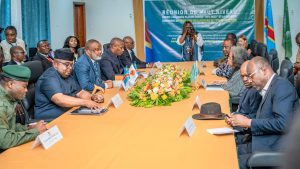
Despite numerous peace accords, including the Nairobi and Luanda processes, the root issue remains unresolved: the contested identity, rights, and safety of Congolese Tutsi and other Kinyarwanda-speaking populations in Kivu.
In this fraught context, the AFC political wing of M23 has proposed a bold new vision: an autonomous governance structure—possibly even a sovereign state—in eastern Congo. Whether viewed as a strategic maneuver or a genuine liberation project, it raises a profound question: what if Kivu were no longer under Kinshasa’s rule at all?
A Safe Zone in the Great Lakes?
Advocates of a Republic of Kivu argue that it could create a neutral, self-governed space—a kind of buffer state—between hostile forces in the region:
Rwanda and Uganda, accused of supporting rebel groups, could see a Kivu Republic as a partner rather than an adversary.
Burundi and the Congolese state, which have accused Rwanda of aggression, might welcome the de-escalation of military tensions.
Most importantly, local populations—particularly the often scapegoated Kinyarwanda-speaking Congolese—could find safety and recognition.
In theory, such a republic could be a zone of political neutrality, regional economic collaboration, and peacebuilding. It could also create a platform for refugee return, reconciliation, and post-conflict recovery in a region devastated by 30 years of war.
The Dangers of Secession and Fragmentation
Yet, this vision is not without deep risks.
The Congolese government, backed by regional allies like Angola and South Africa, sees the idea of partition as an existential threat to the DRC’s territorial integrity. Allowing Kivu to secede could embolden other separatist movements, especially in resource-rich regions like Katanga or Ituri.
Critics also fear the “Balkanization” of Congo, where powerful neighbors might manipulate ethnic tensions and armed groups to carve out spheres of influence—transforming the country into a patchwork of weak states and warlord territories.
Moreover, any new state emerging under the shadow of M23/AFC, an armed group accused of war crimes, would struggle to gain international legitimacy. Human rights concerns, governance challenges, and ongoing inter-ethnic tensions would remain major obstacles.
Between Utopia and Realpolitik
What is clear is that the status quo is unsustainable. Millions remain displaced. Massacres continue. The UN peacekeeping mission is withdrawing. The Congolese army and its allies have failed to decisively defeat the insurgents, while M23’s hold over strategic towns like Bunagana shows their increasing entrenchment.
In this context, the idea of a Republic of Kivu must be examined not through a romantic lens, but through pragmatic political dialogue. If not full independence, could a highly autonomous region within a federated Congo provide a compromise? Could it help formalize cross-border security cooperation, economic trade, and refugee management?
Conclusion: The Hard Questions
The proposal for a Republic of Kivu is not simply about territory—it’s about belonging, identity, and power. It reflects a failure of the Congolese state to build inclusive citizenship and protect all its people equally.
Whether the region moves toward autonomy or remains under Kinshasa, any durable peace must include the voices of marginalized groups, including Kinyarwanda-speakers, women, displaced persons, and survivors of war crimes.
As Africa’s Great Lakes region continues to grapple with its ghosts of genocide, militarism, and colonial borders, the Republic of Kivu may serve as a mirror: reflecting both the hopes for a peaceful, pluralistic future—and the dangers of repeating history’s mistakes.
What do you think—should the Republic of Kivu become a reality, or is it a dangerous illusion?
About The Author


SUBSCRIBE TO OUR NEWSLETTER