Kwibuka32: Guterres Urges World to Learn from Past Failures and Act

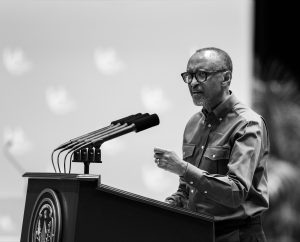
António Guterres, the Secretary-General of the United Nations.
António Guterres, the Secretary-General of the United Nations, has called on the international community to confront past failures and take decisive action to prevent future atrocities, as Rwanda begins the 32nd commemoration of the 1994 Genocide against the Tutsi.
In a message marking the International Day of Reflection on the 1994 Genocide against the Tutsi in Rwanda, Guterres said the day serves to mourn the victims, honour their dignity, and pay tribute to survivors whose resilience continues to inspire the world.
“The United Nations stands with the people of Rwanda, and with all those everywhere who refuse to surrender our future to fear, division, or silence,” he said.
Reflecting on the international community’s response in 1994, Guterres acknowledged what he described as a collective failure to act in time to save lives.
“Let this day reaffirm our commitment to remember, to listen, and to act,” he said. “We recall, with humility and shame, the international community’s failure to heed warnings and take immediate lifesaving action.”
The commemoration, widely known as Kwibuka, marks 32 years since Rwanda experienced one of the darkest chapters in modern history. In just 100 days, more than one million people were killed in the 1994 Genocide against the Tutsi, following decades of systemic discrimination and persecution.
Guterres stressed that remembrance must be matched with concrete action to prevent such atrocities from recurring. He urged countries to reject hate speech and incitement to violence, strengthen social cohesion, and invest in institutions that safeguard peace and human rights.
“Remembrance alone is not enough,” he said. “We must protect the living by rejecting hatred, inflammatory rhetoric and incitement to violence, and by reinforcing systems that prevent mass atrocities.”
He further called on all nations to ratify and fully implement the Convention on the Prevention and Punishment of the Crime of Genocide without delay.
Meanwhile, the Permanent Mission of Rwanda to the United Nations is set to host the official commemoration at the United Nations Headquarters in New York. The remembrance period will run for 100 days, in line with the duration of the genocide.
As Rwanda and the international community enter this period of reflection, the message from the UN chief underscores a renewed call for vigilance, accountability, and collective responsibility to ensure that such a tragedy never happens again.
About The Author


SUBSCRIBE TO OUR NEWSLETTER