Rwanda Women Journalists Unite Against Sexual Harassment and Gender Discrimination
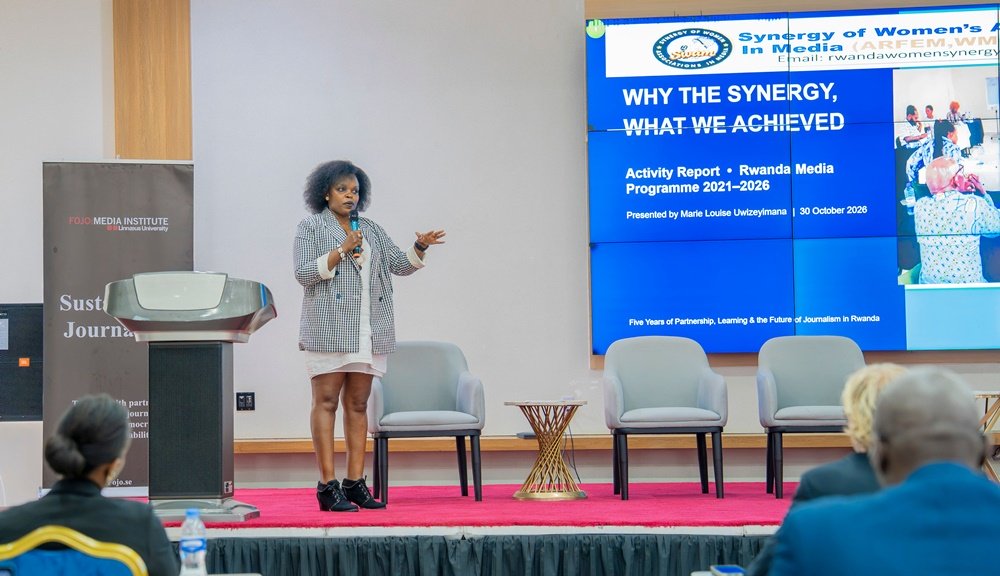
KIGALI, Rwanda – Three Rwanda Women Journalists associations have strengthened their collective efforts to combat sexual harassment, gender-based violence and workplace discrimination through an umbrella coalition known as the Synergy of Female Journalists Associations.
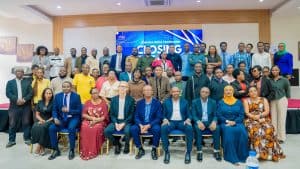
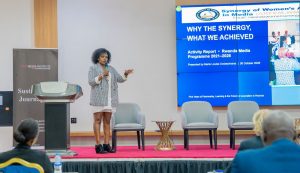
Presenting the coalition’s achievements at the Rwanda Media Programme Closing Ceremony (2021–2026), Louise Uwizeyimana, Project Manager of the Synergy of Female Journalists Associations, highlighted how collaboration among women’s media organizations has strengthened institutional capacity, improved professional development and established support mechanisms for women experiencing harassment.
The coalition brings together three organizations: the Association Rwandaise des Femmes des Médias (ARFEM), Women Media Owners for Change (WMOC), and Women in Digital Media (WDM).
Each organization brings a different area of expertise. ARFEM promotes gender equality and the rights and safety of female journalists, WMOC represents women who own, manage or lead media organizations, while WDM supports women working in digital and online media.
Uwizeyimana explained that the associations previously operated independently despite sharing similar objectives.
With support and guidance from the Rwanda Media Programme, they decided to combine their efforts to avoid duplicating activities, coordinate resources and reach more beneficiaries across the media sector.
“Before, we were working separately. Sometimes one association would train the same journalists on a particular topic, and another association would organize similar training. By working together, we can coordinate our activities, identify our beneficiaries and reach more people,” she explained.
Developing gender policies and safer newsrooms
One of the coalition’s major interventions was supporting media houses to develop gender and sexual harassment policies aimed at creating safer and more inclusive working environments.
The associations visited media organizations, raised awareness about gender-based violence and encouraged the establishment of reporting mechanisms for sexual harassment.
According to Uwizeyimana, women journalists continue to face discrimination, harassment and barriers to professional advancement, making institutional protection and accessible support systems essential.
The initiative also supported the development of the coalition’s administrative and organizational capacity, helping its member associations strengthen their collaboration and institutional structures.
Gender Desk supports 24 victims of harassment
Among the most significant achievements highlighted by Uwizeyimana was the establishment of a Gender Desk providing support to women journalists experiencing harassment.
The desk offers psychological assistance through a psychologist and helps victims access additional services, including medical and legal support where necessary.
Uwizeyimana reported that 24 victims received psychological support over the five-year period.
Some were also assisted in accessing medical services, while one woman was referred for legal support.
She said the Gender Desk remains relevant even as the Rwanda Media Programme concludes, noting that women continue to contact the associations seeking assistance.
The support mechanism provides an avenue for women journalists to seek help rather than face harassment and discrimination without institutional support.
Empowering women through professional and financial skills
Beyond protection and advocacy, the coalition invested in strengthening the professional and economic capacities of women journalists.
Training activities covered investigative journalism, cyberbullying, grant writing, artificial intelligence and fact-checking.
Uwizeyimana emphasized the importance of financial independence, explaining that economic vulnerability can expose women journalists to exploitation and workplace harassment.
She argued that equipping women with grant-writing skills and knowledge of alternative funding opportunities can help them become more financially independent and strengthen their professional position.
The initiative also conducted awareness campaigns, including social media activities involving influencers, to inform women journalists about available support services and encourage reporting of sexual harassment.
Advocacy and collaboration for women’s rights
The Synergy of Female Journalists Associations also organized national dialogues bringing together women in media to discuss sexual harassment, gender-based violence and the challenges affecting women journalists.
These discussions provided opportunities to identify common problems, exchange experiences and explore collective solutions.
The coalition’s work also contributed to gender-related activities within media houses and universities.
Earlier programme results presented during the closing ceremony indicated that gender policies had been implemented in close to 40 media houses, alongside the establishment of gender clubs in universities.
International partnerships supporting media development in Rwanda
The achievements presented by Uwizeyimana were part of the broader Rwanda Media Programme, implemented over five and a half years with support from international development partners.
The programme received support from the Governments of Sweden and Switzerland, with key partners including Fojo Media Institute, the Swedish Radio Media Development Organization and the Swiss Agency for Development and Cooperation (SDC).
These partnerships supported efforts to strengthen Rwanda’s media ecosystem through professional journalism development, institutional capacity building, improved journalism education, gender equality and media sustainability.
The Rwanda Media Programme brought together media organizations, universities, journalists and civil society actors to address challenges affecting the country’s media sector.
For the Synergy of Female Journalists Associations, this support helped strengthen collaboration among women’s media organizations, develop institutional systems and establish practical mechanisms for addressing harassment in newsrooms.
Building institutional capacity beyond the programme
Reflecting on the experience, Uwizeyimana highlighted the importance of institutional development and financial accountability.
She explained that the Rwanda Media Programme helped the young associations strengthen their administrative systems, understand government tax obligations and improve financial reporting.
She particularly appreciated the programme staff for providing guidance and allowing the associations to learn and develop their management capacities.
As the Rwanda Media Programme reaches the end of its implementation period, Uwizeyimana emphasized that the work of the coalition remains important, particularly in supporting women journalists who continue to experience harassment and discrimination.
The experience demonstrates how collaboration among women’s media organizations can contribute to safer newsrooms, stronger professional networks and improved institutional support for women in journalism.
For Rwanda’s media sector, sustaining these achievements will require continued cooperation, adequate resources and a commitment to ensuring that women journalists can work, report and advance their careers without harassment or discrimination.
About The Author


SUBSCRIBE TO OUR NEWSLETTER

![Two women smile as one awards a crystal trophy at a Commonwealth Youth Programme event, with a blue backdrop behind them.”]},{](https://www.topafricanews.com/wp-content/uploads/2026/06/unnamed-5-300x200.png)