Global Health Reforms Imperiled: Women, Children, and Adolescents ‘Risk Being Written Out’ Amid Collapsing Aid
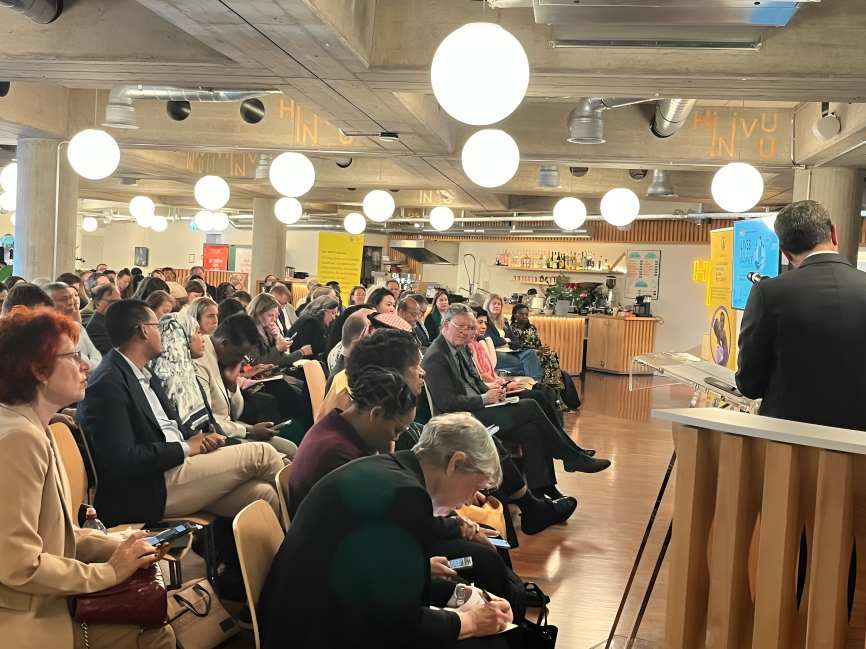
GENEVA — 19 May 2026. As Health Ministers convene for the 79th World Health Assembly (WHA79) to discuss global health architecture reform and crisis response, partner organizations are issuing a “stark warning” that Women, Children, and Adolescents (WCAH), along with Sexual and Reproductive Health and Rights (SRHR), risk being excluded from both agendas.
On the eve of the Assembly, partners convened by the Partnership for Maternal, Newborn & Child Health (PMNCH) for the Lives in the Balance dialogue cautioned that governance reforms, including the UN80 Initiative and the Accra Reset, remain “conspicuously absent” of explicit mentions of WCAH and SRHR.
“Global health governance only protects what it explicitly prioritizes,” said Rajat Khosla, Executive Director of PMNCH. “An architecture that fails to safeguard women, children and adolescents cannot credibly claim to be equitable or resilient.”
A Crisis of Funding and Mortality
The warning comes against a backdrop of escalating crises and declining resources. Data highlights a severe and gendered crisis:
- Maternal and Child Deaths: A woman dies giving life every two minutes. In 2024, 4.8 million children did not reach their fifth birthday.
- Collapsing Aid: Official development assistance (ODA)—a key lifeline—fell by 23.1% in 2025, marking the steepest single-year drop on record.
- Gendered Emergencies: Women, children, and adolescents bear the brunt of every emergency. In 2023, an estimated 160,000 women died from preventable maternal causes in fragile and conflict-affected settings, accounting for six in ten of all maternal deaths globally. The maternal mortality ratio in conflict-affected countries (504 per 100,000 live births) is five times higher than in stable countries (99).
The funding cuts are already having devastating real-world consequences. Dr. Vinny Mabesa, Senior Managing Director of Global Health at Save the Children, reported that in Sudan, 7 out of 8 supported clinics have shut down. This has forced providers to make “really tough choices on how to treat” increasing numbers of children presenting with severe acute malnutrition.
Call for Explicit Protection and Sovereignty
The partners are demanding that health reform focus on function and purpose, arguing that “Reform without WCAH is reform that will fail”. Rt. Hon. Helen Clark, Board Chair of PMNCH, stressed, “Conversations on the global health architecture should not start from the premise of what the ideal structures are… They should start from the premise of what will do the most for health.”
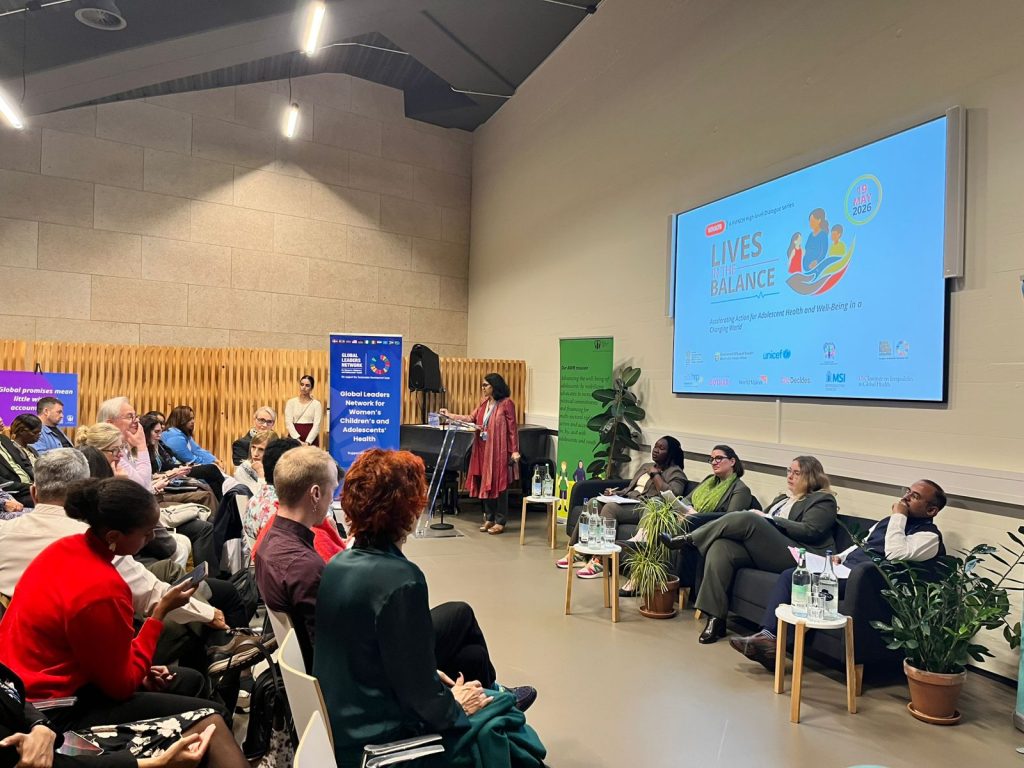
To protect WCAH and SRHR financing, partners insist that reform must explicitly name them, protect their funding, guarantee representation of women, youth, and Global South civil society, and preserve normative capacity in the institutions that deliver for them.
Amid crippling African debt repayments in 2025, which exceed health spending in over 30 countries, Member States are pointing to health sovereignty and domestic resource mobilization as the decisive pivot. Examples of country-led action include:
- Nigeria: Shielding primary care as external aid retracts through its Basic Health Care Provision Fund.
- Kenya: Pledging to double public health spending to 5% of GDP over five years.
- Morocco: Extending mandatory health insurance to an additional 22 million people.
- Africa CDC: Achieving price reductions of 30–90% on 10 priority maternal and newborn health products through its first African Pooled Procurement Mechanism tender.
Ali Haji Adhan, Minister of Health, Somalia, underscored this approach: “Even in fragile and complex settings, continuity of services for women, children and adolescents is possible when these services are treated as a national priority and placed at the center of health system rebuilding”.
WHA79 Commitments
Partners concluded by calling on Member States to leave Geneva with three specific commitments:
- Explicit Naming: Name WCAH and SRHR in the final text of Agenda Item 20.1.
- Accelerate Resolution WHA77.5: Accelerate implementation of the resolution through ring-fenced domestic financing.
- Build Sovereign Systems: Build sovereign, self-financing health systems capable of protecting women, children and adolescents, especially in crisis settings.
“Financing decisions are always political decisions, determining what is prioritized, whose rights are protected, and ultimately whose lives we value much,” Helen Clark stated. “Our plea… is to make sure in that debate that the rights and lives of women, children, and adolescents not only get recognition, but actually get prioritized right through to the financing decisions.”
About The Author


SUBSCRIBE TO OUR NEWSLETTER