How Healthcare Support Is Helping Refugees Manage Chronic Illnesses in Rwanda
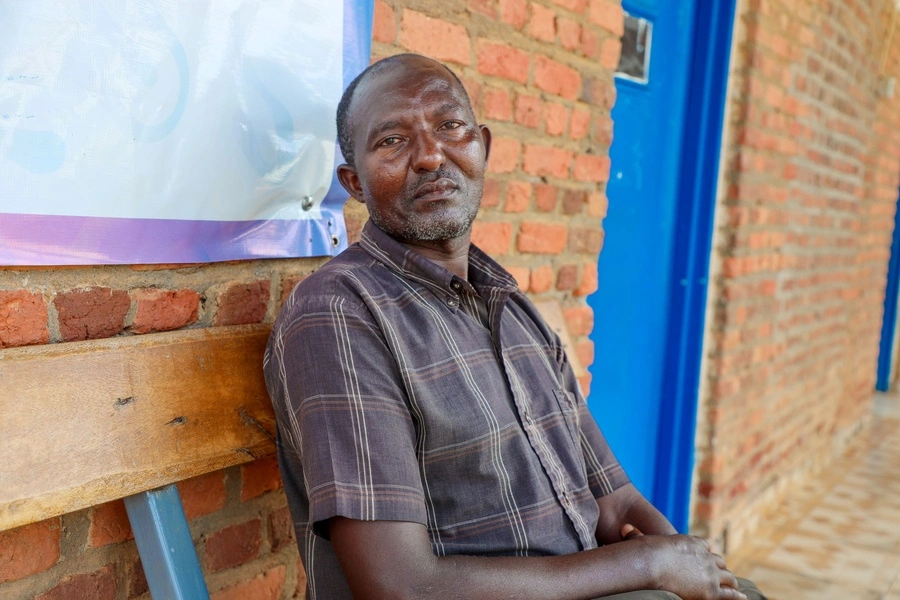
Matayo Bukiri at Kiziba Health Centre. (UNHCR)
Bukiri Matayo, a 54-year-old Congolese refugee living in Kiziba Refugee Camp, walks out of the consultation room at Kiziba Health Centre with a sense of relief after learning that his blood sugar levels are stable. Around him, the health centre’s waiting area remains busy with patients seeking treatment just past midday.
For Matayo, who has lived in Kiziba Refugee Camp since 1996, every positive medical check-up offers renewed hope after years of struggling with diabetes.
“There is an improvement now,” he says while heading to the pharmacy to collect medicine for the coming days.
Matayo recalls how his illness first revealed itself years ago through unusual symptoms that he did not immediately understand.
“Before I knew what I was suffering from, my foot would always get dry after I bathed and I always felt like I didn’t want to eat, but I was always thirsty,” he explains.
“I would drink water, then go to the restroom, come back, and drink again, over and over. Even at night, I kept drinking water and going to the restroom.”
Eventually, doctors diagnosed him with diabetes, by then, the condition had already become severe.
“At some point I went to the hospital, they tested me and told me I had diabetes, and that it was already very serious. From then until today, diabetes has remained with me,” he says.
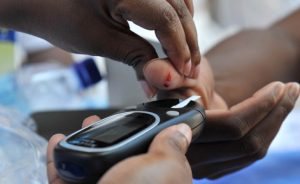
For the past 15 years, Matayo has depended on regular medical consultations, insulin and constant monitoring to manage the chronic illness. Without treatment, he says, his condition quickly worsens.
He remembers one frightening incident when he collapsed into a coma while visiting his wife in the fields during heavy rain.
“There was a time I left home and went to the fields to see where my wife was farming. While I was there, it rained heavily and I collapsed into a coma,” he recounts.
“I only left that place after people carried me, I was not aware of anything. When I arrived here, they took care of me and gave me medicine that brought me back to life.”
He says there were also moments when the disease affected his eyesight so severely that he could not recognize familiar surroundings.
“Back then, there were times I stayed in the house and even lost my vision. I could lie down and not even recognize the door to go out. But when I got insulin, things improved a bit,” he says.
Matayo is among thousands of refugees in Rwanda living with chronic illnesses that require regular medical attention. In 2025 alone, health centres operating in refugee camps across the country conducted more than 44,000 consultations for chronic diseases, mainly asthma, diabetes and other non-communicable diseases.
With support from France, UNHCR, working through implementing partners including Alight and Save the Children, has continued to provide healthcare services to refugees and asylum seekers across Rwanda.
More than 138,000 refugees and asylum seekers living in camps and transit centres have access to primary healthcare through 10 camp-based health centres, while patients requiring specialized treatment are referred to tertiary hospitals.
For refugees like Matayo, such support remains critical to survival.
“If I had not received this help, it would have been over for me,” he says.
“Diabetes can be controlled with medicine, but it is not cured 100 percent. The medicine helps reduce it. But when I don’t get the medicine, my sugar rises and can go beyond control, and it can stop the heart.”
However, humanitarian agencies warn that declining global funding is increasingly straining their ability to support vulnerable refugees. As resources shrink, priority is being given to emergency and life-saving referrals, while non-urgent medical cases risk delays.
Despite the uncertainty, Matayo remains hopeful that access to medicine and treatment will continue.
“If we could be helped to regularly get test strips and insulin, and if medicine was available, it would help us survive longer,” he says.
About The Author


SUBSCRIBE TO OUR NEWSLETTER