Mounting pressures raise concerns over global agricultural Markets
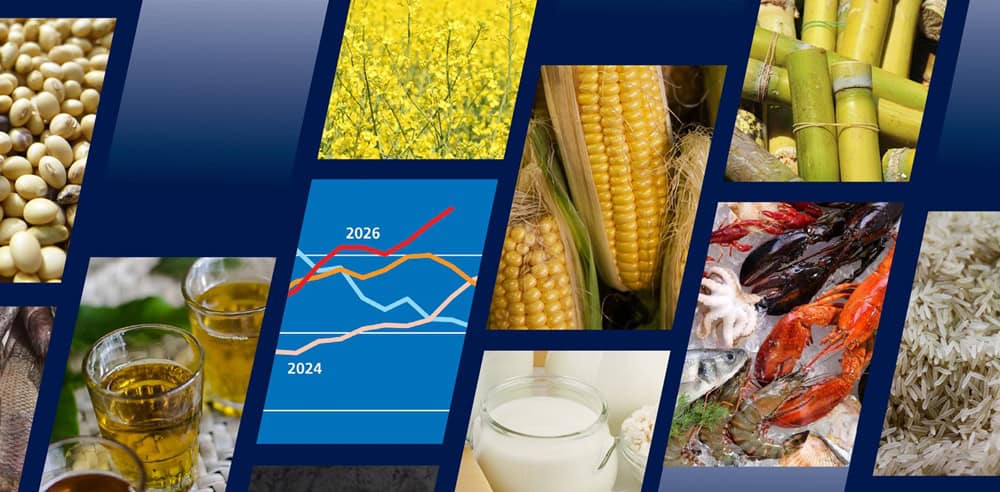
Global food supplies remain generally sufficient, but rising fertilizer costs, weather disruptions and declining production forecasts for some commodities are creating new uncertainties for international food markets, according to the Food and Agriculture Organization of the United Nations (FAO).
In its latest Food Outlook, published on November 19, 2026, FAO said supplies of major agricultural commodities, particularly wheat and coarse grains, remain relatively comfortable. However, tighter market conditions are emerging for rice, sugar and vegetable oils.
The report warns that international food markets remain vulnerable to adverse weather conditions, disruptions to transport routes and uncertainty surrounding trade policies.
FAO forecasts that global cereal stocks will increase by 1.8 percent by the end of the 2026/27 marketing seasons, largely due to growing wheat inventories in Russia and Ukraine, where export disruptions have constrained shipments.
Despite the expected increase in stocks, international cereal trade is projected to decline by 3.3 percent in 2026/27, mainly because of reduced wheat shipments from major exporting countries.
Wheat and maize production, however, are expected to remain above their respective five-year averages.
Rice production faces a different outlook. FAO forecasts the first decline in global rice production in four seasons, partly due to declining returns for producers and adverse weather conditions associated with El Niño.
Although existing reserves could keep global rice stocks at their second-highest level on record, the production decline highlights growing pressures in some food commodity markets.
Fertilizer Costs Add Pressure
Beyond production and trade, FAO identifies fertilizer markets as another source of concern for global food security.
Global production of nitrogen fertilizers, including ammonia and urea, is expected to decline in 2026, largely due to disruptions to energy supplies, production and trade associated with the closure of the Strait of Hormuz.
The report also finds that fertilizer affordability deteriorated across four major agricultural markets: maize in Brazil, wheat in the European Union, rice in Southeast Asia and soybeans in the United States.
By mid-2026, fertilizer affordability in these markets had fallen below its long-term baseline, reaching its lowest levels between April and June.
FAO warns that high fertilizer costs relative to crop prices could discourage farmers from purchasing and applying sufficient fertilizer, potentially affecting future agricultural production.
Disruptions to grain exports through the Black Sea are also reshaping international trade.
Combined grain shipments from Ukraine’s Greater Odesa ports and Russia’s Sea of Azov and Black Sea ports fell below 500,000 tonnes in September 2026, compared with 7.8 million tonnes during the same month in 2025.
As a result, other exporters, including Argentina, Australia and the European Union, are increasing their shares of global wheat exports.
Global Food Import Bill to Reach $2.27 Trillion
FAO also projects that the global food import bill will reach $2.267 trillion in 2026, representing a 1.9 percent increase from the previous year.
Although this is a considerably slower increase than the nearly 8 percent recorded in 2025, import costs for several essential commodities are expected to rise.
The import bill for cereals is forecast to increase by 3 percent, while that for oilseeds and oleaginous fruits is expected to grow by 9.9 percent. Meat import costs are also projected to rise by 6.9 percent.
Meanwhile, lower international prices of coffee and cocoa are expected to reduce the import bill for coffee, tea, cocoa, spices and related products by 11.9 percent.
The financial pressure is expected to differ across income groups. FAO projects that the food import bill for low- and middle-income economies combined will increase by 4.9 percent, while that of least developed countries will rise by 3.9 percent.
Other sectors are also experiencing mixed trends. Global meat production is expected to grow moderately in 2026, driven mainly by poultry, while milk production is forecast to increase by 1.8 percent.
World sugar production, however, is projected to fall below expected consumption in 2026/27, contributing to concerns over tighter supplies and rising international prices.
FAO’s latest assessment suggests that, although global food supplies remain broadly adequate, maintaining stable markets will depend on how countries and producers respond to mounting pressures from climate conditions, fertilizer affordability, energy supply disruptions and international trade.
About The Author


SUBSCRIBE TO OUR NEWSLETTER