ForAfrika Interventions Boost Water Access, Childcare and Food Security in Rural Rwanda
ForAfrika Rwanda’s integrated interventions in Rukoma Sector, Kamonyi District, are improving access to clean water, strengthening Early Childhood Development (ECD) services and boosting agricultural production, with local authorities highlighting their contribution to efforts to improve community wellbeing.
The interventions, implemented in Gisenyi, Gishyeshye and Buguri cells, form part of ForAfrika’s approach to linking water, nutrition, child development, livelihoods and food security to build more resilient communities.
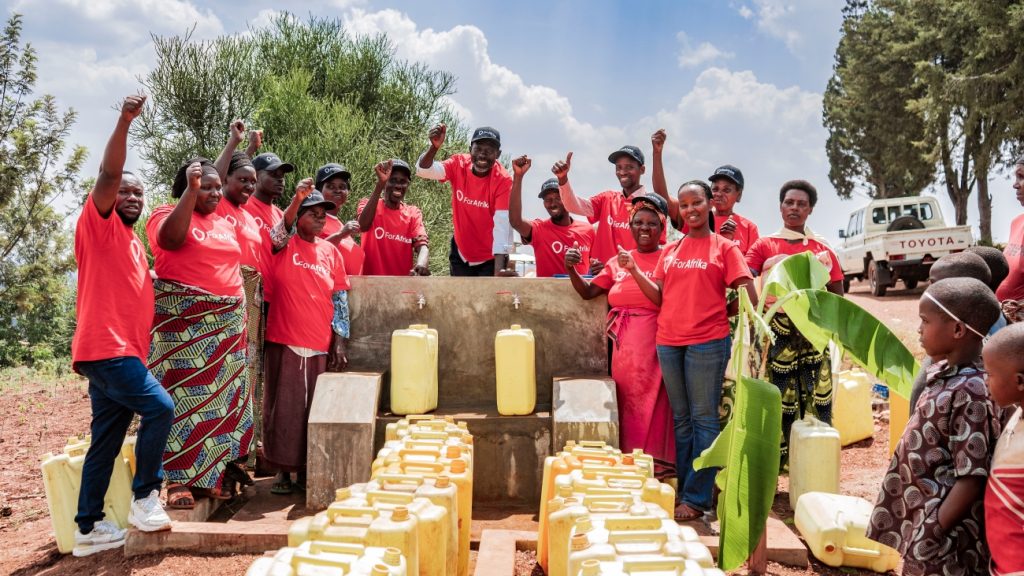
At Gisenyi Primary School, the provision of clean water has helped address longstanding challenges that previously forced pupils to walk several kilometres to collect water for cleaning the school and preparing meals under the school feeding programme.
The school’s head teacher, Kandida Marie Josée, said that before the intervention, the school had no reliable water source, requiring students to spend part of their break time travelling long distances to fetch water. She added that the situation sometimes disrupted learning, as pupils were occasionally required to leave class to collect water, resulting in the loss of valuable instructional time.
“The lack of water affected the learning environment because students sometimes missed valuable class time when they had to go and fetch water. This made it difficult for them to fully follow the learning programme.”
In addition to the school, ForAfrika established more water wells for the surrounding community, allowing residents to access water without relying on the school’s water source.
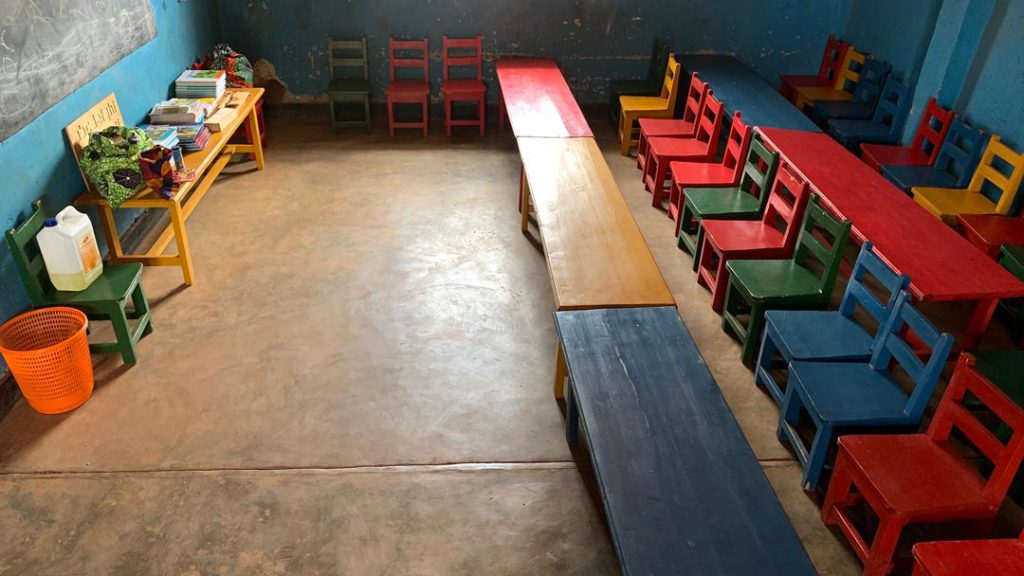
In Gishyeshye Cell, the organisation rehabilitated an ECD centre to provide a safe environment for young children while their parents go to work, particularly those involved in mining and other income-generating activities.
Residents attest that the centre has helped address safety and nutrition challenges that previously affected children who were left without adequate care.
Nirere Vestine, a resident of Gishyeshye Cell, said some children had previously been exposed to road accidents, including being hit by motorcycles, while others suffered from illnesses associated with poor nutrition.
“Before the ECD centre was established, many parents did not have a safe place to leave their young children when they went to work. As a result, children were often left without proper supervision, and we experienced cases of children being involved in accidents, including being hit by motorcycles,” she said.
“Today, the ECD centre has provided a solution. Children are receiving care in a safe environment, while parents can go to work with greater peace of mind.”
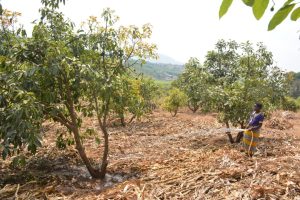
In Buguri Cell, ForAfrika’s support has combined ECD services and water access with efforts to promote climate-smart agriculture.
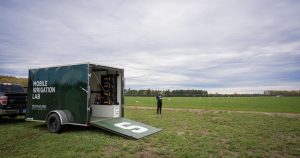
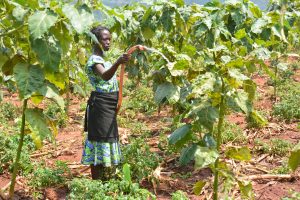
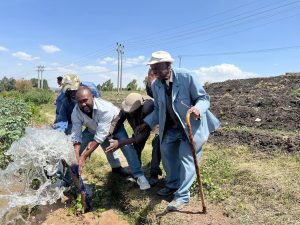
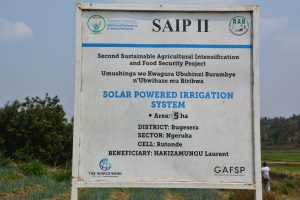
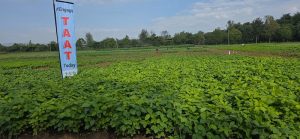
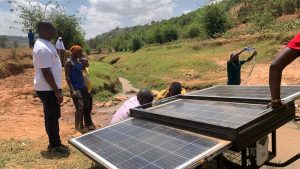
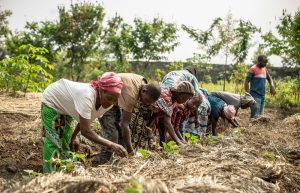
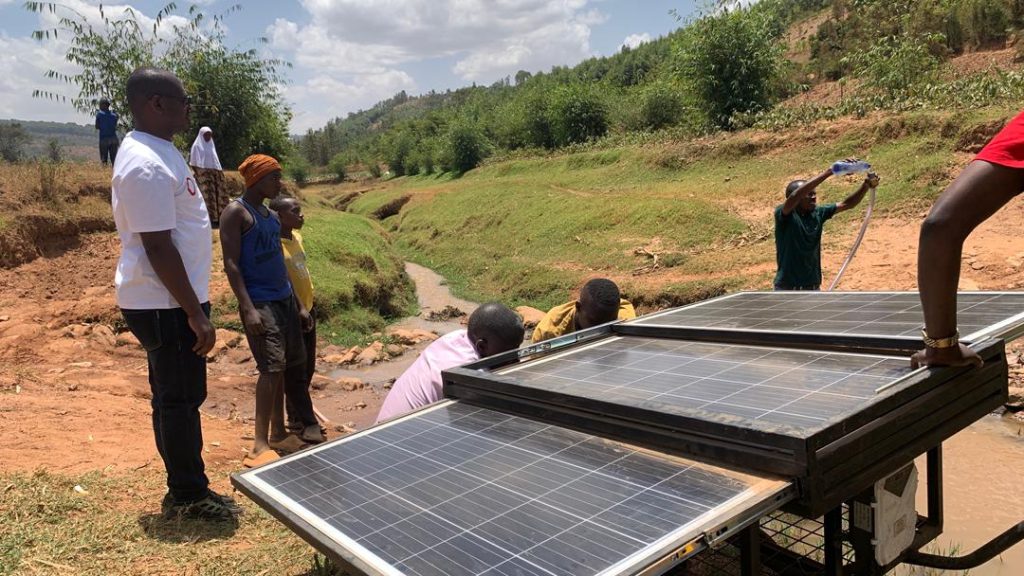
Among the interventions is a solar-powered irrigation system supporting farmers to produce crops with less dependence on rainfall. The system has enabled farmers to irrigate their fields more consistently, contributing to increased production, income and household food security.
Byukusenge Adele, a member of Umunezero Village Savings and Loan Association (VSLA), which comprises 34 farmers, said the irrigation system has made a significant difference to the group’s agricultural activities.
“The solar-powered irrigation system has been a game-changer for our farming activities. It has helped us increase production, improve our incomes and strengthen food security among members.” she said.
Though the irrigation system has brought a solution, farmers say that its reliance solely on solar power limits its effectiveness.
Ndahayo Jean Damascene said the absence of a battery backup means the irrigation system cannot operate effectively during early morning or evening hours when sunlight is gone.
“Since we started using this system, we have realised that its effectiveness is limited because it depends entirely on sunlight.” he said. “A battery backup would enable us to store energy and operate the system during periods when there is little or no sunlight.”
ForAfrika has acknowledged the challenge and is exploring possible solutions to improve the reliability of the irrigation system. Among the options under consideration, as revealed by Nzabonimpa Socrate, the field officer in Kamonyi district, are the establishment of water storage dams or tanks that would allow farmers to store water and use it when needed, including during periods when the solar-powered system is not operating.
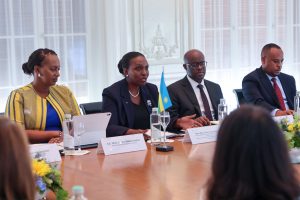
Dr. Jean Lambert Sebareze, Acting Country Director of ForAfrika Rwanda, said the projects in Kamonyi demonstrate the importance of integrated interventions in building sustainable food systems.
“Food security is not only about producing more food. It is also about ensuring that farmers have reliable access to water, families are able to save and invest, children are healthy and able to learn, and communities have the infrastructure and opportunities they need to become more resilient.”
He said ForAfrika works with communities rather than imposing solutions.
“Our role at ForAfrika is not to impose solutions, but to work with communities, build on what already exists and create pathways towards resilience, self-sufficiency and lasting prosperity.”
Niyongira Uzziel, Vice Mayor of Kamonyi District, commended ForAfrika and other development partners for contributing to the district’s efforts to improve the welfare of children and families.
He said interventions addressing water, nutrition, agriculture and early childhood development are particularly important in the fight against malnutrition and stunting.
“We appreciate the contribution of ForAfrika and other development partners because their interventions are helping us address some of the challenges affecting our communities, particularly malnutrition and stunting,” Niyongira said.
According to the Vice Mayor, Kamonyi has made progress in reducing stunting, with the prevalence currently standing at about 10% among children.
However, he acknowledged that the figure remains a concern and requires continued collaboration between local authorities, communities and development partners to achieving further progress.
“The progress we have made shows that partnerships can make a difference. By working together and strengthening these interventions, we are confident that we can further reduce stunting and improve the living conditions of families across the district” he said.
These interventions in Kamonyi reflect ForAfrika’s broader effort to help communities becoming self-sufficient through interconnected solutions spanning water, agriculture, nutrition, livelihoods and child development.
About ForAfrika
ForAfrika is an African-led humanitarian and development organisation that has worked with communities across Africa for more than three decades.
In Rwanda, the organisation works with communities, local government and partners to deliver integrated interventions in food security, livelihoods, safe water, Early Childhood Development and financial inclusion, with a focus on building resilience, self-sufficiency and sustainable futures.
About The Author


SUBSCRIBE TO OUR NEWSLETTER